
News
Bunny Garden 2 Remake Debuts at CJ2026 With No Release Date Yet
Metal Max: Steel Season Remake made its playable debut at ChinaJoy 2026, nearly 20 years after the divisive 2006 NDS ori
















The second you grip the controller late at night, the first thing that creeps up isn’t excitement, but a very subtle sense of foreboding. Like the light at the end of a hallway in a horror movie—clearly not broken, yet somehow always seeming like it’s about to flicker. You know, what really sends a chill down your spine usually isn’t the loudest thing, but the kind of design that’s quiet, restrained, and meticulously calculated in every detail.
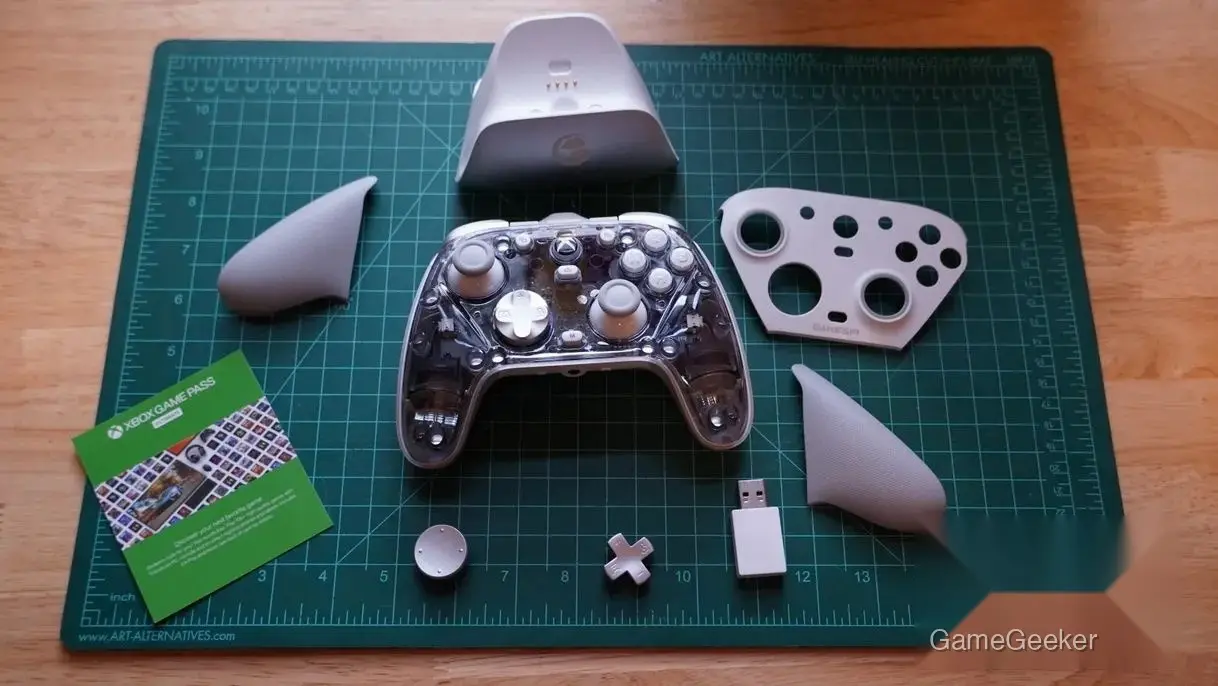
What made me take a second look this time wasn’t a new game, but a Chinese-made controller. IGN gave the GameSir G7 Pro a 9, and that score alone is impactful enough. More importantly, the review’s stance was crystal clear: it’s still a little short of perfect, but already good enough to challenge products that cost twice as much.

But what really startled me wasn’t that—it was the thinking behind it. These days, a lot of peripherals love turning themselves into “spec monsters”: the lights have to flash, there has to be a screen, and the feature list gets piled up like a hospital diagnostic sheet. The result? The price goes up, the battery life goes down, and the player’s wallet starts screaming first. The G7 Pro, on the other hand, takes a more pragmatic route: cutting RGB lighting and built-in display screens—those flashy but nonessential extras—to keep both cost and battery strain under control, in exchange for a more competitive price.
The keywords IGN used in its overall verdict were also very straightforward: excellent feel, stylish design, and rich customization options. Put simply, this is a controller that spends money on the parts that actually matter. Just like a great horror game doesn’t rely on constant jump scares for cheap thrills, what really works is atmosphere, feedback, and a sense of control. Controllers are the same. What players care about most has never been whether it can light up like a Christmas tree, but whether that press of the button feels worth it.

Of course, it’s not a flawless perfect run either. The review pointed out two obvious shortcomings: the software is a bit cumbersome to use, and the gyroscope controls aren’t stable enough. These two issues aren’t huge, but they’re definitely not negligible either. Especially for players who love tweaking custom settings or care a lot about motion-control precision, they’ll feel a bit like hearing footsteps behind a door—nothing fatal, but unsettling all the same.
Even so, once you step back and look at it, IGN’s conclusion remains firm: these flaws are not enough to stop it from being a truly excellent controller in its price range. One line in particular hits hard, calling it “the real deal.” That’s basically another way of saying the G7 Pro’s pragmatism isn’t a compromise born of necessity, but a more clear-eyed kind of trade-off.

If you ask me whether it’s worth paying attention to, my advice is simple: if what you want is core feel, design, and customization—and you’re not blindly loyal to first-party branding—then Chinese-made controllers really have reached the point where they deserve serious consideration. On the other hand, if you’re especially sensitive to software usability and gyroscope stability, it’s probably best to wait and see a little longer. Don’t let a high score go to your head.
What’s even more unsettling is that maybe the ones who should really be nervous aren’t the players, but those high-priced products that have long relied on brand premium to hold their ground. When IGN starts giving Chinese-made controllers this level of praise, the scent of the market has already changed. It’s not the kind of shock that explodes all at once, but more like the slow, creeping pressure of a frog being boiled in warm water—gradual, but very real.
The interactive poll at the end is actually pretty interesting too: would you choose a Chinese-made controller? On one side: “Affordable and great to use—Chinese gaming peripherals have truly come into their own.” On the other: “I’d still go with the original first-party big three.” This debate has probably only just begun. Let out a cold laugh—sure, first-party faith is still alive, but today’s Chinese peripherals are no longer just knocking at the door. They’re starting to push it open, little by little.





Comments 0
Share your game review
Join the discussion and share your review of this game.
No comments yet. Share your review.