
News
Grab two free PC games before Epic's clock runs out, while Undertale and Divinity: Original Sin 2 are 75% off
Astral Ascent and LUFTRAUSERS are free to keep today, while two of PC gaming's most celebrated RPGs cost less than $14 c
















A few days ago, I went back through early materials on Gears of War again. It felt like walking deeper into an old district along a cracked street. The more I looked, the more I felt that what makes this series so captivating was never just the cover shooting itself, but the constant sense of pressure in those apocalyptic ruins, as if something could burst out at any moment. And precisely because that atmosphere is so distinctive, when series creator Cliff Bleszinski recently spoke about the possibility of Gears of War coming to PlayStation, the topic suddenly gained new weight. For someone like me, who doesn’t care much about hardware camps and only cares whether more people get to play great games, his stance actually felt pretty straightforward—and pretty realistic.

In an interview with The Expansion Pass, Cliff made it clear that he has no special loyalty to Microsoft, describing himself as “hardware agnostic.” That phrase carries a lot of meaning: platforms are platforms, works are works, and what really matters is whether a brand can go further. He even mentioned that if Sony had been able to offer similar market support and brand momentum many years ago, then Marcus Fenix’s story might not necessarily have begun on PlayStation. Seen from that angle, his support for expanding Gears of War’s reach is fundamentally about bringing more players into this universe, rather than locking it behind a particular fence.

In today’s industry environment, that actually makes perfect sense. Microsoft has spent the past few years pushing its subscription strategy through Game Pass, and Cliff has taken note of that, believing the model is already starting to produce real returns. But the problems beyond that are just as obvious: AAA costs are still climbing, while players’ wallets and patience are both becoming more limited. Cliff’s take is sharp—today’s 3A market is starting to resemble the mobile game ecosystem, where the bulk of the revenue is usually swallowed by just a handful of top-tier titles. And for that very reason, he now seems more interested in smaller-scale, more experimental indie projects than in endlessly piling budgets onto industrial-sized blockbusters.
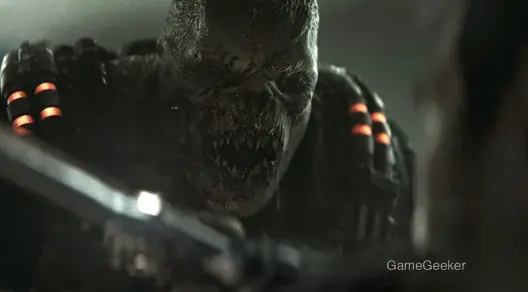
More than the platform discussion, what interests me most is his assessment of Gears of War: E-Day. Cliff is clearly excited about this new entry, especially because it returns to a smaller scale, a darker tone, and a more oppressive atmosphere, while once again putting the relationship between Marcus and Dom back at the center of the narrative. To me, it’s like spotting an unmarked little path on Google Maps—not a wide road, but one that gets more compelling the deeper you go. Rather than simply making everything bigger, turning the Locust back into a truly terrifying main enemy may be exactly what helps Gears of War recover that original identity: rough, hopeless, and strangely sticky.
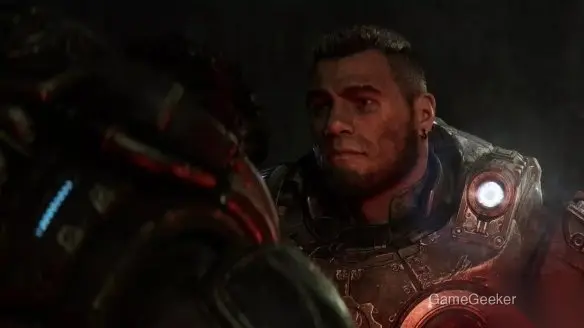
He also said the trailer “hit the bullseye,” believing that its harsher, more hopeless vision of the world is fully in line with the creative foundations of the early series. I mostly agree, because what many longtime players miss was never just the sheer scale of the explosions, but the feeling of cities collapsing, comrades gritting their teeth and pushing forward, and enemies bearing down like actual nightmares. Step back a little, and you realize that what truly revives a long-running franchise is often not making the map bigger, but reigniting its core atmosphere.

If you’re a PlayStation player, this statement at least makes one thing clear: bringing Gears of War to multiple platforms does not go against the series creator’s understanding of how the brand should expand. If you’re a longtime fan, then the most exciting thing about Gears of War: E-Day right now isn’t how big it might sell, but whether it has a chance to pull the series back into that shadow-drenched, heavy-footed state where every push forward feels like crossing a war zone. And for the industry as a whole, this is also a very clear signal of the broader trend: platform boundaries are loosening, and what is truly scarce is not the label of exclusivity, but whether anyone can still create a world worth stepping into again and again.




Comments 0
Share your game review
Join the discussion and share your review of this game.
No comments yet. Share your review.