
News
Grab two free PC games before Epic's clock runs out, while Undertale and Divinity: Original Sin 2 are 75% off
Astral Ascent and LUFTRAUSERS are free to keep today, while two of PC gaming's most celebrated RPGs cost less than $14 c
















Wow! The graphics card scene is putting on a real show this time!
Recently, GIGABYTE released overclocking results for the RTX 5070 and RTX 5060 Ti GAMING OC Eagle. My first reaction was just one word: beastly. Especially the RTX 5070 GAMING OC 12G Eagle — according to test data on the official 3DMark website, it scored 27,269 points in the Time Spy benchmark. The moment that score dropped, the vibe was instantly there, like a livestream chat suddenly flooding the screen with “Can we hop on this one?”
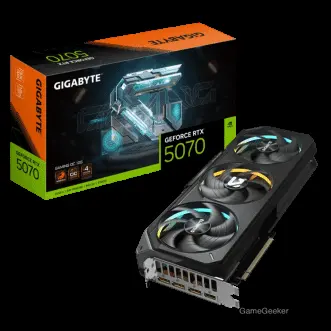
Here’s the key point. In a 25°C room-temperature environment, the RTX 5070 Eagle achieved a maximum stable core frequency of 3.5GHz. And yes, stable operation — not the kind of “firework overclock” that only flashes on screen long enough for a screenshot. That distinction really matters. For many gamers, hitting a high overclock is one thing, but keeping it stable is the real skill. On the other side, the RTX 5060 Ti 8G Eagle wasn’t sitting idle either, pushing its core frequency to 3.33GHz in 3DMark Time Spy Extreme, showing equally strong momentum.

Both cards are built on the NVIDIA Blackwell architecture, so the foundation is solid from the start. Then there’s cooling: GIGABYTE equipped both Eagle models with its WINDFORCE system, featuring three Hawk Fans, a large copper plate, and composite heat pipes. Put simply, this combo is aimed at one thing — keeping temperatures down, noise under control, and providing a safety net for high-frequency operation. The original text also notes that this design helps maintain low temperatures and quiet acoustics under heavy loads, while laying the groundwork for stronger overclocking performance.

However, there’s also a need to splash a bit of “cold rational water” here. These results come from GIGABYTE’s laboratory under extreme overclocking test conditions. In real-world user systems, final performance will still be affected by system configuration, ambient temperature, and power supply specifications. So when you see 3.5GHz, don’t get so excited that you slam the desk on the spot — if your case airflow is average and your PSU isn’t up to par, the experience may be a very different story.
From a buying-advice perspective, if you’re a PC user who enjoys tweaking settings and is willing to study airflow and power delivery, then these Eagle cards definitely have plenty to offer, and their overclocking potential is genuinely noteworthy. If you care more about plug-and-play convenience, stability, and quiet operation, then their cooling setup is also a clear plus. Simply put, they’re cards that can game and can push hard, but they definitely belong in the category that rewards hands-on enthusiasts.
Next, it all comes down to real-world feedback from more RTX 50 series products. The lab results have already maxed out the hype, but what will really determine their reputation is long-term performance after players install them in their own rigs. GIGABYTE has also stated that it will continue advancing high-performance, high-quality graphics card products. If you’re waiting for new product updates, keep an eye on the official website and official channels. My take? This Eagle launch doesn’t feel like testing the waters — it feels more like switching on the stage lights right from the start.





Comments 0
Share your game review
Join the discussion and share your review of this game.
No comments yet. Share your review.