News
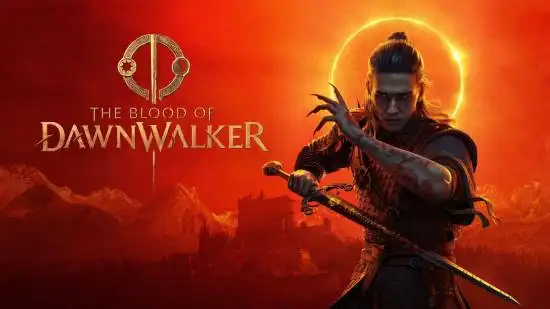
The Blood of Dawnwalker Is Out Now and Tops Steam's Best Sellers
The Blood of Dawnwalker tops Steam’s global best-sellers chart, excluding free games, after its official unlock. Led by
















I’d give it a 7. Because this isn’t exactly magical realism—it’s more like something many people only knew as a childhood fable suddenly got turned into a live demo on the streets of Guangzhou.
According to media reports, a netizen in Guangzhou filmed a white-necked crow facing a bottle with water it couldn’t reach. Instead of flapping around wildly, it first observed the situation, then picked up stones and dropped them in. What’s even more subtle is that it wasn’t just guessing blindly: after each stone, it would move closer to check whether the water level had changed. Once it confirmed the method worked, it switched to picking up larger stones, and eventually raised the water all the way to the bottle’s mouth and drank steadily. The whole process was smooth and continuous, with almost none of that panicked, pacing-in-place confusion. To put it plainly, this wasn’t luck stumbling onto the right mechanism—this was deliberate action with judgment behind it.
That said, what really got the internet buzzing was that old textbook passage suddenly being “successfully recreated.” A lot of people memorized The Crow Drinks Water as kids the way you grind through a side quest: recite it, then forget it. But now, a real white-necked crow has gone and turned that childhood text into a high-definition remaster, no narrator required. If you ask me what it feels like, my first reaction is: it’s like an old gamer seeing a concept from the PS1 era suddenly run successfully on modern hardware—and somehow the whole logic chain still holds up.

Of course, the comment section wasn’t quiet either. Some people noticed there was a pool not far from the bottle, so they started joking that the crow was “taking the long way around” and even wondered whether it was deliberately putting on a show for humans. The joke is pretty funny, but let’s not flatter ourselves into thinking we’re the directors here. The fact that the crow chose the container in front of it at least shows it could come up with a specific solution to a specific problem, rather than simply following the shortest route by rote. A 2009 Cambridge University experiment already showed that rooks would drop stones into a tube to raise the water level and reach insects floating on the surface, and they even knew to prioritize larger stones to save steps and effort.
What’s more impressive is that later research didn’t stop at the elementary-school-handicraft level of “it can throw stones.” A more advanced 2014 experiment showed that crows could distinguish between heavy stones that sink and light ones that float, and would also avoid traps. The website of the Chinese Academy of Sciences once cited German scientists’ findings that crows can even recognize geometric patterns, such as picking out a star shape from a group of rectangles. At that point, this is no longer just simple cleverness—it comes with a degree of abstract judgment. To use a gaming analogy, it’s not just capable of pressing the prompted button; it’s the kind of AI that can figure out the rules of the level on its own.
But I still have to pour a little cold water on the hype. Some analyses point out that crows in laboratory settings were trained, and that using insects as bait is more behaviorally stimulating than mere thirst. In the wild, if a crow is genuinely thirsty, it will usually just fly to a riverbank or pool and drink—there’s no need to get into a standoff with a bottle. This kind of skepticism isn’t pointless nitpicking; it helps pull the story back from myth into reality. But the point is, in this Guangzhou video, the crow really did complete the entire sequence of actions. At the very least, that shows this ability isn’t something invented by textbooks, much less a feel-good filter projected by humans.
If you place this in a broader trend, it actually gets pretty interesting. The internet today loves two extremes: one is to say animals have all “become spirits,” and the other is to refuse, no matter what, to acknowledge that they possess complex cognition. Crows are the kind of creature that lands right in the middle. They don’t benefit from the cute-pet filter, and they don’t intimidate with sheer size, but their brains really do work. So the reason this discussion went viral isn’t just that a textbook story came true—it’s that people suddenly realized the story they once dismissed as corny in childhood really did have a basis in reality.
So here’s my old-gamer-style conclusion. This isn’t a miracle, and it’s not just meme material either. Whether or not the original fable was based on a real event, this white-necked crow in Guangzhou has already laid out the answer: the textbook didn’t lie—we just used to mistake it for a cutscene.





Comments 0
We'd love to hear from you
Welcome! Share your take on this game — being first might come with a surprise.
No comments yet. Be the first!