
News
Grab two free PC games before Epic's clock runs out, while Undertale and Divinity: Original Sin 2 are 75% off
Astral Ascent and LUFTRAUSERS are free to keep today, while two of PC gaming's most celebrated RPGs cost less than $14 c
















What caught my eye the most wasn’t how many cores this desktop CPU has, but that it actually wants to seriously make “integrated graphics that can game” a reality on a mid-range platform. For people who often play indie titles like Hollow Knight and Dead Cells, that idea is really appealing. It’s like taking an ordinary PC and suddenly turning it into a “lightweight handheld dock” — the direction feels absolutely right!

The star of this latest leak is a special Nova Lake model in Intel’s next-generation Core Ultra 400 series. According to leaker Jaykihn, its CPU side consists of 4 P-cores, 8 E-cores, plus 4 LP-E cores, for a total of 16 cores and 16 threads, clearly aimed at mid-range users. The real eye-opener, though, is that the integrated GPU jumps straight to 12 Xe3P graphics cores, a huge leap over the 2 Xe3 cores found in regular desktop versions.
When I saw that, my first reaction was that it doesn’t feel like a traditional desktop CPU at all — it feels more like Intel has brought a mobile-style “big iGPU” design back to the desktop. The vibe is a bit like Celeste meeting Undertale: it’s not about brute-forcing with specs, but about changing the experience through one key design choice. The report also mentions that Xe3P is an enhanced version of Xe3, with stronger media and display modules, so beyond gaming, it should also handle tasks like encoding/decoding and AI inference.

If the leak is accurate, this move is really aimed at the gap in AMD’s desktop APU lineup. AMD already has the Radeon 800M series on mobile, with 12 to 16 RDNA 3.5 cores, but high-spec integrated graphics still haven’t truly made their way to desktop. Looking at it from the other side, Intel’s 12 Xe3P desktop chip almost feels like it’s moving in first to claim that space. For gamers on a tight budget who don’t want to deal with the high cost of a discrete GPU, this kind of “battle-ready integrated graphics” genuinely has real-world appeal.
What’s interesting is that while the paper specs look great, the real-world rollout may not be nearly as smooth as the promo images suggest. The report says this processor requires the motherboard to provide a dedicated two-phase VCCGT power supply for the integrated GPU, so not every LGA 1954 motherboard will be able to fully unlock its performance. On top of that, integrated graphics naturally depend heavily on memory bandwidth. Even if Nova Lake supports higher-frequency DDR5, high-speed memory itself isn’t cheap. The money saved on skipping a graphics card might end up being spent again on the motherboard and RAM, which is a bit unfortunate.
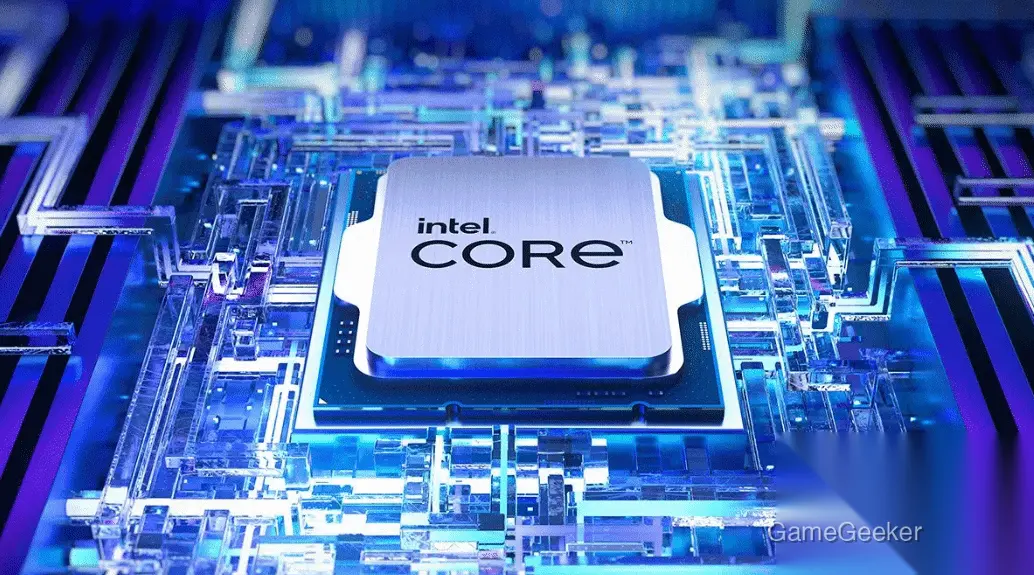
On the performance side, current claims say it will be another 20% to 25% faster than the previous Panther Lake generation’s 12 Xe3 cores. If that figure holds up in the end, then it will most likely run mainstream online games and a large number of indie titles very comfortably; it may even be able to keep some well-optimized AAA games playable without a discrete GPU installed. But high-end gamers will still pair it with a dedicated graphics card, so the real target here is still the mid-range crowd with very tight build budgets.
My advice is simple: don’t rush to celebrate, and don’t rush to dismiss it either. It’s still early. The Nova Lake series is expected to launch officially around late 2026 to early 2027, and for now this is still an early leak, so both specifications and plans could change. If you’re looking to build a compact powerhouse mainly for pixel-art games while also handling everyday creative work, then this chip is definitely worth keeping an eye on. But if you expect it to completely replace a mid-to-high-end discrete GPU, I’d stay cautious for now. It’s a good idea — now it comes down to whether Intel can execute it properly.





Comments 0
Share your game review
Join the discussion and share your review of this game.
No comments yet. Share your review.