
News
over the hill launches with introductory Steam offer and lower-priced key listings
Funselektor’s off-road exploration game is out on Steam at $19.99 with an introductory offer. Approximate third-party ke
















Some memories of animation’s golden age are not unearthed from opening credits, but rekindled by an old invoice. Recently, while sorting through his mother’s belongings, a Japanese netizen discovered a work invoice that had been gathering dust for years. It gave more concrete confirmation that his mother had once worked as a cel painter and had taken part in the production of classic anime such as Dragon Ball and Anpanman. For people who love old animation, the feeling is a bit like suddenly looking back toward the pit lane just before the finish line, only to realize that a legendary race car made it through the whole course not just because of the driver, but because of countless people quietly tightening every part behind the scenes.
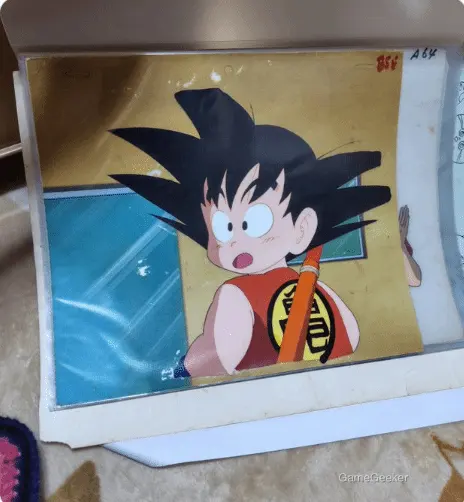
The most heartbreaking detail is how the work was paid. The invoice shows that she was paid by the piece, earning 70 yen for coloring a single cel, equivalent to about 1.9 yuan. Looking at that figure today, it feels almost like an unimaginable “low-spec fuel,” yet that was exactly how the animation industry moved forward back then—through dense, labor-intensive work done step by step. More importantly, the job could basically be done from home, without having to frequently go to the studio, giving us a real glimpse of what home-based animation labor looked like in that era.
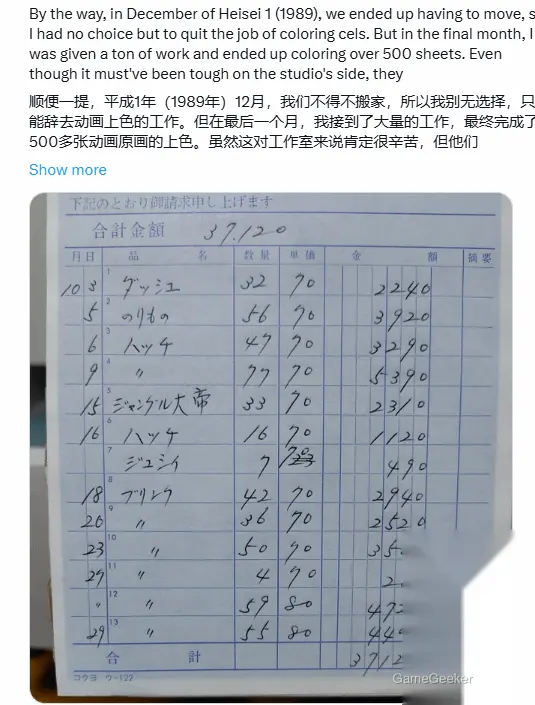
The netizen had already known that his mother had colored works for Dragon Ball and Anpanman, but after finding the invoice, he realized she had also participated in Mister Ajikko. What this filled-in information brought was not simple surprise, but an understanding that arrived many years late: those familiar childhood images really were painted one by one by someone sitting at a desk at home. The netizen also recalled that his mother had been responsible for coloring animation key frames for Ghibli’s Ocean Waves, but because the family had to move, the related artwork could not be completed perfectly at the time, something that bothered her for a long time.

What gives the story real weight is that it is not simply about “having worked on famous titles.” In the first year of the Heisei era, in December 1989, because the family had to move, she could only resign from her animation coloring job. But in the final month before leaving, she still received a large number of assignments and completed the coloring of more than 500 animation sheets. The number feels like a final flying lap—unflashy, yet immensely powerful—and it makes it easier to understand the quiet professionalism of the older generation of animation workers: calm, pressure-resistant, and committed to getting every frame right.
Later, studio staff even made a special trip to deliver those Ocean Waves drawings to her, as if to make up for a little of that regret. The netizen also found a photo of his mother painting cels back then, and the desk in the picture instantly brought the memories back. For today’s gamers and anime audiences, the greatest value of this news is actually the reminder that when we talk about IP, box office, collaborations, and popularity today, we should not forget the most fundamental human warmth in the content industry. Many people in the community have been lamenting that the handmade texture of old animation was not just a matter of technology, but also because behind it were countless people like this mother, day after day filling in colors, making corrections, and rushing to meet deadlines, holding up an entire era.

If we are to make a trend judgment, stories like these found among personal belongings will only become more moving in the future. As digital production becomes fully dominant, the traces of labor from the cel era will instead become like limited-edition classic cars—rarer, and more deserving of being seen. Rather than treating this as just a nostalgic news story, I would rather see it as making up for a missed fare: a belated tribute to those who were never credited, yet once gave Dragon Ball its color.





Comments 0
Share your game review
Join the discussion and share your review of this game.
No comments yet. Share your review.