News
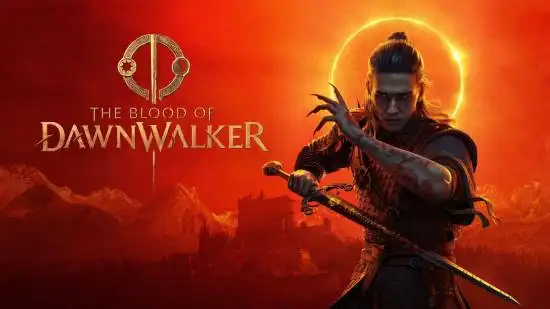
The Blood of Dawnwalker Is Out Now and Tops Steam's Best Sellers
The Blood of Dawnwalker tops Steam’s global best-sellers chart, excluding free games, after its official unlock. Led by
















In a forest of distinctly separated color blocks, the grass is a willfully saturated fresh green, the shadows of the trees pressing down like a foreground plate in an animated storyboard that’s just been lit. I have the samurai girl Mochiko stop on a small slope, holding her sword motionless. In that moment the background music is still gently tapping out a rhythm, but my vision has narrowed to just that patch of grass and the out-of-focus distance. My fingertip instinctively hovers over the screenshot key, and a familiar question arises in my mind: if I could, would I want to live inside this world?
Back to the game itself: Mochiko The Samurai is a 3D action RPG crafted solo by Syrian developer Rashad Asaad. It’s still in Early Access, and will soon arrive on Steam as a full release on April 10. It’s categorized as “Soulslike,” which means you can expect to read attack patterns, learn to roll and backstep, and endure the loop of getting up over and over again at bonfires. The difference is that it stitches dodges and combos together more tightly, with a tempo more like a sword dance that forces you to keep time. You control Mochiko, a samurai girl fighting to save her twin sister, who has been turned into a half-human, half-demon by a cult. The motivation is so straightforward you grasp it at a glance, yet strong enough to carry you through dying several extra times in unfamiliar dungeons.

On the action front, it goes for a clean, refreshing style. There’s none of that suffocating feeling of multiple layers of HUD piling up on the screen; instead it wants you to focus on the enemy’s wind-up, nail the roll timing frame-perfect, then tear open the gaps with your combos. Swordplay and magic share the same stage: you can bait out attacks with your positioning, then use ranged spells to cut off their HP bar. The rhythm feels like the air suddenly pressing down before a storm—thunder is guaranteed to strike next second; you just have to learn to swing your blade in that instant. The combat isn’t the flashiest sort, but it has a crisp, decisive texture. As you keep playing, you might catch yourself thinking: if I recorded this move as a GIF and posted it on my timeline, it’d actually look pretty good.

Visually, it clearly isn’t going for high-budget realism. It’s more of a compromise between indie cartoon and low-poly. The color blocks are laid out boldly, with somewhat hard edges, which in turn lends it a kind of “model toys arranged on a desk” warmth. When you’re hopping between blocky patches of water, the blue-and-white ripples are so simple they verge on abstract, yet you can’t help constantly adjusting the camera, trying to find an angle where you can see both the reflected sky and the character’s silhouette stretched out long. Level exploration includes dungeons, open wilderness, and little collectibles tucked into corners. Paths often suddenly open up into wide vistas as you turn a corner; in that moment you instinctively hold your breath, then slowly push the camera upward, letting the distant structures gradually emerge into view.

Beyond the visuals, what impressed me more this time is the audio. The full Japanese voice acting already fits very well, and Mochiko is voiced by former SKE48 member Yuka Nakamura, who mentioned in interviews that she deliberately tried to capture the character’s “pitiful yet dignified,” “conflicted yet gentle” feelings. In practice, her breathing, muttered lines, and the subdued cries when she’s hurt all bind closely to your inputs, as if stitching a little emotional tail to every successful dodge. When you’re quietly walking outside combat, the music retreats into the background, leaving enough blank space for footsteps and ambient sounds to spread out like a light mist, giving you the illusion of wandering through alleys in an old city after the rain.
From the perspective of “would I want to live there,” it’s not the kind of world that stuns you at first glance like an oil painting. It’s more like a stage still under construction: some areas already hung with lights, other corners still just bare backdrops. If you’re a Soulslike player used to the heavy, chilly tone of Dark Souls or Sekiro, you might find the colors and pacing in Mochiko The Samurai a bit lighter. But precisely because of that, it carries a more personal, intimate atmosphere you want to hold onto. Dungeon collectibles and tough enemies ensure you have enough reasons to “live” in it for a while, while the main story of saving your twin sister provides a small light—never too dazzling, but always on.
If you’re the kind of person who instinctively opens photo mode whenever you enter a new area, the current state of this world is already enough to deserve a spot on your wishlist. If you just want a new Soulslike to hone your dodge timing, you can wait until the full version launches on April 10, then check how the optimization and content additions turn out before deciding whether to move in for real. For me, it already qualifies as the kind of game I “want to keep revisiting certain scenes just to take screenshots of,” but whether it can become a place I’d “want to live in long-term” is something I’ll leave to the full release to answer.




Comments 0
We'd love to hear from you
Welcome! Share your take on this game — being first might come with a surprise.
No comments yet. Be the first!