News
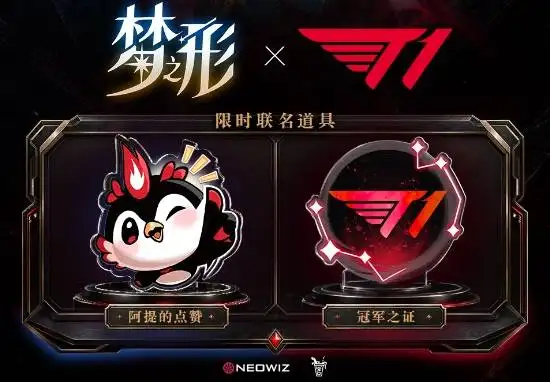
After 1 Million Sales, Shape of Dreams Teams Up With T1
Shape of Dreams is teaming up with T1 from June 9 to June 30, 15:00, letting players permanently unl
















That patch of enhanced red and blue on the eastern side of the Moon was originally nothing more than color differences in mineral composition captured by the lens. Yet in players’ eyes, it somehow grew into an unmistakably familiar silhouette: like the plumber from Super Mario who is always jumping, turning, and striking exaggerated poses. Moments like this are fascinating. It feels like a comedic shot that wandered into a space movie, suddenly giving serious astronomical imagery the warmth of pop culture. For that reason, it is hardly surprising that this lunar photo quickly went viral among gaming communities.

The broader context behind this wave of discussion is actually quite complete. According to the foreign media outlet everyeye.it, at 2:07 last night, the crewed spacecraft from the Artemis II mission had successfully returned to Earth, and during the mission it flew past the far side of the Moon, leaving behind historically significant footage. Coincidentally, at exactly this moment, another photo showing a “Mario-shaped outline on the Moon” began circulating repeatedly. As a result, the narratives of space exploration and gaming—like two parallel montage sequences—were casually edited together by netizens. With hype around The Super Mario Galaxy Movie also on the rise, the coincidence felt even more like a natural crossover of trending topics.
But on a deeper level, the fact that many people initially believed this image came from Artemis II itself says a lot about the current media environment’s preference for “drama.” Based on the available information, this photo was not taken during the mission, but was instead a work created last August on Earth by Ukrainian astrophotographer Ildar Ibatullin. He used a Sony a7s II camera and a GSO 150/750 telescope, and increased the saturation to highlight mineral differences on the Moon’s surface, which is why the entire lunar face appears in such distinct blue and red tones. From another perspective, what is truly astonishing is not that “the Moon looks like Mario,” but that scientific imagery, when processed appropriately, can evoke the audience’s instinct to automatically complete a character in their minds, almost like an animated storyboard.

From a compositional standpoint, this “Mario outline” is not the work of any single lunar mare performing solo, but rather the accidental result of several regions overlapping: the red patch at the top is Mare Tranquillitatis, the bluish central area is Mare Serenitatis, and below them lie Mare Nectaris and Mare Fecunditatis. These were originally just geological terms, but they have now been effectively renamed within player communities, like a collective act of fan reinterpretation. On a narrative level, this also reveals what is most remarkable about Mario as a character: he does not need to speak, nor even need to appear in a game. With only a profile-like outline, audiences can recognize him instantly. For a character to be remembered to that extent is, in fact, more convincing than any promotional slogan.

If we place this incident back into the context of gaming culture itself, it feels more like a reflection of a larger trend: classic IPs are moving beyond their original works and becoming public symbols, constantly transplanted into new settings like iconic shots from old films. To players, Mario has long been more than just a synonym for platforming mechanics; he is also a highly recognizable cultural icon. That is why the Moon photo was read as “Mario shaking his hips” rather than some other character. Behind that lies not only visual coincidence, but also the inertia of shared community memory. Unfortunately, amid all the excitement, a bit of factual discernment is still necessary—at the very least, one should distinguish which image came from a space mission and which came from a photographer’s post-processing expression. After all, a good anecdote should not be built on misinformation; and when science, imagery, and games happen to share the same frame, what proves most enduring is often precisely this kind of misunderstanding—romantic, yet in need of correction.
Comments 0
We'd love to hear from you
Welcome! Share your take on this game — being first might come with a surprise.
No comments yet. Be the first!