News
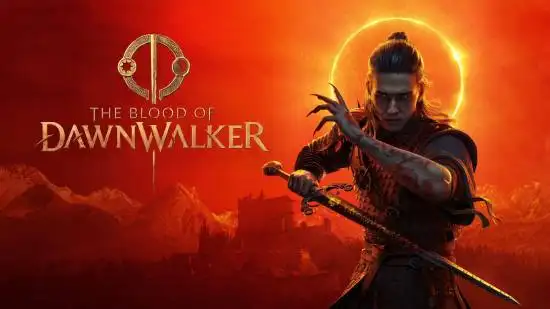
The Blood of Dawnwalker Is Out Now and Tops Steam's Best Sellers
The Blood of Dawnwalker tops Steam’s global best-sellers chart, excluding free games, after its official unlock. Led by















Much like many studios that grow from focusing on a single track to running multiple projects in parallel, the inside story about Naughty Dog recently supplemented by a former employee feels more like a shift in creative control; and Uncharted and The Last of Us, two series with distinctly different styles, happen to form the clearest contrast for this transition. For players across all platforms, this kind of change is nothing unfamiliar: when the same company makes two exclusives, one emphasizing gameplay rhythm and the other emotional oppression, the difference behind them is often not technological, but a change in creative priorities.

According to former employee Gabriel Betancourt, Naughty Dog went through a crucial power shift in the early 2010s. Amy Hennig had been the creator, writer, and director of the Uncharted series, and during the development of Uncharted 3, she was still the key decision-maker; Neil Druckmann and Bruce Straley were, at the time, more like important second-in-command figures on the execution side. At that stage, Naughty Dog followed a “design-first” philosophy, with small teams moving efficiently, and its overall approach was closer to the storytelling style of classic adventure films.

The turning point came after the success of Uncharted 2: Among Thieves. As Neil’s influence gradually increased, Naughty Dog began pushing the new IP The Last of Us, and the studio thus had two core creative directions existing at the same time: on one side, Uncharted, which was brisk, clear, and emphasized a sense of adventure; on the other, The Last of Us, which was heavier and more focused on the psychological tearing of its characters. Betancourt mentioned that there were intense discussions within the team at the time, even escalating into conflict, which also shows that Naughty Dog did not suddenly change its face, but slowly broke the original balance while operating on two fronts.
By 2014, Amy Hennig left Naughty Dog during the development of Uncharted 4, after which Neil and Bruce took over the project and made sweeping changes to the existing content. Based on what was revealed in the interview, Uncharted 4 did not just rewrite the story; even the character setups were reshaped, with Nathan’s brother Sam, for example, undergoing a notably different positioning. Compared with the early series’ cleanly driven, spectacle-led adventure structure, the later version clearly placed greater emphasis on character relationships, inner trauma, and emotional deconstruction. This shift becomes very easy to understand when compared with The Last of Us.

Viewed from another angle, this revelation also explains why many longtime players feel that Uncharted 4 is “still high in quality, but different in flavor.” It is not simply a straightforward sequel upgrade, but more like grafting The Last of Us-style character writing onto the framework of Uncharted; the final product remained polished, yet it had clearly grown distant from the series identity of the Amy Hennig era. Another interview segment also mentioned that while Neil was making the first The Last of Us, some of his ideas were once checked and balanced internally; but by the time of The Last of Us Part II, as the team expanded, this kind of opposition had noticeably diminished, making it easier for outsiders to interpret the further narrowing of the work’s style as the result of increasingly concentrated creative control.
From an industry trend perspective, many top-tier studios, after growing larger, shift from “a balance pulled together by multiple people” to “a more distinct authorial expression”; the former is often steadier, while the latter is more likely to produce both passionate supporters and intense controversy. The path Naughty Dog has taken in recent years is clearly closer to the latter. For player communities, this interview may not settle every debate once and for all, but it at least provides a clear frame of reference: from Uncharted 3 to Uncharted 4, and then to The Last of Us Part II, the changes were not accidental fluctuations, but part of a coherent creative trajectory. Whichever side of that style divide you prefer, it will probably now be easier to judge in advance whether Naughty Dog’s future games are to your taste.




Comments 0
We'd love to hear from you
Welcome! Share your take on this game — being first might come with a surprise.
No comments yet. Be the first!