News
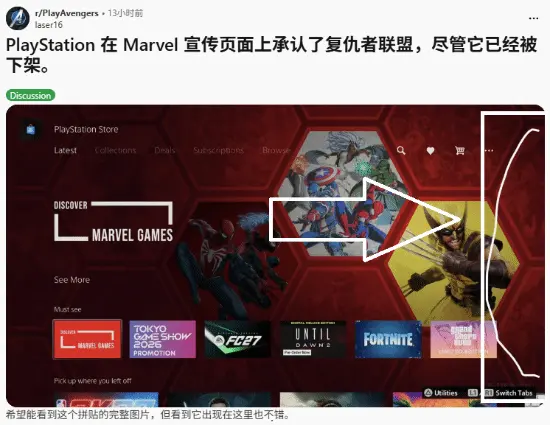
After 3 Years Offline, Marvel's Avengers Accidentally Appears on a PS Collection Cover, Sparking Debate
September 12 saw Marvel’s Avengers on a PS Store Marvel bundle cover—likely oversight—three years offline. Marvel’s Wolv














120 hours — I usually get the most hooked on collection-style events, and although this time it wasn’t gaming news, Nestlé turning a theft case into an ongoing storyline really did feel a bit like a sudden side quest in a JRPG escalating all the way into a world event. The protagonist, of course, was none other than the truck carrying 12 tons of KitKat chocolate — the same truck that had been stolen in Europe and then vanished entirely. What started as just a social news story was somehow kept alive by Nestlé from March 26 all the way to April 8, sustaining the buzz for 12 straight days. That sense of pacing felt exactly like a limited-time event with story chapters unlocking in phases.

What really pushed the topic into a new phase was a scene captured by a Canadian internet user: a red truck emblazoned with a giant KitKat logo driving down the highway, escorted the entire way by 4 black Cadillac SUVs. According to reports, this kind of 4-black-Cadillac-SUV escort setup is even the standard configuration for U.S. presidential travel. If you want to think of it as SSR-level treatment in the chocolate world, that works too. The visual impact was wildly over-the-top, and social media naturally exploded. Netizens from various countries immediately started debating whether this was an official stunt.

What made this marketing push especially smart, though, wasn’t just the spectacle — it was how it pulled users into the mission flow as well. The day before, official KitKat Canada accounts had already posted a security hiring notice and a statement, striking a dead-serious tone and declaring that they would “not take any more risks,” raising the suspense first. Then, after the stolen-chocolate topic started gaining traction, a Nestlé spokesperson picked up the joke in a very relaxed tone and even tossed out a clearly performative line like “this thief has great taste.” Right after that, the official side launched a batch code lookup tool, letting consumers enter the product code on what they had bought to see whether it was supposedly part of the “stolen batch.” At that point, it was no longer just watching a news story unfold — it had turned into an interactive side dungeon.

Viewed in the context of brand communications in recent years, this approach feels a lot like transforming an unexpected incident into serialized content that people can follow, participate in, and remix. Compared with posting a single announcement and calling it a day, Nestlé this time seemed more like it was running a global community meme, and at every step it knew exactly what kind of new stimulus to give players — or rather, netizens: first the theft setup, then the official meme-playing response, then the lookup interaction, and finally the upgraded escort spectacle to push the storyline to its climax. The millions of views weren’t accidental; it tapped right into the kind of “event-driven storytelling” that performs best on social media today.
That said, this isn’t a playbook just anyone can copy. The prerequisite is that the incident itself has to be memorable enough, and the brand also has to be willing to keep the ball in the air; otherwise it can easily end up like a half-finished side quest, just starting to get interesting before wrapping up hastily. Judging from this case, Nestlé at least proved one thing: in an environment where attention is becoming more and more fragmented, advertising doesn’t necessarily have to look like advertising. In fact, when it feels more like a hidden storyline that everyone can participate in, it spreads more efficiently. For anyone trying to do brand content, this is definitely worth studying; and for ordinary internet users, seeing a chocolate truck receive presidential-motorcade treatment has to count as one of the most entertaining industry memes in recent memory.




Comments 0
Share your game review
Join the discussion and share your review of this game.
No comments yet. Share your review.