News
The Blood of Dawnwalker Is Out Now and Tops Steam's Best Sellers
The Blood of Dawnwalker tops Steam’s global best-sellers chart, excluding free games, after its official unlock. Led by
















It’s blown up! This NVIDIA update is seriously aggressive! At exactly 21:00 on March 31, DLSS 4.5 officially arrived, and the core message can be summed up in three words: it’s even stronger. For PC gamers, this isn’t just an ordinary patch—it’s more like a full-on ultimate move on the graphics card stage, pushing both image quality and frame rates upward at the same time.

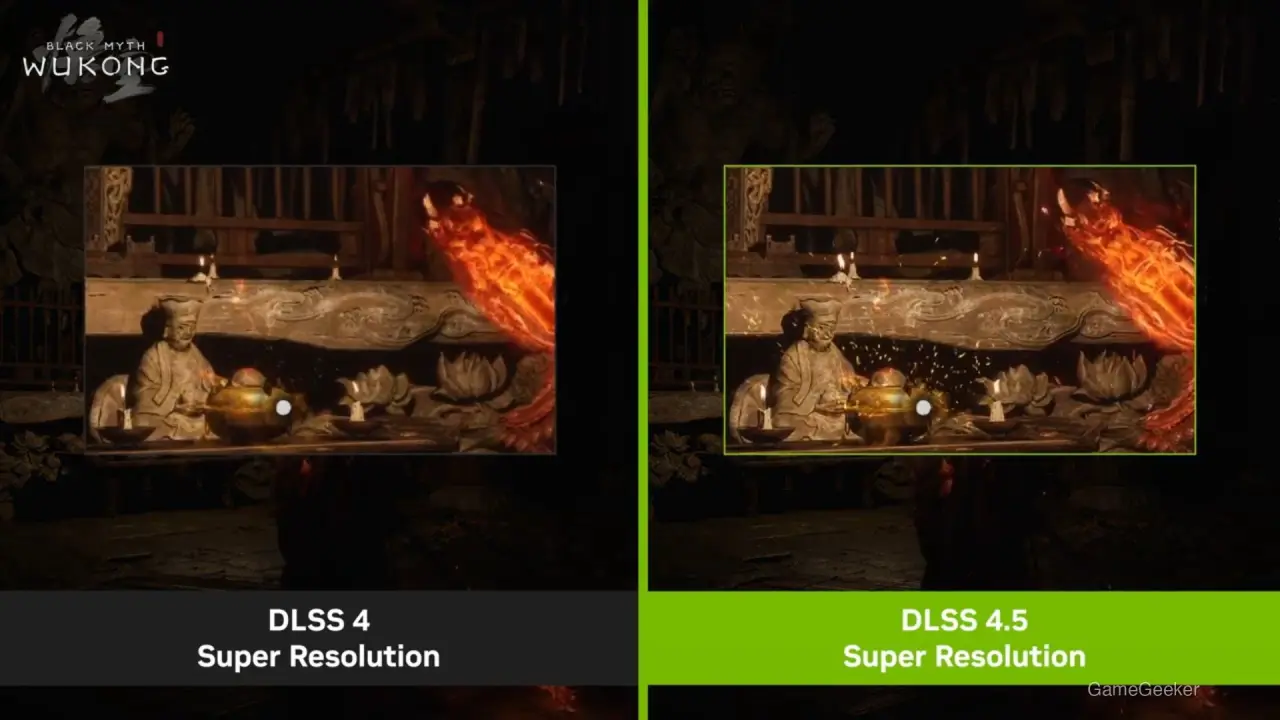
Here’s the key point: DLSS 4.5 brings three upgrades in one go—second-generation Transformer super resolution, 6x frame generation, and dynamic multi-frame generation. NVIDIA directly stated that the second-generation Transformer model delivers 5 times the compute power of the previous generation. The moment that number came out, you could tell they meant business. It’s still targeting the usual old problems—blurry visuals, jagged edges, motion ghosting—and now the goal is to wipe them out completely, making the visual experience after enabling super resolution much closer to native image quality.

What will really make players’ eyes light up, though, is the 6x frame generation. Previously, DLSS 4 topped out at 4x, meaning 1 native frame plus 3 AI-generated interpolated frames; now DLSS 4.5 jumps straight to 1 native frame plus 5 AI-generated frames, for a total output of 6 frames. The original line, “To put it simply in one sentence: image quality and frame rate are taking off,” honestly doesn’t feel exaggerated at all. Take the RTX 5060 as an example: if a game originally runs at only 30 FPS, then in theory, enabling 6x frame generation could push it straight to 180 FPS. Once you do that math, the livestream chat would probably fill with question marks.
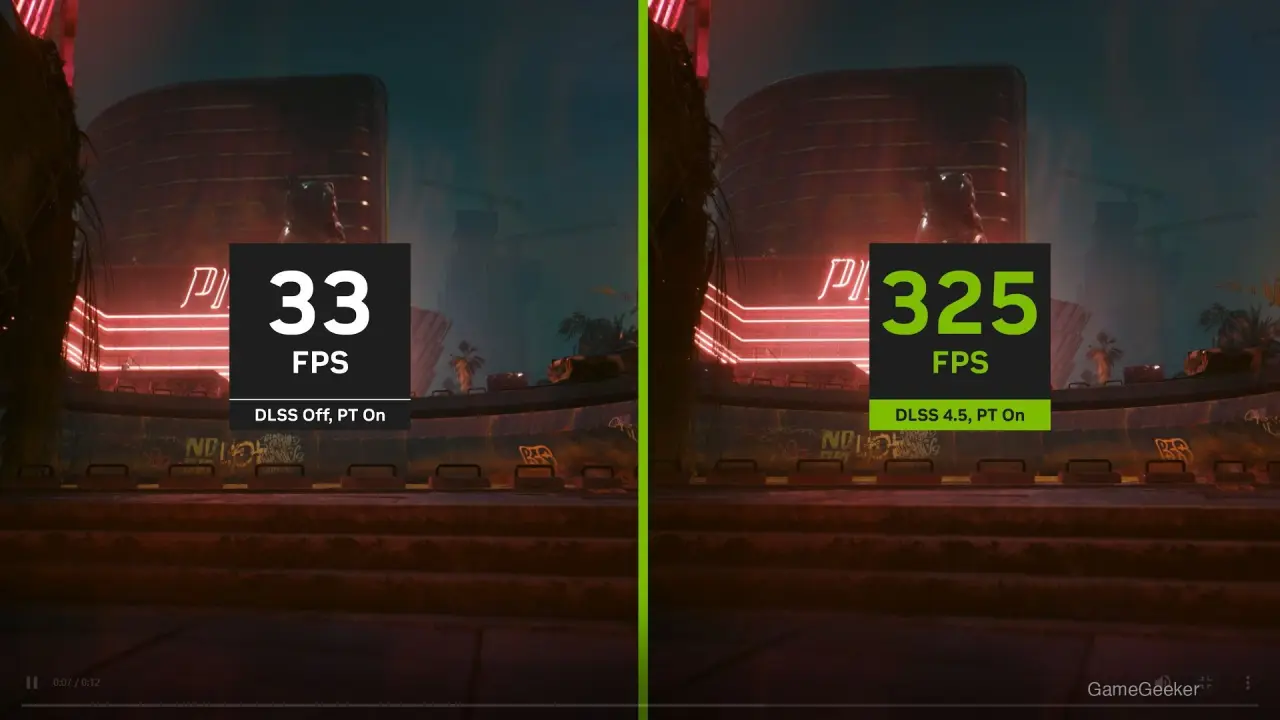
But! The smartest part this time is actually dynamic multi-frame generation. It doesn’t just lock the multiplier in place—instead, the GPU automatically adjusts the frame generation multiplier based on the monitor’s refresh rate. For example, when you’re exploring the map or watching story scenes, the system can switch itself to 2x; when you enter a complex combat scenario, it can ramp all the way up to the maximum 6x. It’s like a director frantically switching camera angles behind the scenes, pouring firepower wherever it’s needed most. NVIDIA also specifically mentioned that this is especially friendly for esports titles, because more stable frame rates may help reduce perceived latency and stuttering.
Next comes the compatibility issue players care about most, and this is something you absolutely need to look at carefully. The entire RTX 50 lineup is based on the Blackwell architecture and, with fifth-generation Tensor Cores, can fully support all DLSS 4.5 features; the entire RTX 40 lineup can use the second-generation Transformer super resolution model, but not 6x frame generation or dynamic multi-frame generation; as for RTX 30 and RTX 20, the entire lineup only supports the older basic DLSS super resolution model, with no access to the new Transformer model or frame generation. The segmentation this time is very straightforward: if you want the full experience, the entry threshold is RTX 50.
If you’re currently planning a new build, or struggling with whether to upgrade your graphics card, my advice is also pretty simple. If you mainly play high-refresh-rate competitive games, or care a lot about the benefits of new technology, then the appeal of the RTX 50 will be very obvious; if you already have an RTX 40, the second-generation super resolution model is honestly attractive enough, and the image quality improvement will still be noticeable; but RTX 20 and 30 users need to look at this calmly—this time, it’s more like watching other people show off through the screen. At the end of the day, DLSS 4.5 is no longer just about simple frame interpolation. It feels more like a signal that the AI graphics roadmap is continuing to accelerate, and future PC gaming performance may really be pushed into its next stage by it.



Comments 0
We'd love to hear from you
Welcome! Share your take on this game — being first might come with a surprise.
No comments yet. Be the first!