News
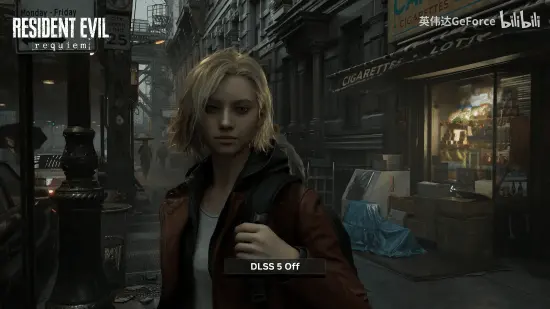
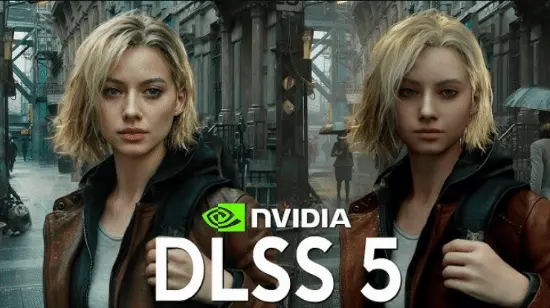
Did *Resident Evil 9*'s DLSS 5 go off the rails? Even Leon looks like a completely different person.
NVIDIA unveils DLSS 5; its stunning results wow audiences, but its AI-generated faces spark controve
















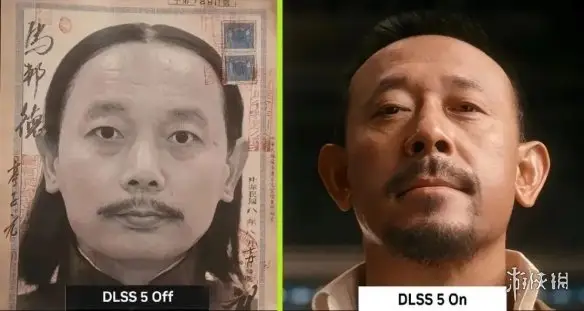
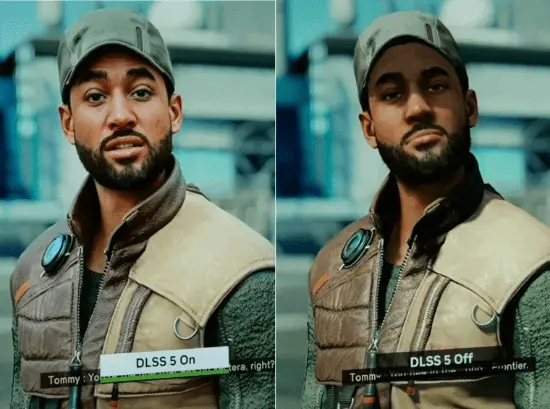
After 120 hours, as someone who wanted to turn over every last corner of Stray, my first reaction after watching NVIDIA’s recently released DLSS 5 demo wasn’t amazement, but a sense of dissonance. The DLSS everyone was familiar with used to feel more like a behind-the-scenes assist for boosting resolution and filling in frame rates; but this time, the biggest point of controversy among players is that it seems to be moving toward “AI actively altering the image.”

Judging from the demo and player feedback, the core criticism of DLSS 5 is not just that it makes the image clearer or motion smoother, but that even lighting, materials, and facial details seem to have been re-polished by the model. Put bluntly, it’s no longer just a convenient plugin that speeds up JRPG battles; instead, it feels a bit like putting a social media filter over an entire game. The skin looks brighter, but the flavor is easily lost.
The most meme-worthy example is still that comparison image of Stray on Reddit. That originally distinctive orange cat was jokingly dubbed by netizens as the “Taylor Swift version of a catgirl.” Of course it’s a joke, but what makes it funny is also very real: once AI starts “re-creating” on behalf of developers, a character’s original texture, expression, and atmosphere all get diluted. In some Japanese works especially, the charm of character portraits and the tone of scenes rely on a very delicate balance. Once everything gets uniformly airbrushed, it will likely all end up with the same plastic look.

On the combat system side, I can accept technology helping players maintain stable frame rates, because smoother performance is a very real improvement to the experience. But visual aesthetics aren’t numbers; “brighter, sharper, more realistic” does not automatically mean better. The artistic style of many games is like the crystal-themed variations in the FF series—their value lies in uniqueness, not in conforming to a single standard answer. What players are worried about now is precisely that DLSS 5 may slowly grind the visual language of different works into one template.

I’ve always been obsessive when it comes to collecting, so I especially understand that fixation on preserving the original flavor. Players complete collections, build screenshot galleries, and study scene details because they want to experience the exact design developers originally placed there. If display technology starts significantly rewriting those elements, then it is no longer just serving performance—it is intervening in creation itself. And unfortunately, once that line is crossed, the controversy will only grow.
As for side quests, this incident can also be seen as a test of the industry’s direction. After NVIDIA released the DLSS 5 demo, the discussion shifted from “can it give us more frames” to “can you accept AI putting makeup on games.” That shows the focus of the player community has changed, especially among people who are sensitive to aesthetics and value the original work’s expression—they will be more wary of this kind of AI repainting.
My view is very clear: if DLSS 5 is just an option, then fine—people who want to turn it on can turn it on; but if in the future “AI repainting” is packaged as progress by default, then I will strongly resist it. Technology should be like the speed-up button in a great turn-based game, helping you experience the work more smoothly, not like an out-of-control summon beast that directly changes the work itself. Can you accept visuals like those in Stray being reshaped by AI?
Comments 0
We'd love to hear from you
Welcome! Share your take on this game — being first might come with a surprise.
No comments yet. Be the first!