News
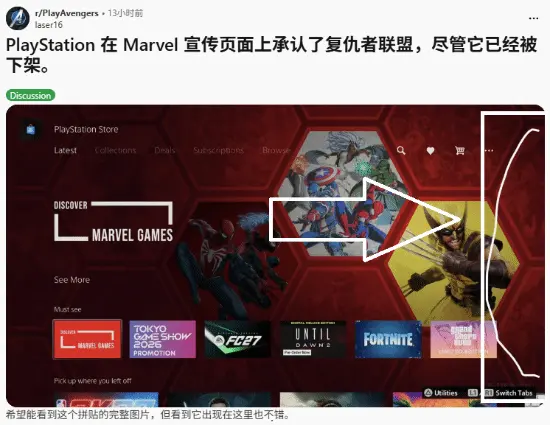
After 3 Years Offline, Marvel's Avengers Accidentally Appears on a PS Collection Cover, Sparking Debate
September 12 saw Marvel’s Avengers on a PS Store Marvel bundle cover—likely oversight—three years offline. Marvel’s Wolv















OpenAI's latest image generation model, GPT-Image-2, has officially launched, targeting one of gaming's most labor-intensive bottlenecks: UI design and character card creation. Traditional workflows require repeated coordination between artists, designers, and programmers. Now a single prompt can generate finished interfaces with complete text information—a strategic advantage for indie studios working with tight budgets.

One blogger used the model to generate The Witcher 3-style character introduction cards for Yennefer and Triss, complete with skills, status effects, and backstory—all cleanly formatted with legible text rendering. Previous AI art tools struggled with this: fonts would distort or logic would break down. GPT-Image-2's core breakthrough lies in embedding reasoning capabilities into the image generation process, allowing it to understand complex prompts with far greater precision than earlier models. You can describe game mechanics in natural language, and it translates directly into visual output.
The real value here isn't replacing artists—it's accelerating prototype validation. When designing a new class system or equipment interface, you can preview rough layouts without waiting for art assets, enabling rapid iteration. Another blogger generated Jin Ping Mei-themed classical Chinese game visuals and a "Black Myth: Lin Chong" demo, both delivering strong visual impact that's difficult to replicate in other tools.

But commercial-grade content demands more than aesthetics—it requires copyright compliance, style consistency, and editability. AI-generated assets still occupy legal gray areas, especially derivative works involving existing IPs. These models typically produce one-off images; subsequent adjustments require regeneration or manual editing, creating non-trivial workflow integration costs for long-term projects.
AI tools are shifting game development's barrier from "can you do it" to "do you want to do it." Indie developers can achieve visual presentation on smaller budgets, while larger studios may focus on optimizing existing pipelines rather than full AI dependency. GPT-Image-2 shows massive potential for infographics, concept art, and marketing materials, but production-level integration still requires solving copyright, controllability, and team collaboration challenges. For strategy-minded developers, this is a tool worth positioning for early—just don't expect it to replace your entire art team overnight.



Comments 0
Share your game review
Join the discussion and share your review of this game.
No comments yet. Share your review.