
News
Grab two free PC games before Epic's clock runs out, while Undertale and Divinity: Original Sin 2 are 75% off
Astral Ascent and LUFTRAUSERS are free to keep today, while two of PC gaming's most celebrated RPGs cost less than $14 c












Overwatch has had a Play of the Game system since 2016, automatically picking a match highlight and showing it to everyone in the lobby at the end of each round. In late March 2026, that old feature suddenly became the source material for a new editing craze after Bilibili creator Beibei Bushi Henxing posted clips that cut those hero close-ups into anime scenes, movie shots, mini-game story beats, and everyday comedy videos. The trend, widely nicknamed the "shenren transition," says something larger about why this game is still culturally alive: not because Blizzard pushed a new update, but because players found a new way to reuse what had been sitting there for a decade.
What made the format click was never technical difficulty. It was timing, and recognition. Those few seconds of hero posing before the Play of the Game had existed for years as background decoration, something most players treated as part of the match-end package. In spring 2026, the community started treating them as a reusable visual library instead. Once you look at it that way, the whole boom makes sense.

The earliest wave mostly used absurd player IDs as the punchline setup. Then Beibei Bushi Henxing widened the format by linking Overwatch hero close-ups to mini-game story clips, anime footage, film scenes, and slices of everyday internet comedy. After that, short-video platforms filled up fast. Different schools of the format appeared almost immediately: some creators chased pose-to-pose visual matches, some built transitions around narrative logic, and others pushed toward something more abstract and stream-of-consciousness. Viewers joined in too. Compilation videos built around "watch a whole batch of Overwatch shenren transitions at once" started circulating, and comment sections turned into guessing games over which hero animation each cut came from.

That wider context matters more than the meme itself. Similar "game character animation plus unrelated video" transitions are not unprecedented, and some players had even used this kind of edited storytelling before as a way to show off their relationships. What is different here is the scale and the fit. Overwatch's Play of the Game system has been supplying hero close-ups for years, while the community has spent just as long stockpiling memes, misheard voice lines, and reaction images. By the time this format hit, the raw material was already everywhere.

That also explains why this 2026 Overwatch "renaissance" feels different from 2016. Back then, the game broke into the mainstream on the strength of the game itself. It won TGA Game of the Year and reached 50 million in cumulative sales. That was official momentum, clearly directed and easy to follow. The spring 2026 surge works in almost the opposite way. It is not being driven by a new version, and it is not the result of some especially clever planning push. The heat comes from players taking old material, breaking it apart, recombining it, and sending it back through the culture. Once players start treating a game as creative raw material, the nature of the thing changes.
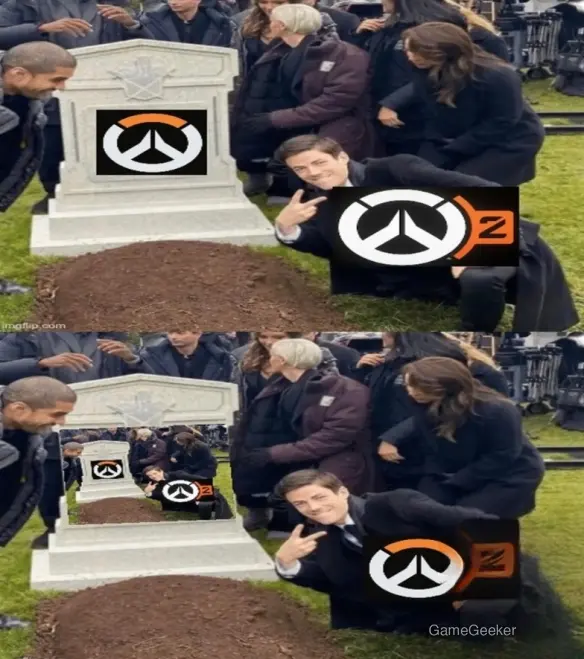
It also helps explain why official attempts to "join the joke" often land flat. The article notes that earlier this year, the official account posted a New Year greeting on social media built around a Soldier: 76 meme, clearly trying to speak in the community's language. The response in the comments was tepid. The problem is not that players reject old jokes. It is that they do not want to be told when to laugh. They would rather discover a new path through familiar ground on their own. And Overwatch, after years of community accumulation, still has an unusually dense stockpile of usable material waiting to be remixed.
If you are a returning player, this wave is worth following because it offers something more useful than patch-note relevance: a way back into an old game through its community language. If you have never touched Overwatch, it is better not to read this as proof that the game itself is suddenly "back." It looks more like a concentrated burst of community creativity. That is the real takeaway here. For older live-service games, longevity depends not just on update cadence, but on whether players still want to dig through the leftovers, recombine them, and keep making new jokes. This time, Overwatch broke out again for exactly that reason. Player-driven remix culture can keep a game alive more effectively than official meme management ever will.




Comments 0
Share your game review
Join the discussion and share your review of this game.
No comments yet. Share your review.