
News
Grab two free PC games before Epic's clock runs out, while Undertale and Divinity: Original Sin 2 are 75% off
Astral Ascent and LUFTRAUSERS are free to keep today, while two of PC gaming's most celebrated RPGs cost less than $14 c
















Multiple leakers, including comments on the Broken Silicon Podcast, say Sony is targeting 2027 for both the PlayStation 6 and a handheld PS6 model. The claim is that the handheld would ship with 24GB of memory, while the home console would have 30GB. Sony has not officially announced any of this.
This gets a 7 out of 10. The report still sounds like a pitch deck in leak form, but at least this version is more convincing than the usual fantasy hardware talk. The most important line here is not the claim of three times Nintendo Switch 2 performance, and it is not the comparison to Intel Panther Lake. The part that actually matters is Moore’s Law is Dead saying on the Broken Silicon Podcast that the memory gap between the PS6 handheld and the main console is under 30%. If that is true, Sony may finally avoid splitting its next platform into two incompatible worlds.
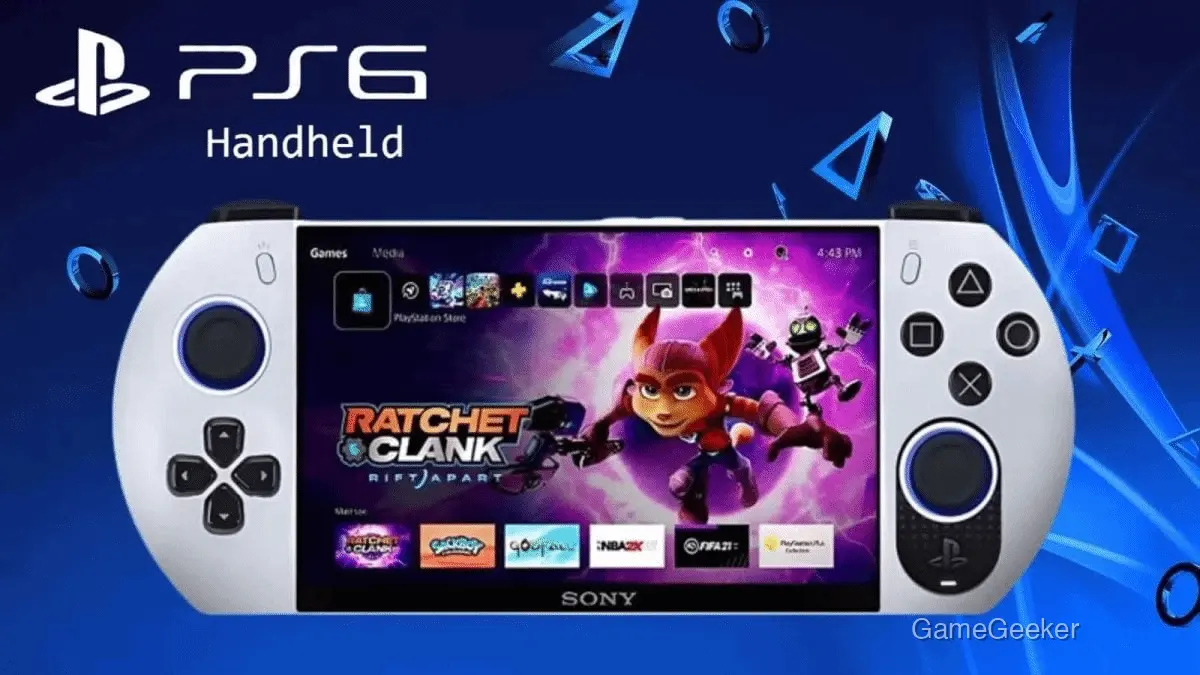
Anyone who has followed console generations knows the real problem with tiered hardware is not that one device is weaker. It is when the gap lands in an awkward middle ground that keeps dragging development down. Xbox Series S and Xbox Series X have been the go-to example for years because the VRAM difference is roughly 60%, and developers often have to optimize separately for the lower-end machine. If a team is building large environments while also cutting textures, scaling back effects, and reworking memory budgets for one specific SKU, that is not elegant platform design. It is extra labor forced downstream.
By comparison, 24GB versus 30GB is still a manageable split. According to the leak, developers could use automated systems to load the appropriate textures and assets for each device. In practical terms, that means the resource pipeline would be planned properly at the system level instead of being patched together two months before launch. If Sony can actually deliver that, this handheld would not occupy the same strange space as the PS Vita, which looked adjacent to the home console business but often felt like a side branch instead of a true extension.
I am keeping my usual level of skepticism toward the “three times Nintendo Switch 2” line. No matter how bold the specs sound, the real test is still power draw, thermals, battery life, and the system-level compatibility strategy. Another leak says the handheld could match Intel Panther Lake performance at half the power, but even that only matters if the software side is handled correctly. A handheld is not a desktop box, and Sony cannot assume developers will simply work around every constraint. If it really wants the PS6 handheld and the main console to coexist, the porting process has to feel almost as seamless as loading a save file. Otherwise, third-party studios will be the first to push back.
As a broader trend, the idea is not hard to believe. PC handhelds have already done a lot of the market education over the past two years, and Nintendo is still moving steadily into its next hardware cycle. If Sony steps in now, it is obviously not doing it to revive PSP nostalgia. The goal would be to reconnect the living room and portable play inside one ecosystem. That direction makes sense. The real question is whether Sony is willing to support the software side consistently for more than three years.
If you are already waiting for new hardware, the advice is simple: do not celebrate early, and do not panic about your wallet either. Sony has not formally announced any of these plans, and everything here remains unconfirmed leak information. Wait until the actual device, system strategy, launch lineup, and battery life are all on the table before deciding whether it is worth buying. That is still the right level of caution for anyone who has been around since the PS1 era.





Comments 0
Share your game review
Join the discussion and share your review of this game.
No comments yet. Share your review.