News
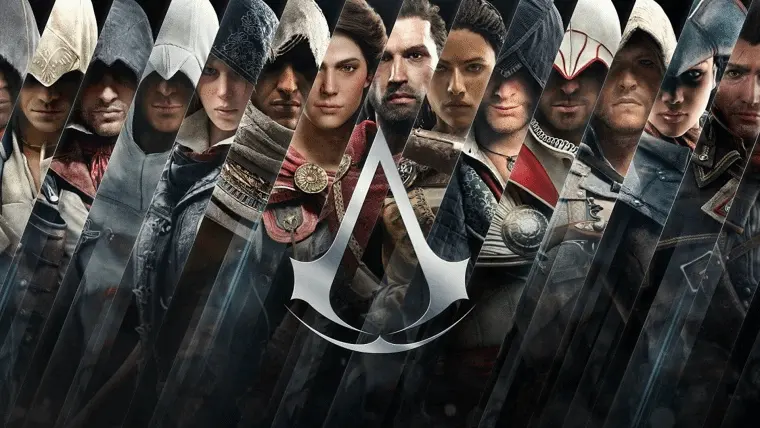
Assassin's Creed: Invictus playtest bombs as Ubisoft's multiplayer project draws harsh criticism
Ubisoft's unannounced multiplayer project received disastrous feedback in closed testing, with indus
















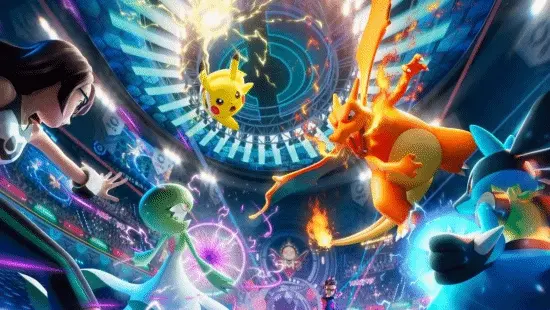
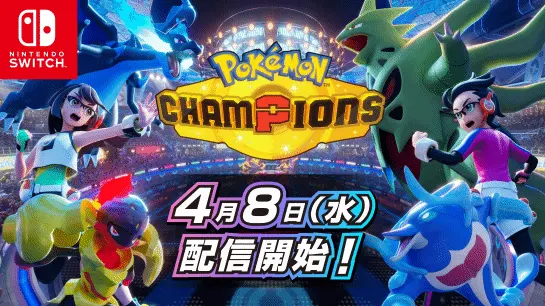
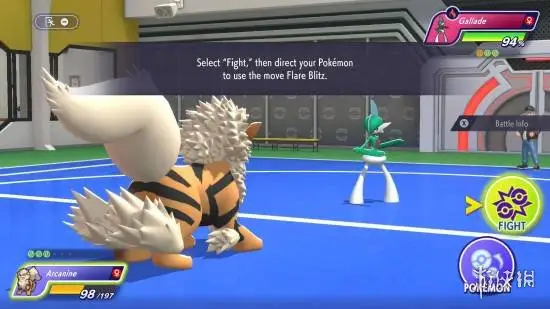
Compared with the late-game battles of traditional mainline Pokémon titles, Pokémon Champions was supposed to feel more like a game that lowers the barrier to entry while delivering a purer competitive experience; yet judging from feedback within 12 hours of the Switch version’s launch, its debut went in the exact opposite direction. The developers positioned it as the future direction of Pokémon competitive battling, but the community quickly responded with overwhelmingly negative reviews. That contrast was even more glaring than many botched cross-platform launches. For players who spend years grinding ranked, following rulesets, and studying team composition, the most fatal issue with the launch version is not simply the lack of content, but that the “room to play” has been shrunk along with it.

First, look at the roster restrictions. At launch, this game includes only 186 Pokémon, covering the initial roster from all nine generations; compared with the massive battle pools players are used to across past entries, that scale is far too small to sustain healthy metagame shifts. Even more immersion-breaking is that the game only supports fully evolved Pokémon, with Pikachu as the sole exception; this may seem convenient for balancing on the surface, but in practice it directly wipes out many team-building ideas. Mega Raichu, which appeared in the trailer, also cannot be unlocked in the launch version because the Mega Evolution item has not been implemented. This gap between promotion and actual release content will quickly drain player trust.

If you compare it with mature competitive games, the completeness of the ruleset is often more important than the number of characters; yet Pokémon Champions continues cutting back on core items and battle formats. Common competitive items such as Life Orb, Choice Band, and Choice Specs are missing, and official tournaments are still disabled, which is effectively the same as stripping away the framework behind many standard strategies. Private room battles are also limited to 3-on-3 singles and 4-on-4 doubles, with no full 6v6 option. It is like making a training mode for fighting game players but not letting them arrange matches under the full ruleset—the depth of discussion naturally suffers.

From another angle, the system experience has also failed to salvage its reputation. The game has BUGs such as abnormal move behavior during matches and classic moves not functioning properly. Problems like these might be somewhat masked by content hype in a more casual title; in a product built around competition, they are direct flaws that affect win-loss judgment. More troubling still, the training process is extremely cumbersome. Players have to earn Victory Points through ranked matches before they can adjust stats, change moves, or swap appearances, and even catching Pokémon is tied into this loop. The result is that it already takes quite a bit of time just to build one usable Pokémon, and the cost of assembling a full team is pushed very high.
There is also one detail that says a lot about the community mood: some players have even complained that the game does not offer an in-app purchase option to skip the grind. That sounds sarcastic, but the message behind it is very clear—not that players want to spend money, but that the current progression process has become so exhausting that they would rather pay to save time. By contrast, what a competition-focused product should really do is lower the cost of experimentation and encourage frequent team changes, not turn team building into repetitive labor before battles even begin.
From a purchasing-advice perspective, if you just want to try out Pokémon’s new battle platform, it may be better to wait and see for now; if you were already treating it as the main platform for official tournaments, then the launch version is clearly not up to standard. Future updates may well add content, improve the rules, and fix BUGs, but ruining first impressions within just 12 hours of launch among the competitive community is a cost that is often harder to repair than the patch itself. At least at this moment, Pokémon Champions feels less like the starting point of the future and more like a test server pushed out in haste.
Comments 0
We'd love to hear from you
Welcome! Share your take on this game — being first might come with a surprise.
No comments yet. Be the first!