News
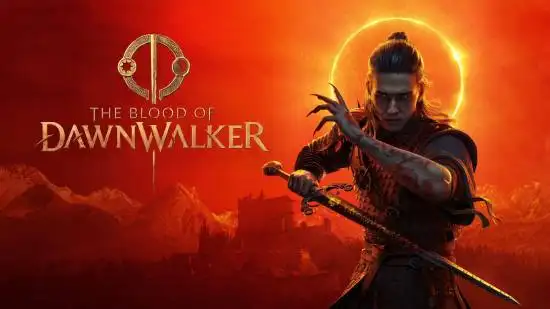
The Blood of Dawnwalker Is Out Now and Tops Steam's Best Sellers
The Blood of Dawnwalker tops Steam’s global best-sellers chart, excluding free games, after its official unlock. Led by
















What moved me first was not the spec sheet, but that image of the girl in blue standing in a sci-fi space. She stands alone at the center of a cold-toned world, as if pressing six years of waiting into her silhouette, and it also gives Pragmata’s April 17 release date a little more of the feeling of reuniting with players. For those who have long cared about characters and atmosphere, this feeling of “finally, you’re here” really does feel like meeting an old friend who has been late for far too long.

First, the facts: Capcom has now officially confirmed that Pragmata will launch simultaneously on all platforms on April 17. It is a brand-new original IP that Capcom has poured a great deal into, but players have waited six years for it, with multiple delays along the way. Delays naturally wear down patience and can even make people feel a little conflicted, but if what finally arrives is truly complete, then at least it shows they were not in a rush to turn in a half-finished product.
As for the characters, the information revealed so far is still fairly limited, so I will not force praise about the depth of the story. But judging from the tone of the newly released footage, it is clearly leaning toward a more immersive, colder sci-fi style of expression. In particular, details like the rainy cyber city nights, illumination from electronic screens, and reflections in puddles on the ground all manage to establish a real emotional mood. For me, the biggest fear with sci-fi works is when they are full of worldbuilding but devoid of humanity. If Pragmata can truly write this sense of visual loneliness into the fate of its characters, then it has a real chance of striking people emotionally.

What impressed me was that this presentation did not stop at the shallow level of saying it “supports ray tracing,” but directly emphasized upgraded path tracing rendering. Simply put, ordinary ray tracing is more like adding extra lights to a scene, while full path tracing is more like reorganizing the entire world’s relationship between light and shadow, making street neon, vehicle reflections, screen lighting, and puddle reflections conform more closely to physical logic. The difference is not just that things look brighter; it is that the image finally starts to “breathe.”

But what pulled me out of it was that the stronger the realism, the more direct the hardware burden becomes. The test platform in the article used a Ryzen 5 9600X, a Gigabyte X870E AORUS ELITE X3D motherboard, a Gigabyte RTX 5080 MASTER 16G graphics card, and 32GB of DDR5 6400MT/s dual-channel memory. That setup is already very high-end on its own. Under 4K full path tracing with frame generation turned off, the measured frame rate was only about 37 fps; only after enabling DLSS 4 Multi Frame Generation at 4× did it reach 125 fps. In other words, the stunning visuals this time are indeed beautiful, but they are also definitely not the kind of beauty that just anyone can fully enjoy with ease and no pressure.

If you care more about buying advice, I will put it more directly: if you want the full path tracing experience on PC, you should really be aiming at the high-end GPU tier, and DLSS 4 is almost no longer just the “icing on the cake,” but an essential pillar of the experience. In the tests, at 4K with path tracing off and only standard ray tracing enabled, native performance was 77 fps; with Multi Frame Generation on, it broke past 150 fps at 2× and reached 264 fps at 4×. At 2K with path tracing, performance rose from 66 fps to 204 fps, and under standard ray tracing it could even climb to 339 fps. In other words, if you are not obsessed with maxed-out 4K, then 2K resolution is actually a much more comfortable way to experience the game right now: it preserves the atmosphere without letting performance anxiety take over.

From a broader trend perspective, Pragmata feels more like a signal this time: new AAA sci-fi titles are no longer satisfied with merely “looking premium,” but want to use path tracing and AI frame generation to truly push cinematic presentation into a playable form. Capcom has taken a very aggressive step here, and NVIDIA’s DLSS 4 has also been placed in a very central role. What I care about most now, however, is no longer how many frames it can run at, but whether, when I actually get my hands on it on April 17, its characters, dialogue, and emotional arcs can live up to this beautiful exterior. After all, to me, visuals are like an exquisite face, while the story and the characters are what determine whether you are willing to keep loving someone.



Comments 0
We'd love to hear from you
Welcome! Share your take on this game — being first might come with a surprise.
No comments yet. Be the first!