News
The Blood of Dawnwalker Is Out Now and Tops Steam's Best Sellers
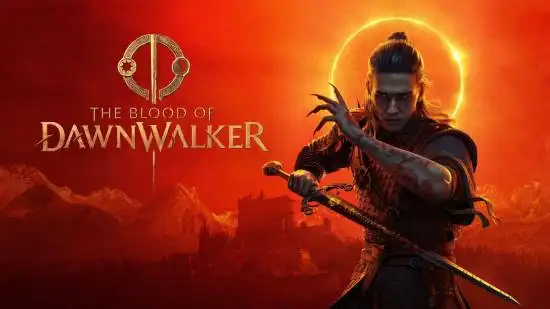
The Blood of Dawnwalker tops Steam’s global best-sellers chart, excluding free games, after its official unlock. Led by
















As launch approaches, the controversy around the RTX effects in Pragmata has generated more buzz than the gunplay and puzzle-solving themselves. As a sci-fi third-person shooting adventure game developed and published by Capcom, it centers on combining hacking-based puzzles with traditional shooting, and what originally stood out most was its cold, oppressive, slightly cyber-flavored spatial atmosphere. Now Nvidia has released comparison images with ray tracing and path tracing enabled. The intention was clearly to show off the technology, but Kotaku’s verdict was blunt: in some scenes, turning on RTX doesn’t feel like an upgrade at all—it feels more like washing away a layer of the original artistic identity.

At the heart of the controversy is actually a simple issue. Players are not against new technology—they are against “technical correctness” overriding artistic expression. Nvidia’s argument is that the shadows and reflections are more accurate, but Kotaku believes those comparison shots lose depth and contrast, making the whole image look grayer and whiter, with the original emotional tension diluted. Especially in enclosed environments like a space station, darkness, localized lighting, and strong contrast are part of the storytelling. Once everything is uniformly brightened, that sense of danger and the unknown quickly falls apart.

From the perspective of FPS and action game players, this issue is even more practical than whether it “looks good” or not. In a shooting adventure game, lighting is not just decorative background dressing—it directly affects enemy recognition, scene guidance, and the sense of combat pressure. If path tracing makes certain areas look more realistic but disrupts the carefully arranged visual focal points, then the information players receive can actually become more chaotic. In theory, ray tracing and path tracing do indeed bring more realistic reflections and shadows, but if they are simply applied to existing scenes without retuning them for the game’s art style, the result may be: “more realistic, but less fun.”

This is also a trap that many AAA projects fall into today: mistaking “higher specs” for “higher polish.” Kotaku put it rather sharply: “These images actually look worse. They not only lose depth and contrast, they also look gray, washed out, and even a little ridiculous.” It sounds harsh, but it points to an old problem in the industry—technical showcases often serve GPU marketing, but not necessarily the game itself. Especially for a title like Pragmata, where atmosphere drives exploration and combat pacing, once the language of light and shadow is rewritten, what players feel at first glance is not an upgrade, but a break in immersion.

For players considering buying it, my advice is straightforward: don’t treat RTX as the main reason to buy this game. First, wait to see whether the final version offers sufficiently detailed graphics options, and how the game actually looks across different modes. If immersion and the original artistic atmosphere matter more to you, then at launch you can absolutely prioritize impressions of the game with some of the higher-end ray tracing effects turned off. If you’re more of a hardware enthusiast, then compare for yourself whether “realistic lighting” or “artistic style” suits your taste better. Pragmata will launch on PC, PS5, and XSX on April 17, and on Switch 2 on April 24. In the end, what determines its reputation will not be how accurate the reflections in promotional screenshots are, but whether it can find its own rhythm between gunplay, puzzle-solving, and sci-fi atmosphere.

At the end of the day, this controversy is a reminder for players: visual technology has never been a multiple-choice question with only one right answer, and realism does not automatically mean sophistication. The poll at the end of the article already laid the issue bare: on one side, “It is indeed more realistic—it’s technological progress”; on the other, “It’s actually worse and damages the original style.” If I had to take a side first, I’d choose the latter, because what action shooting games fear most is not being not bright enough, but not being precise enough.




Comments 0
We'd love to hear from you
Welcome! Share your take on this game — being first might come with a surprise.
No comments yet. Be the first!