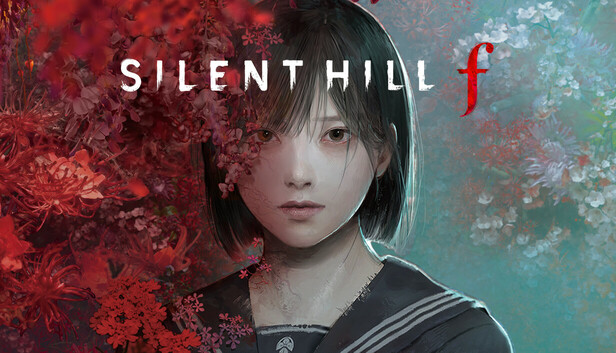
 SILENT HILL f
Popular PicksView All
123456789101112
10 Best Short-Level Precision Platformers for Focused Movement Practice
10 Best Single-Player Underwater Adventure Games
10 Best Fantasy Shopkeeping Games for Crafting and Trading
10 Best Single-Player Escape-Room Puzzle Games
10 Best Sokoban Games with Creative Twists
10 Best Programming Puzzle Games in 2026: Visual Logic, Bots, and Assembly
10 Best Railway Network Management Games in 2026
10 Best Single-Player Photography Exploration Games in 2026
10 Best Single-Player Monster Taming Games in 2026
10 Best Immersive Sim Games on Steam (2026)
7 Best Time-Loop Mystery Games for Exploration, Dialogue and Deduction
7 Best Fictional Language Deciphering Puzzle Games in 2026
Popular Games LikeView All
Games Like PowerWash Simulator - 12 Best Relaxing Cleaning and Restoration PicksGames Like Dave the Diver - 12 Best Diving, Cooking and Systems-Stacker PicksGames Like Road to Vostok - 12 Best Hardcore Survival Shooter PicksGames Like Path of Exile 2 - 12 Best Action RPG and Loot PicksGames Like Clair Obscur: Expedition 33 - 12 Best Turn-Based RPG PicksGames Like R.E.P.O. - 12 Best Co-op Horror PicksGames Like PEAK - 12 Best Co-op Climbing and Survival PicksGames Like Slay the Spire 2 - 12 Best Roguelike Deckbuilders to Play NextGames Like Mina the Hollower - 12 Best Top-Down Action and Zelda-Like PicksGames Like Baldur's Gate 3 - 12 Best CRPGs and Turn-Based RPGsGames Like Monster Hunter Wilds - 12 Best Co-op Hunting and Action RPG PicksGames Like Hollow Knight: Silksong - 12 Best Metroidvania Picks (2026)Games Like Final Fantasy VII Rebirth - 12 Best Action RPG & JRPG PicksGames Like Dead by Daylight - 12 Best Asymmetric & Co-op Horror PicksGames Like Forza Horizon 6 - 12 Best Open-World Racing & Driving Picks (2026)Games Like 007 First Light - 12 Best Stealth and Spy GamesGames Like Solarpunk - 12 Best Cozy Survival and Crafting GamesGames Like Subnautica 2 - 12 Best Underwater and Alien-World Survival GamesGames Like Lies of P - 12 Best Soulslikes to Play in 2026Games Like Hell Let Loose - 12 Best Tactical Milsim Shooters
Popular ReviewsView All

Mina the Hollower — Review
Clair Obscur: Expedition 33 — Review

Schrödinger's Call — Review

Resident Evil Requiem — Review

Shift At Midnight — Review

Mixtape — Review
Middle-earth™: Shadow of Mordor™ — Review

The Mermaid Mask — Review

MOLE — Review

Desktop Explorer — Review

Mad Max — Review

Go-Go Town! — Review

Dead as Disco — Review

Crushed In Time — Review

Beastro — Review

Moonlight Peaks — Review
Has the graphics in *Silent Hill f* finally turned things around? Has PSSR 2.0 finally made up for its shortcomings?
Since the PS5 Pro launched, opinions about it have remained divided, and this update to Silent Hill f effectively brings the question back to the software level. Objectively speaking, after PSSR was upgraded to 2.0, this title’s performance on PS5 Pro has finally come close to what the hardware should have been delivering in the first place.

Silent Hill f did not make a strong first impression on PS5 Pro. Although the machine is more powerful, the early upscaling solution came with obvious side effects, including flickering, unstable model edges, texture shimmer, and the ghosting issue players cared about most. In a horror game, flaws like these are amplified even further by the atmosphere, especially in high-frequency detail environments such as foggy streets and woodland areas, where the image looked as if it were covered by an unstable filter, far from premium in presentation.
What has changed now is not just the usual minor patchwork. Reports have already made it clear that "the latest PSSR 2.0 is not merely a slight optimization, but a rewritten reconstruction algorithm." Judging from the results, that assessment largely holds up. Previously, moving grass and leaves would easily blur into pixelated blobs, but now their structure can be identified far more consistently; the earlier issue of almost constant flickering in indirect lighting has also nearly disappeared. Distant textures are rendered more clearly as well, without introducing obvious edge jitter.

From a design perspective, the core value of this upgrade is not just that still screenshots look better, but that dynamic clarity has finally caught up. PSSR 2.0 uses more efficient inter-frame data reuse, directly improving stability during motion. For a game like Silent Hill f, which relies heavily on atmosphere, lighting, and mid-to-long-distance visual observation, dynamic image quality matters more than single-frame sharpness. That is why, once ghosting and flickering were fixed, the overall visual texture saw such a noticeable leap.
More importantly, the comparison itself has changed. The current PS5 Pro image quality in 60fps mode is already clearly superior to the standard PS5’s 4K output in 30fps quality mode. That means the Pro version is no longer just an alternative with "higher frame rates," but is beginning to show a genuine visual-quality advantage. It is like a second-generation product finally closing the launch gap after its firmware matures—only at this point is the hardware’s value truly being unlocked.
This also offers something for potential buyers to consider. If you are already in the PS5 ecosystem and are particularly sensitive to atmosphere-heavy titles like Silent Hill f, then the PS5 Pro version’s value for money is starting to recover; if you were holding off solely because of PSSR’s reputation at launch, now is a good time to reassess. Conversely, this improvement also highlights a reality: what drew criticism when the PS5 Pro launched was not entirely the hardware itself, but the lack of maturity in the supporting algorithms. After Alan Wake 2, Silent Hill f has once again proven that point.
Overall, PSSR 2.0 feels more like the first truly meaningful completion of the PS5 Pro. It does not change the game’s content itself, but it corrects the key weak points that were dragging down the baseline experience. For players, that is more practical than a simple spec bump; for Sony, it is also a reminder of an industry truism—if high-end hardware wants to establish itself, the software stack has to keep pace.
SILENT HILL f On saleAlan Wake
 SILENT HILL: Townfall
 On saleSILENT HILL 2





Comments 0
Share your game review
Join the discussion and share your review of this game.
No comments yet. Share your review.