
News
Grab two free PC games before Epic's clock runs out, while Undertale and Divinity: Original Sin 2 are 75% off
Astral Ascent and LUFTRAUSERS are free to keep today, while two of PC gaming's most celebrated RPGs cost less than $14 c















On March 24, 2026, with the “Amethyst Project” update, Sony finally revealed PS5 Pro’s most crucial trump card: PSSR is not just a patch-style optimization, but an upgrade closer to “reforging a weapon.” For someone like me who has long followed the evolution of console graphics quality, the most meaningful part of this news is not how impressive the specs look on paper, but that Mark Cerny has, for the first time, openly brought Sony and AMD’s deep collaboration on AI upscaling and frame generation into the spotlight.
The underlying algorithm of the new PSSR has now been clearly identified as co-developed with AMD FSR 4, the solution internally codenamed Redstone. Although PS5 Pro and PC differ in hardware pathways—the former uses 8-bit integer operations, while the latter uses 8-bit floating-point operations—Sony’s conclusion is very straightforward: the implementations are different, but the end results are becoming increasingly similar. It’s a lot like two teams taking different mountain paths, only to meet at the same summit in the end.
What players truly care about, though, is how it actually looks in practice. Cerny mentioned that while the new PSSR delivers a clear improvement in image quality, it also runs 100 microseconds faster than the original version. The number may seem small, but in a game rendering pipeline, it represents more flexible frame-time scheduling. Even more interesting is the new system-level “Enhance PSSR Image Quality” toggle—it can force older games to use the new algorithm, not only increasing clarity but also further reducing frame drops.
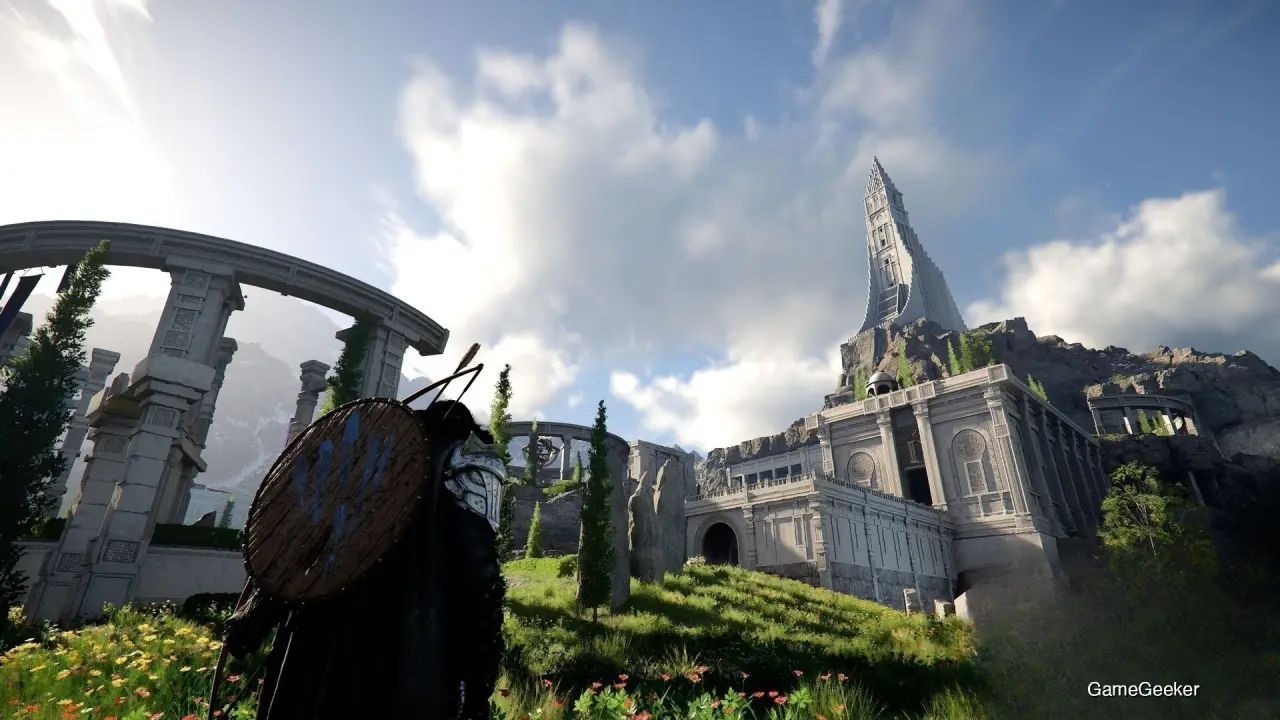
In tests with Resident Evil 9: Requiem and Crimson Desert, the impact of this upgrade was especially convincing: the artifacts that occasionally appeared in the original version were almost completely cleaned up, and the overall image now comes very close to native resolution. For players who value immersion, this kind of improvement is not some laboratory victory—it means that when you turn around in a dark corridor, or gaze at a distant tower across the wilderness, the image finally stops breaking the illusion.
As for compatibility, Sony has not pushed the burden onto developers either. An initial batch of 11 titles, including Silent Hill 2 Remake, can already replace the old algorithm directly through a driver update, while other games can be manually switched over by players through the system toggle. In other words, this upgrade is not just about supporting future titles; it is also making up for older games.

What is even more worth watching is the next move. Sony and AMD are already jointly engineering an ML frame generation library. Although no further releases are planned within 2026, Cerny has already hinted that frame generation technology will most likely arrive on the PlayStation platform in the future. As for even more advanced techniques like “ray tracing reconstruction,” he left only one line: “I look forward to discussing more in the future!” In plain terms, that means: the door has already been opened a crack.
If you are a PS5 Pro user right now, my advice is simple: turn on Enhance PSSR Image Quality first, especially when playing titles like Resident Evil 9: Requiem, where both detail and stability matter greatly—the benefits will be immediately noticeable. Looking at the bigger picture, this PSSR upgrade sends a very clear signal—the AI image quality race in the console camp is no longer just about catching up with PC; it is beginning to move shoulder to shoulder, and may even be preparing to seize a new stretch of the narrative.




Comments 0
Share your game review
Join the discussion and share your review of this game.
No comments yet. Share your review.