News
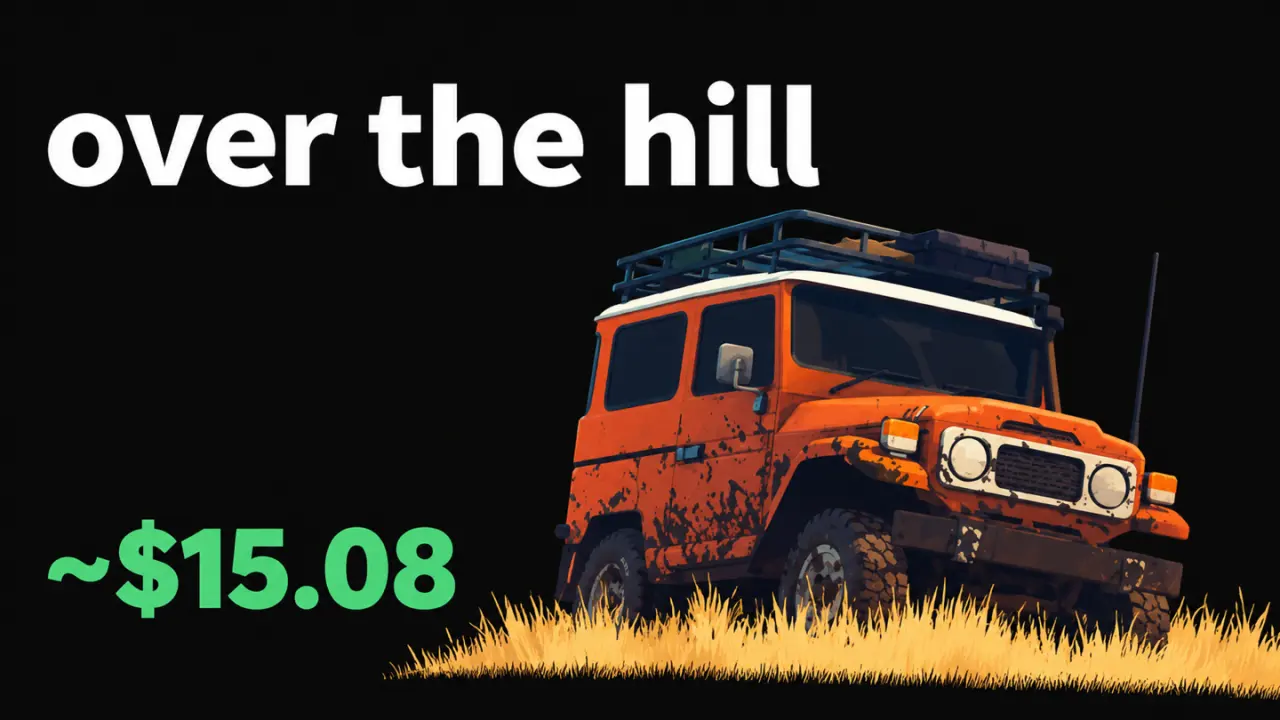
over the hill launches with introductory Steam offer and lower-priced key listings
Funselektor’s off-road exploration game is out on Steam at $19.99 with an introductory offer. Approximate third-party ke
















Although this industry news comes from the heavy truck sector, what it immediately made me think of was the price wars that have played out again and again in the gaming industry over the years. Recently, when discussing low-price competition, Liang Linhe, Director of SANY Group and Chairman of SANY Heavy Truck, offered a very direct judgment: low prices may bring a wave of sales, but they are unlikely to elevate a brand into the ranks of the “classics.” This view holds true in manufacturing, and it is just as worth reflecting on in fields like games, smartphones, and computers, where product strength and brand recognition are equally fierce battlegrounds.

Liang Linhe cited a highly representative example: Xiali Automobile, once hugely popular in the domestic market. It benefited from the era’s tailwinds by taking an affordable, mass-market approach, but in the end it still faded from public view. That in itself shows that low prices can help you secure an entry ticket, but they may not help you survive through market cycles. For gamers, this logic is hardly unfamiliar: if a title can only attract attention through a low launch price, steep discounts, or a “get people in first and worry later” strategy, it often struggles to grow into a truly vital, enduring IP.

Even more interestingly, Liang Linhe also recalled that when the company was pushing toward its goal of RMB 10 billion in revenue, a veteran of the industry posed a soul-searching question: if they continued down their current path, could Chinese heavy trucks truly surpass global top-tier brands like Mercedes-Benz, Volvo, and Scania over the next decade? The veteran offered two sharp pieces of advice. One was that “looking across the global market, not a single classic brand has been built through low-price dogfights,” and the other pointed out that when your competitors possess absolute core competitiveness, even the most sophisticated business model can hardly make up for the gap in product strength.
Placed in the game market, this is practically the basic victory condition in a strategy game. You can use discounts to attract new users, rely on events to climb the charts, or create buzz through collaborations, but in the end, what determines a game’s ceiling is still the completeness of its content, the depth of its systems, the distinctiveness of its aesthetics, and its ability to sustain ongoing updates. This is especially true for indie games: some titles are priced relatively high yet continue to sell for years on the strength of word of mouth; conversely, some ultra-low-barrier products may surge quickly in the short term, but fail to retain players in their communities, leaving behind nothing but a one-off promotional spike.

If we take this as a reminder for consumers, my advice is also very clear: whether you’re buying a game or evaluating a brand, don’t focus only on the launch price. Look at what real need it addresses and whether it can deliver a core experience that others cannot replace. For manufacturers, low prices can be a tactical move, but they should not become the only weapon; for players, affordability certainly matters, but what truly leaves a lasting impression and makes people willing to recommend something to friends is never the cheapest option—it is the one that is the most complete, the most distinctive, and the most capable. Liang Linhe was talking about heavy trucks, but this discussion about “how classics are born” clearly belongs to far more than just the heavy truck industry.




Comments 0
Share your game review
Join the discussion and share your review of this game.
No comments yet. Share your review.