News
The Blood of Dawnwalker Is Out Now and Tops Steam's Best Sellers
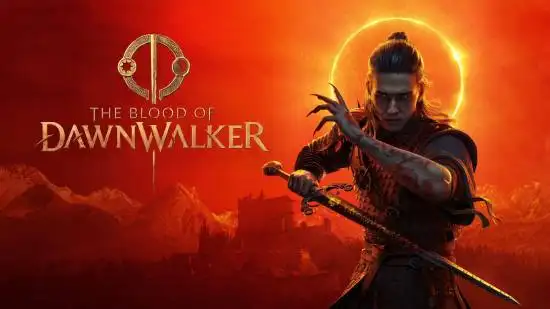
The Blood of Dawnwalker tops Steam’s global best-sellers chart, excluding free games, after its official unlock. Led by
















In the roguelike deckbuilder space, if you place Slay the Spire 2 between Slay the Spire 1 and a wave of successors like Across the Obelisk and Monster Train, you’ll notice a subtle contrast: global players still rate it as “Very Positive,” while the Chinese region has used a wave of negative reviews to drag the rating down to “Mixed.” The same game on the same platform ends up with reviews that look like they’re split into two parallel universes.

Looking at the numbers first: on Steam, Slay the Spire 2 currently has about an 83% positive rating globally, which falls under Steam’s “Very Positive” label; but Simplified Chinese sits at only 67%, dropping straight into the “Mixed” tier. On the day the first balance patch went live, nearly ten thousand new negative reviews appeared in one go, with a substantial portion coming from the Chinese region. That’s how we ended up with the now-jokingly called “ring of positive reviews around China” — players around the world are fairly satisfied, while Chinese players are clearly more upset.
From the perspective of player behavior, if we compare it with other games: for example, when Sekiro locked the Chinese region to 60 FPS at launch, players also used concentrated negative reviews to lower the score. By comparison, this time the negative reviews for Slay the Spire 2 are focused more on version changes and poor communication, rather than technical region-locking or content cuts. Mega Crit co-founder Casey Yano’s stance is also quite unusual: in an interview he said he understands players using their impact on store visibility to express dissatisfaction, and that he “won’t be mad at players for bandwagon reviewing.” If a major publisher’s PR department said this, it would basically be running counter to their usual playbook.

If we compare it horizontally with other blow-up cases, such as Romance of the Three Kingdoms 14 being bombarded with negative reviews from the Chinese region back then, the developers mostly chose to stay silent. With Slay the Spire 2 this time, the official team directly acknowledged problems with their communication channels, especially regarding Chinese players. Yano emphasized that he prefers to call them “players based in China,” meaning he doesn’t want to label this group, but rather see them as players who love games just as much, yet are forced by circumstances to speak only through negative reviews. This kind of statement is relatively rare among indie teams.

Back to platform experience: if you play across platforms, you’re probably very familiar with a kind of “platform translation loss.” Many demands from console players can only be expressed through store ratings and refunds; on PC, in theory, you can write long posts in community hubs, but in some regions, accessing external platforms and communities isn’t easy. The result is that, for essentially the same feedback, Western players write long posts, while Chinese players spam short reviews. Yano also mentioned that the “essential feedback” from English and Chinese players is similar; it’s just the way they present it that differs, which basically matches what I’ve seen in discussions across different regional communities.

Comparing Steam’s review system to console storefronts, its advantage is that ratings are heavily weighted and highly visible; but the downside is just as obvious — all complex emotions are squashed into a single “thumbs up / thumbs down” switch. Yano also believes that this one-size-fits-all star-rating culture is far from perfect, as it forces players to use extreme attitudes to summarize feelings that are actually quite nuanced. Console players are more used to arguing on forums or social media before buying, whereas Steam users often vote directly with reviews. That’s why phenomena like Slay the Spire 2’s “ring of positive reviews around China” look so exaggerated.
From the perspective of a player who compares games horizontally and plays across all platforms, I’d break this incident into two parts. As a game in itself, Slay the Spire 2 currently holds an 83% global positive rating; among roguelike deckbuilders at the same price point, it’s still a top-tier title worth paying attention to. As a community event, the flood of negative reviews on the day of the first patch was more of a collective “this is the only way I can speak” action. As for purchase advice: if you’re purely a single-player card-game fan who values gameplay depth and can accept balance swinging back and forth during Early Access, buying it now is perfectly fine. If you’re particularly sensitive to numerical/balance changes and don’t want to participate in “using reviews as social voting,” you can wait for a few rounds of patches, and decide whether to hop on once communication between the devs and Chinese players has truly been smoothed out.





Comments 0
We'd love to hear from you
Welcome! Share your take on this game — being first might come with a surprise.
No comments yet. Be the first!