News
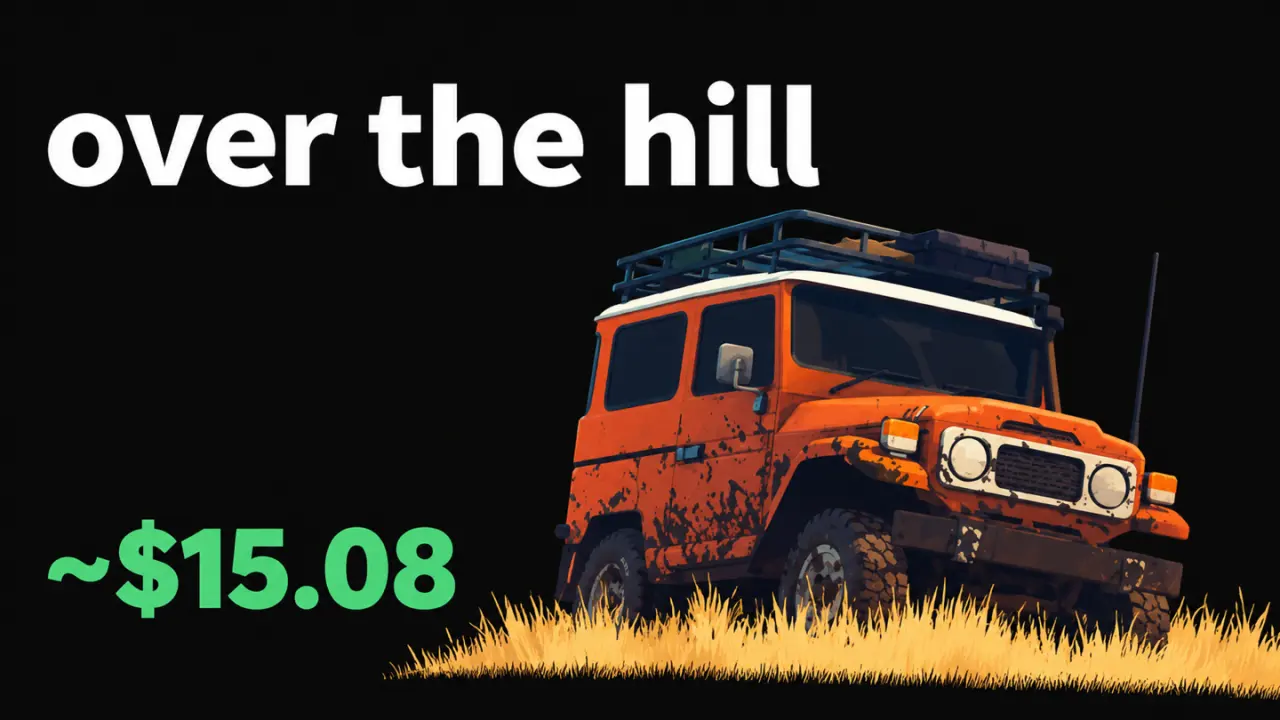
over the hill launches with introductory Steam offer and lower-priced key listings
Funselektor’s off-road exploration game is out on Steam at $19.99 with an introductory offer. Approximate third-party ke
















A couple of days ago, I was trying to find a food pickup point in a huge mall. I wandered around twice and still couldn’t figure it out. It felt like seeing the destination clearly on a map, only to have the actual path blocked by a mess of unmarked corridors and floors. For someone like me who can’t stand leaving a question mark hanging, the most annoying part isn’t that the route is long, but that the process gets stuck in the very last stretch. Seen from that angle, Taobao Flash Purchase’s newly launched “delivery relay” really is taking a bite out of the most awkward hard bone in food delivery logistics.

News on April 10 shows that Taobao Flash Purchase has recently taken the lead in the industry by launching a new “delivery relay” model, mainly targeting places that are both hard to pick up from and hard to deliver to, such as large shopping malls, hospital campuses, and large residential communities. The idea itself isn’t complicated, but it resembles splitting a winding mountain road in an open-world game into two segments: first break down the terrain problem, then assign manpower to the most suitable positions. Specifically, the platform has set up standardized order consolidation centers, dividing the process into two parts: “inside the venue” and “outside the venue.” Dedicated staff handle the inside, while outside riders can pick up and go as soon as they arrive.
The most critical part of this design is that it doesn’t require every rider to repeatedly navigate malls, hunt for elevators, and climb stairs. Inside the mall, dedicated-zone couriers use silent shopping carts to make continuous runs, while outside riders connect directly upon arrival. This replaces the old inefficient model, where everyone had to take a detour through the maze, with a much clearer division of labor. Looking a bit further, you’ll realize this is not simply about speeding things up. It is actually redrawing the delivery map, turning the hardest “last 100 meters” from a vague gray area into a clearly defined route.
The results have already started to materialize. So far, the project has been implemented at nearly 100 locations across more than 20 cities nationwide, including Shanghai, Hangzhou, Shenzhen, Suzhou, Chengdu, and Guiyang. At some sites, riders can save 10 to 20 minutes per order. In the food delivery industry, 10 minutes is no small number, especially during peak hours. It’s like suddenly discovering a shortcut at the edge of the map, one that can directly change the route efficiency of an entire area. According to related feedback, riders, merchants, property management, users, and relevant authorities have all expressed approval, which shows that this is at least more than just an attractive design on paper.
But beyond the map, what concerns me more is the employment impact this brings. Huaguoyuan in Guiyang, a large residential community with a population of about 500,000, has already attracted nearly 100 workers, 80% of whom are women. One 51-year-old auntie also mentioned that the job is just across the road from her home, and she is very satisfied with the position. This is important information, because it shows that “delivery relay” is not only optimizing riders’ routes, but also creating more grounded, community-based jobs for people living nearby. That makes it far more solid than many solutions that only know how to shout about efficiency.
Viewed within the broader trend, this model represents how instant retail is shifting from “competing on speed” to “competing on organizational capability.” In the past, everyone was scrambling to see who could run faster. Now it feels more like a contest over who can break down complex scenarios more finely, and who can truly open up difficult terrain like malls, hospitals, and residential communities. For users, receiving their meals more reliably may matter more than the theoretically fastest delivery time; for riders, climbing fewer flights of stairs and making fewer detours means a very real improvement in day-to-day experience.
So my judgment is straightforward: if they can continue expanding to more locations and make the handoff between inside and outside operations smooth enough, then Taobao Flash Purchase’s latest move is not some minor patchwork improvement, but the opening of teleport points on a difficult map. A large map is not what’s scary; what’s scary is when every road gets blocked at the final corner. And this “delivery relay” initiative has at least shown me a new path worth continuing to explore.





Comments 0
Share your game review
Join the discussion and share your review of this game.
No comments yet. Share your review.