News
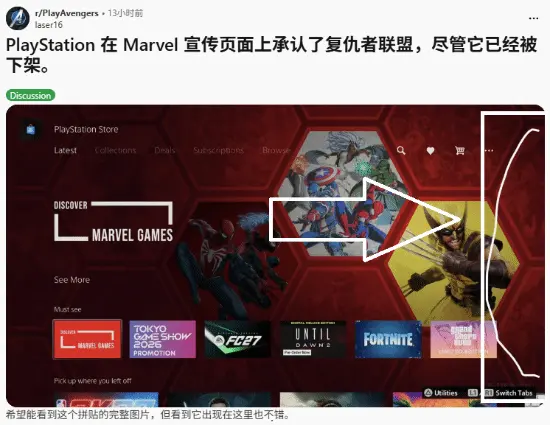
After 3 Years Offline, Marvel's Avengers Accidentally Appears on a PS Collection Cover, Sparking Debate
September 12 saw Marvel’s Avengers on a PS Store Marvel bundle cover—likely oversight—three years offline. Marvel’s Wolv
















A WeChat icon on a phone actually resembles a prop that recurs throughout modern narratives: it does not speak, yet it tugs at the emotional strings of countless creators, readers, and platform rules. The recent wave of hype around “using AI to write Official Account posts” is just such a prop-like event. On the surface, it looks like technology entering the scene; underneath, it is really the ethical boundaries of content production being redrawn. On April 9, the WeChat team made it clear once again that Official Accounts and Service Accounts may not use AI, scripts, APIs, or other automated methods to replace real people in completing the content creation and publishing process. This stance is neither ambiguous nor merely exploratory.

What sparked the discussion was a highly enticing narrative template circulating on social media: a husband-and-wife team, AI starting a company, an Official Account earning 2 million a year. It reads like a tightly edited startup short film—brisk pacing, dazzling ending, as if the only thing missing were for the audience to step onto the set themselves. But when you break down the public information, the source of that “2 million” is not, as many imagined, traffic-based advertising revenue from the Official Account. It mainly comes from the 299 yuan deposits charged to “content creators” or students. In other words, the most captivating main storyline in this tale is actually separated from the real revenue structure by a filter that is far from thin.

On the level of narrative, WeChat’s reaffirmation of the rules this time is more like inviting the “author” back to center stage. As early as March 27, the WeChat Official Account Platform added a new rule on “non-human automated creation behavior,” explicitly prohibiting content generated, rewritten, stitched together, or copied using AI in ways detached from a real creator’s expression. It also banned the use of scripts or program hosting for batch and continuous publishing. The platform’s principle is actually quite clear: tools may be used as pens, but tools may not impersonate the person holding the pen. The WeChat team said it plainly as well: "The platform encourages creators to reasonably use tools to assist creation and improve creative efficiency, but opposes the use of fully automated programs to replace real people in completing content production."
But the deeper issue is that this is not just WeChat’s concern alone; it is a shared plot turn now confronting the entire content industry. On April 6, Hongguo Short Drama also issued an announcement on regulating the improper use of AI short-drama materials. In the first quarter of this year, it cumulatively removed 1,718 non-compliant animated dramas and completed a comprehensive review of 15,000 works, handling 670 violating works in accordance with the rules. The signal behind these numbers is direct: AI is not unusable, but once it crosses the boundaries of authorization, originality, and authentic expression, platform governance will only become stricter—like a film entering censorship review, where roughly spliced shots are always picked out one by one.

From another angle, this controversy may not be bad news for ordinary content creators. For some time, many people worried that AI would turn Official Accounts, short dramas, and even news accounts into assembly-line factories. But the direction platforms are now signaling is: assistance is allowed, replacement is not. That effectively preserves a space for people with genuine expression, a space that still values “authorship.” For those hoping to enter the self-media field, my advice is simple: stop believing in templates like “fully automated passive income.” They are more like badly made road movies—full of signposts, yet the destination is often selling courses and charging fees. What is truly worth investing in is still topic selection, personal experience, and consistent expression; for now, these are things that still cannot be outsourced at scale.
Unfortunately, technological myths always like to portray creation as a kind of arbitrage business, as if once an API is connected, words can drop endlessly like canned goods off a conveyor belt. But content is not canned goods after all. At least in a medium like the Official Account, readers can still tell whether there is a real person standing behind the sentences. WeChat’s renewed ban this time is not, in essence, a war against AI, but a reminder to everyone that tools can accelerate writing, yet they cannot assume the responsibility of expression on behalf of a person.



Comments 0
Share your game review
Join the discussion and share your review of this game.
No comments yet. Share your review.