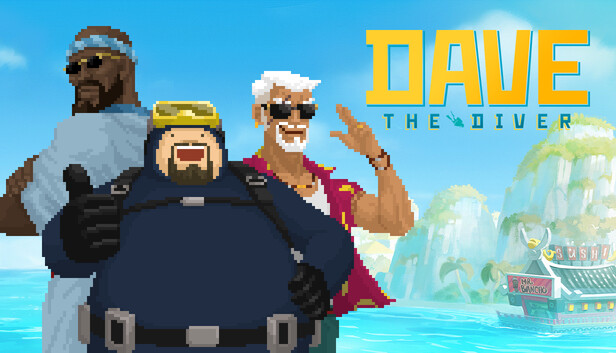
 DAVE THE DIVER
Popular PicksView All
123456789101112
10 Best Single-Player Escape-Room Puzzle Games
10 Best Sokoban Games with Creative Twists
10 Best Programming Puzzle Games in 2026: Visual Logic, Bots, and Assembly
10 Best Railway Network Management Games in 2026
10 Best Single-Player Photography Exploration Games in 2026
10 Best Single-Player Monster Taming Games in 2026
10 Best Immersive Sim Games on Steam (2026)
10 Best Mech Games on Steam (2026)
10 Best Single-Player Pirate Games on Steam (2026)
10 Best Steam Autumn Sale 2026 Games by Budget and Play Style
7 Best Time-Loop Mystery Games for Exploration, Dialogue and Deduction
7 Best Fictional Language Deciphering Puzzle Games in 2026
Popular Games LikeView All
Games Like PowerWash Simulator - 12 Best Relaxing Cleaning and Restoration PicksGames Like Dave the Diver - 12 Best Diving, Cooking and Systems-Stacker PicksGames Like Road to Vostok - 12 Best Hardcore Survival Shooter PicksGames Like Path of Exile 2 - 12 Best Action RPG and Loot PicksGames Like Clair Obscur: Expedition 33 - 12 Best Turn-Based RPG PicksGames Like R.E.P.O. - 12 Best Co-op Horror PicksGames Like PEAK - 12 Best Co-op Climbing and Survival PicksGames Like Slay the Spire 2 - 12 Best Roguelike Deckbuilders to Play NextGames Like Mina the Hollower - 12 Best Top-Down Action and Zelda-Like PicksGames Like Baldur's Gate 3 - 12 Best CRPGs and Turn-Based RPGsGames Like Monster Hunter Wilds - 12 Best Co-op Hunting and Action RPG PicksGames Like Hollow Knight: Silksong - 12 Best Metroidvania Picks (2026)Games Like Final Fantasy VII Rebirth - 12 Best Action RPG & JRPG PicksGames Like Dead by Daylight - 12 Best Asymmetric & Co-op Horror PicksGames Like Forza Horizon 6 - 12 Best Open-World Racing & Driving Picks (2026)Games Like 007 First Light - 12 Best Stealth and Spy GamesGames Like Solarpunk - 12 Best Cozy Survival and Crafting GamesGames Like Subnautica 2 - 12 Best Underwater and Alien-World Survival GamesGames Like Lies of P - 12 Best Soulslikes to Play in 2026Games Like Hell Let Loose - 12 Best Tactical Milsim Shooters
Popular ReviewsView All

Mina the Hollower — Review

Clair Obscur: Expedition 33 — Review

Schrödinger's Call — Review

Resident Evil Requiem — Review

Shift At Midnight — Review

Mixtape — Review

Middle-earth™: Shadow of Mordor™ — Review

The Mermaid Mask — Review

MOLE — Review

Desktop Explorer — Review

Mad Max — Review

Go-Go Town! — Review

Dead as Disco — Review

Crushed In Time — Review

Beastro — Review

Moonlight Peaks — Review
Dave the Diver Isn't an Indie Game? The 10-Person Rule Sparks Debate
A survey of Polish developers, publishers, and Chinese games-media peers puts Dave the Diver, Clair Obscur: Expedition 33, and Hollow Knight: Silksong at the center of a continuing dispute: which keyword best defines an indie game? The groups were unevenly represented, so the percentages and voting results have no statistical significance. What matters here is how subjective the label remains.

The answers cluster around three possible tests: funding, team size, and creative expression.
Financial independence received the most support, and nearly all of those respondents were independent developers. This definition emphasizes creators bearing their own financial risks while retaining full authority over their work. Individual developer Kuba places more weight on team size, arguing that “once a team exceeds 10 people, it absolutely cannot be considered indie.” His own team has only 2 people, and he prefers serving niche audiences rather than changing his games to satisfy the mass market.
That view raises a basic problem: production scale and creative control are separate measures. Team Cherry has only 3 developers, yet the credits for Hollow Knight: Silksong exceed 200 people, including localization and quality assurance staff. That distinction raises a practical question about where a game's boundaries should be drawn.
Publisher Kasur Games offered a different perspective. Steam adds more games every 24 hours than the entire Xbox One generation produced, so the label can apply to almost anyone making a game in such a crowded market. The harder question is not who qualifies for the label, but whether players are willing to give that game a chance.

For designer and independent-game entrepreneur Pariska, the defining quality is experimentation. Independent creators should use their control over development to expand the boundaries of the medium.
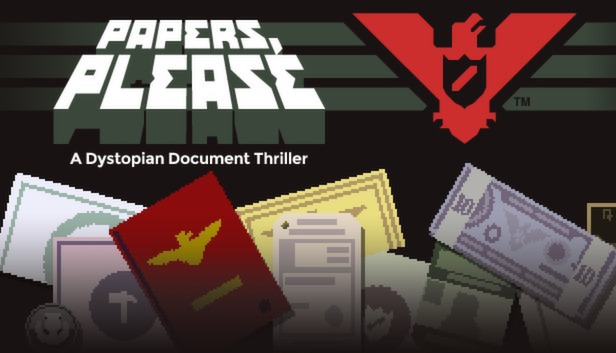
Jacob Rokosz takes that idea even further: a truly independent game should create an entirely new genre. By that standard, Papers, Please and PUBG could both qualify.
That standard also conflicts with another common view of independence. A developer can be completely self-funded and small in scale, yet still follow the market by imitating Vampire Survivors, Hades, or V Rising. Such a project may satisfy the financial definition of independence while lacking the creative independence that many respondents consider essential. One media colleague made the same point: a small, fully self-funded team should not qualify as indie if it merely follows a popular genre to profit from market momentum.

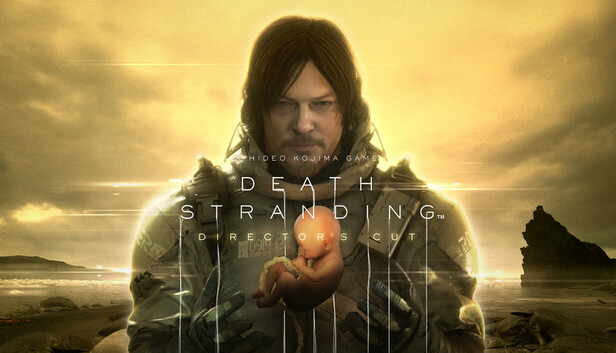
One developer studying at the University of Warsaw focused on whether a studio has a central creative figure and whether its game expresses an individual voice. That view conflicts with a purely financial definition, but it also explains why some respondents were willing to treat Hideo Kojima's Death Stranding as an indie game despite its enormous investment. For them, personal authorship can outweigh the size of the budget.
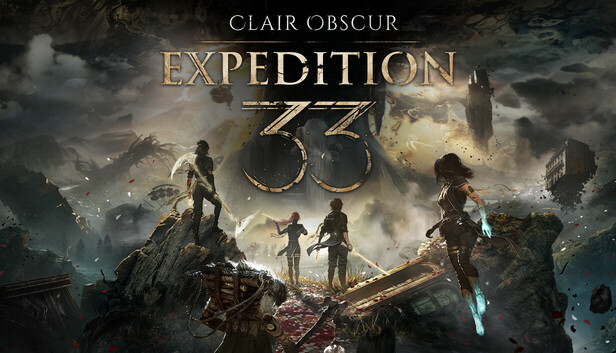
Clair Obscur: Expedition 33 brings that conflict into view. Respondents recognized its high quality and the attention it has brought to indie games, while generally stressing that it sits apart from traditional independent projects.
The response to Dave the Diver shows how strongly ownership can affect that judgment. Its pixel-art presentation and broad range of gameplay systems initially led many people to regard it as an indie game, and it received a nomination for Best Independent Game at TGA2023. That perception changed after its Korean developer, Mintrocket, was revealed to be a subsidiary of Nexon.

Nothing about Dave the Diver itself changed when its funding and corporate background became known, but its reputation suffered noticeably. Producer Jaeho Hwang has also said that he does not consider the game independent. Most respondents reached the same conclusion, reflecting a broader sensitivity to corporate funding and competitive fairness. The concern is not merely whether a game deserves the indie label. It is whether a major company's resources can enter an indie award category and reduce the already limited exposure available to smaller teams.
Fool's Theory presents another complication. The studio previously developed The Thaumaturge and is currently collaborating with CDPR on a new DLC for The Witcher 3. Its example shows why studio identity, ownership, financing, staffing, and project-level creative control cannot always be reduced to one simple test.
Indie games increasingly look like an ecosystem position rather than a fixed genre. Cost scale defines one boundary, while personal authorship defines another. The two dimensions can overlap, but they do not always coincide.
That leaves the independent spirit caught between material constraints and idealism. Some respondents would reject heavily funded games from indie award categories, yet remain willing to make exceptions when they genuinely love the work. That inconsistency is the point: the rules remain unstable because the label combines practical limits with personal taste.
My buying advice is simple: do not rely on the “indie” label alone. Check the studio's background, examine whether the gameplay reflects its own decision-making structure, and ask whether its budget has produced meaningful innovation in the game's systems.
DAVE THE DIVER Hollow Knight: Silksong
 On saleClair Obscur: Expedition 33
 DEATH STRANDING DIRECTOR'S CUT
 Papers, Please






Comments 0
Share your game review
Join the discussion and share your review of this game.
No comments yet. Share your review.