
News
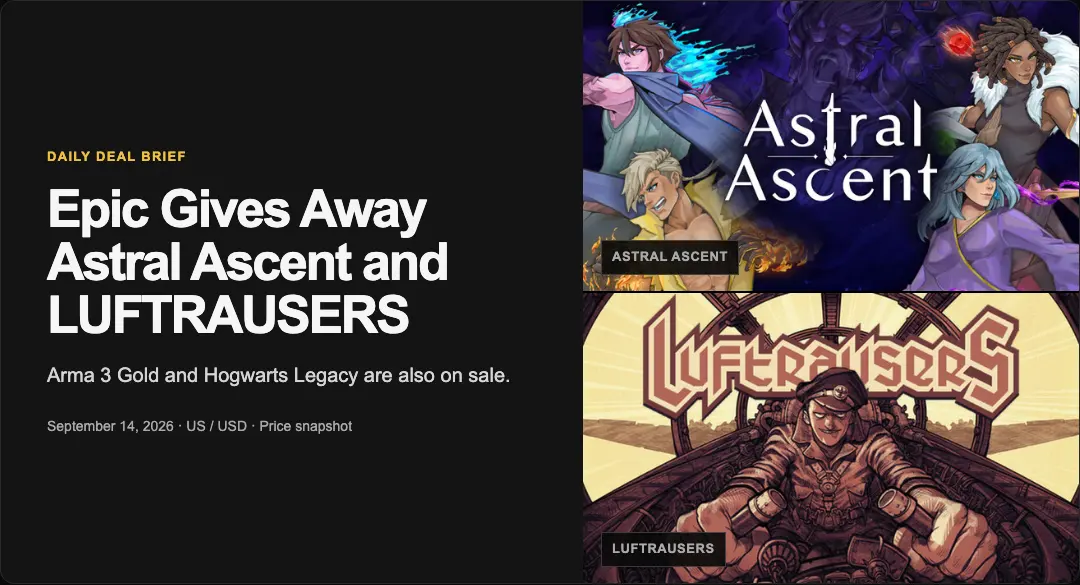
Grab two free PC games before Epic's clock runs out, while Undertale and Divinity: Original Sin 2 are 75% off
Astral Ascent and LUFTRAUSERS are free to keep today, while two of PC gaming's most celebrated RPGs cost less than $14 c













On April 17, Paramount confirmed at the CinemaCon industry convention that the sequel project to World War Z has been restarted. For audiences who enjoy zombie-themed works, this news feels like a buzzer-beating comeback, considering that after seven years of prolonged setbacks, the project had all but been written off by the public as “completely dead.” More importantly, this time they are not simply picking up the 2019 version and continuing from there, but shifting gears entirely and planning a brand-new sequel from scratch.

Why is this worth talking about? Because the World War Z IP itself is not weak; what has truly held it back has never been market recognition, but project execution. According to currently available public information, the main reasons the 2019 version was shelved were disputes over a budget as high as $200 million, along with conflicts in creative vision, which ultimately led to the departure of director David Fincher, who had originally been involved. The line in the original text saying that “Pitt also never got to see that ‘Battle of Moscow’s Red Square’ continued” actually captures the regret many fans have felt over the years.

From an industry perspective, this restart looks more like launching again from the starting line than simply making up a missed trip. With Skydance becoming a new key force, Paramount has clearly decided to retune this war machine that has been stalled for years and push it back onto the track. But the problem is also very real: as of the announcement, neither the director nor the lead cast has been officially revealed, and whether Brad Pitt will return remains one of the biggest questions on everyone’s mind. For a commercial blockbuster of this scale, the core creative lineup is the reaction off the starting gun—if it is half a beat slow, the rhythm of everything that follows can easily fall into disarray again.

If I were to compare it to a sporting event, the World War Z sequel is currently at the stage of play resuming after a timeout. It must preserve the most distinctive element of the original IP—the oppressive sense of overwhelming zombie swarms—while also avoiding the problems of runaway budget and creative tug-of-war that plagued it back then, or it may very well stall out midway once again. The current market environment is also more demanding than it was at the time; audiences have far less patience for big-budget sequels, and relying on nostalgia and spectacle alone is no longer enough to reliably earn high praise.
Judging from the mood in player and film fan communities, people’s attitude is actually a lot like watching a powerhouse team enter a new season after changing coaches: there is anticipation, but even more reservation. Supporters hope it will finally deliver on the ambition that never made it to the screen back then, while the cautious camp worries that “restart” may simply mean repackaging the same internal friction. Personally, I am more focused on two things: first, whether the direction of the script can be clearly defined; second, whether budget control can find a balance between commercial blockbuster demands and creative expression. These two factors are the real pace-setters that will determine whether the project succeeds or fails.

So at this stage, my assessment of this restart is: yes, it is good news, but it is still far too early to pop the champagne. For audiences who love World War Z, the most reasonable stance is not to crown it in advance, but to keep a close eye on three core pieces of information: the director, the lead cast, and the production direction. After all, for a sequel that has emerged from “development hell,” the real competition is only just beginning.



Comments 0
Share your game review
Join the discussion and share your review of this game.
No comments yet. Share your review.