



If you’re also tired of the standard template—getting up to water plants, chopping wood, fishing, grinding favor with townsfolk—this piece is for you. The following under-the-radar titles are all stuck in that awkward “a few hundred reviews” range, yet each one pushes the pastoral/farming theme in a delightfully weird direction: some literally have you raising an entire planet, some shrink the farm down to a single train car, and others turn bakeries, shady shops, or even a sheep-breeding lab into alternative Harvest Moon-style experiences. Their pacing is generally slow, but the systems aren’t brainless; resource loops, production chains, and time management all have enough tension to be interesting. Whether you’re looking for a “second life” after work or just curious how far the pastoral genre can be twisted, this list is worth going through patiently.
1. Planetary Life #

Planetary Life basically expands the “farm” into a full ecosystem: you’re not tending a few plots of land, you’re shaping climate, soil, vegetation, and food chains on an entire planet. Early on it feels like breaking ground in a barren wasteland, slowly tweaking the water cycle and temperature zones, watching which plants can survive, then introducing animals and microbes, fine-tuning the parameters until the ecosystem stabilizes itself. The satisfaction doesn’t come from grinding efficiency, but from watching a dead rock slowly grow forests and lakes and form a self-sustaining cycle. That slow-brewed sense of achievement goes deeper than ordinary farming. The systems are clearly explained without being wordy, making it ideal for players who enjoy dissecting mechanics at their own pace.
2. The Craftsman of Greymist #
 GOG€5.36-21%Steam €5.36Zobacz cenę →
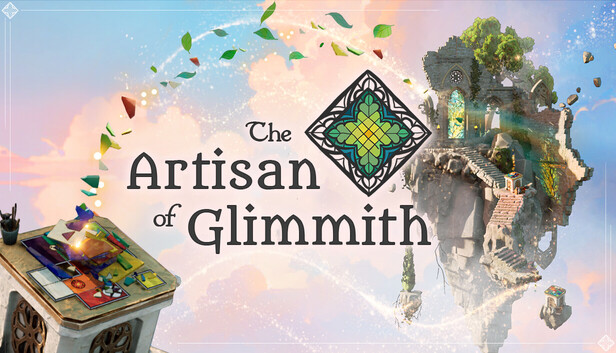
The Artisan of Glimmith is a textbook “niche hidden gem”: it looks plain and plays gently, but the craft–stall–village-upgrade loop is tightly designed. You decide which materials to invest in for your crafts, how much stock to produce, and at what times to set up your stall; profits then feed back into unlocking more tools and facilities. The pastoral vibe doesn’t come from a big map, but from the process of “slowly revitalizing an entire village from your tiny workshop.” With a very low barrier to entry, it still manages to deliver a taste of supply-and-demand trade-offs: do you play it safe with bestsellers, or gamble on high-value niche orders? Both choices affect how quickly the village develops. Great for those who enjoy meticulous bookkeeping but don’t want to be crushed by huge factory chains.
3. New Rome #

 Eneba€6.46Steam €6.46Zobacz cenę →
Nova Roma looks like a laid-back city builder, but all the key loops actually revolve around agriculture and livestock: more than industrial optimization, your land layout is about planning pastures, vegetable plots, and processing workshops. The production chains aren’t long, but planting and breeding speeds at the front end will in turn choke city development, naturally teaching you “don’t just stack buildings upward blindly.” The art is bright and non-stressful, while the trade-offs between population, happiness, and food security are quite grounded. Its biggest surprise is how it treats the city as a “vacation farm resort”: you can linger at one stage to beautify everything, or chase highly streamlined logistics; both playstyles are viable. Even in Early Access the loops are already complete and more fun than you’d expect.
4. Sani Sheep Research Lab #

 Kinguin€19.00-22%Steam €19.00Zobacz cenę →
Don’t be scared off by the “laboratory” label; it’s basically a reskinned sheep farm. You plan pens, breeding routes, and feed resources, use different gene combinations to cultivate sheep that meet specific needs, and expand gradually through orders and research goals. Compared with traditional ranch sims, it leans harder on breed management: which sheep stay as breeding stock, which get sold to bring in cash is entirely your call. The lab setting gives it a gently “offbeat and cute” vibe, but the pace is still relaxed and suits players who enjoy both raising and number-tweaking. The really fun moment is when you realize you’re paging through sheep pedigrees and designing the next generation like a deck, and it hits you that this is actually a deep farming sim in sheep’s clothing.
5. The Road of Life #

Walk of Life pulls out the sense of time from Harvest Moon and turns it into a single-lifetime life simulation. You start as a nobody, gradually accumulating resources by choosing what to study, where to work, how to socialize, even when to move. There’s no big farm map, but it still feels very pastoral: your house, job, and relationships combine into different lifestyles, as time quietly slips from spring to winter. Gameplay-wise it’s closer to turn-based strategy: at every stage your resources are limited, and you must balance survival, pleasure, and investing in the future. It doesn’t chase big dopamine spikes, instead portraying the mix of emptiness and contentment in “a life that just sort of passes by” with surprising honesty. It’s the kind of game that, after one run, makes you reflect on your real-life pace.
6. Golf World #
 GOG€9.14Steam €9.14Zobacz cenę →
GolfTopia’s name makes it easy to mistake for a sports game; in reality it’s more of a “country club vacation sim.” Most of the time you’re wandering between open fairways and a small town, helping residents with small errands, fixing facilities, and casually playing a bit of golf. The tasks are grounded in everyday life and often done “on the way,” without that oppressive feeling of being forced to grind quests. Its pastoral charm comes from those trimmed yet still slightly wild grassy fields—places where you can stop anytime to enjoy the scenery while ticking off small objectives. Compared to traditional farms, this feels more like an already well-run estate that you’re just visiting and adding little touches to. It’s perfect as a small weekend game you can dip into repeatedly for some relaxed idling.
7. Train Mania #
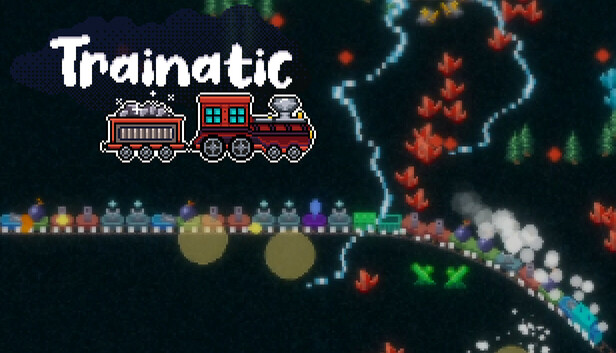
Trainatic packs rural life into a string of train cars: you manage the train’s route while taking on tasks and trading resources in towns along the way, forming a constantly moving “wandering farm.” Every stop is a short and snappy community interaction, while you also have to juggle fuel, time, and cargo capacity. Visually it’s a procession of changing landscapes; gameplay-wise it’s a strong rhythm of small chained goals, giving you the odd delight of “driving your farm truck around to sell goods,” just shifted onto rails. Compared to standard farms, it emphasizes decisions made on the road: detour to earn more, or go straight to hit quest timers? Your choices directly change the tempo of each journey.
8. Pixel Café #
 Kinguin€1.38-89%Steam €1.38Zobacz cenę →
Pixel Cafe is a typical “indoor pastoral” game: no big map, just one small shop and the protagonist’s daily routine. Farming is abstracted into menu recipes and time allocation—you juggle shifts, rest, and socializing to keep income steady without burning yourself out. The mechanics are simple; what’s tricky is the rhythm: overbooking shifts feels eerily like real-world overwork, while slacking off too much slows your development. Soft pixel art and gentle music wrap a slightly bittersweet everyday story, making it a nice light “second life” after work. Compared to ordinary farm sims, this focuses more on “how to get by” rather than “how to scale up.”
9. Sarah’s Black Shop #

 Humble Bundle€11.39Steam €11.39Zobacz cenę →
Sara’s Black Shop is the most “sinister” pastoral entry on this list: you sell creepy goods, but the business logic is pure farming. You plan raw material acquisition, recipe unlocks, and stocking rhythm, using customer traffic patterns to decide how much inventory to put on shelves each night. It’s not a brainless “always restock everything” casual game; it forces you to calculate timing and risk—misjudging demand leads to overstock or stockouts. Under its dark fairy-tale skin lies a surprisingly rigorous resource-management loop, with much stronger strategy than most small management games. Great if you’re bored of sugary pastoral vibes and want an “underworld Harvest Moon.”
10. Meow Meow Dessert House #

 Fanatical€3.99-59%Steam €3.99Zobacz cenę →
In Meow Dessert House, the farming elements are compressed into ingredient stocking and dessert production chains: each day you decide what materials to purchase, which items to make, then use decorations and layout to increase customer dwell time. The cat-plus-dessert combo is inherently charming, but underneath it’s still pushing you to optimize efficiency within limited space and time. Unlike many “stall until numb” mobile-style games, this one gives solid feedback through recipe unlocks and renovations—every small upgrade visibly makes the shop livelier. Ideal for players who enjoy light planning with a hefty dose of cuteness for stress relief.
11. Fresh frosting #
 GOG€2.22-54%Steam €2.22Zobacz cenę →
Freshly Frosted is marketed as a puzzle game, but its stages revolve around the daily operations of a bakery: under certain constraints you fulfill orders and place decorations, like scheduling and laying out your shop through puzzles. The difficulty is modest, focusing more on flow—opening in the morning, a burst of busyness, then closing up for the night. That repetitive yet non-oppressive rhythm feels almost like a miniaturized dessert shop sim. Unlike a real farm, there’s no long-term resource pressure; your attention is on “how to make this one order smoother and prettier.” Great when you want to zone out in short sessions without losing all sense of interaction.
12. Paper Trail Between the Pages of Puzzles #
 Kinguin€1.51Steam €1.51Zobacz cenę →
Paper Trail’s pastoral charm comes from the journey itself: you move across foldable sheets of paper, passing through villages, riversides, and small towns, piecing together a quiet road trip. Puzzles are the main mechanic, but the game doesn’t try to torment you with high difficulty; its rhythm is more like a walk lost in thought—every so often you pause to figure out how to fold the path, then carry on. The environmental storytelling along the way is very down-to-earth, evoking the feeling of visiting people around fields and small towns. Compared to traditional farming games, this is more about experiencing the moment when you “leave the farm and hit the road.” Best for players who aren’t rushing to finish and just want to slowly flip through this paper road book.
13. Primordial Fire #
 Eneba€7.73Steam €7.73Zobacz cenę →
Primitive Fire offers a “hardcore wilderness farm”: starting from a primitive tribe, you survive by chopping wood, gathering, hunting, and building shelters. Resource collection is risky; weather and wild animals can disrupt your plans. Rather than relaxed farming, it’s about squeezing time to survive in the gaps. The thrill isn’t in picturesque scenery but in the moment you finally have a windproof, rainproof camp after a series of close calls—that raw sense of achievement. System-wise it’s close to a classic survival game, but the pacing isn’t maliciously punishing and gives you enough room to think about gathering and building priorities. Good for players who find normal farms too mild and want a bit of pressure-testing.
14. Maze 2 #
 Kinguin€0.42-58%Steam €0.42Zobacz cenę →
aMAZE 2 moves at an extremely slow pace, like an endlessly long countryside stroll. You explore a not-too-complex maze, casually picking up resources and solving small puzzles; the color palette and music are intentionally soft and non-threatening. Resource management is minimal—you only occasionally decide whether to detour for supplies. Its kinship with pastoral games lies in the comfort of “nothing much happening”—often you’re just walking, observing the environment, and occasionally getting minor rewards. Perfect as a noise-canceling game after mental fatigue, easily treated as an electronic “mushroom-picking walk simulator.”
15. Click Paradise #

clickyland is the most “electronic” farm on this list: you basically click, upgrade buildings, and then watch the entire ranch amusement park run itself. Different facilities form simple production chains and numerical synergies; your job is to plan upgrade orders and unlock paths to maximize long-term gains. Visually it’s a cartoon ranch constantly bustling with people and animals, and after a while it does feel like watching a digital fish tank. The strategic depth is limited, but as a background game that you leave running and poke at occasionally, it’s very relaxing. Great when you need a brainless “electronic farm screensaver.”
This pastoral-leaning list deliberately skips major mainstream titles and focuses on lesser-known games with only a few hundred reviews: there’s an ecosystem sim that treats a planet as a farm, a roaming ranch compressed into a single train, and oddball premises like a bakery, a shady shop, or a sheep lab reimagined as pastoral sims. What they share is a gentle pace paired with thoughtful design in resource loops, time management, and recipe/breed planning; they’re not the kind of “hollow healing” experiences that rely on vibes alone. If you’re aesthetically exhausted by template-based farming, these obscure little games will very likely rekindle your imagination about what “farms” and “pastoral life” can be.





Komentarze 0
Chętnie poznamy Twoje zdanie
Dołącz do dyskusji i podziel się opinią o grze.
Brak komentarzy. Dodaj swoją opinię.