



















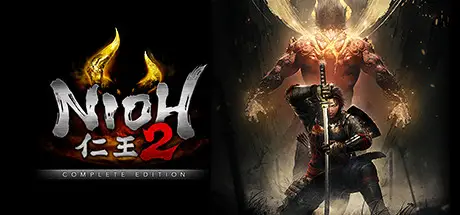

Opening
Here's the verdict up front: Nioh 2 – The Complete Edition is a brutally deep action RPG that won't coddle you for a second, but sink your teeth in and it pays back harder the more you suffer. The thing that sets it apart isn't the "Souls-like" label everyone slaps on it — it's how Burst Counters, Yokai Shift comebacks, and Soul Core builds get braided into one nasty, offense-first system. This isn't a chill cruise through pretty maps; it's a game that wants you to fail, adjust, and come back swinging. Stances, Ki Pulse, reading an enemy for the parry window — a wall of systems that, once they click, stop feeling like clutter and start feeling like rhythm. Boss fights aren't about dodging in circles. You're fighting for the opening, fighting for the breath, fighting for the comeback, and that pressure cooker of tension and payoff is something very few games hand you.
The flip side is that it's picky about who it lets in. If you came for easy wins, big story beats, or open-world wandering, you'll probably spend the whole time frowning. The entry wall is steep, the punishment is mean, and getting flattened your first hour is normal. Levels are mission-based, so the Sengoku scenery starts repeating, and the plot stays in the background while the combat does all the heavy lifting. This isn't a game that hooks you with its story — it hooks you with "I am going to figure this stage out tonight."
So the right buyer is crystal clear: someone who loves a pure action system and is happy to die, learn, and refine their hands over and over. And because this is the Complete Edition, all three DLCs come bundled in, so there's a genuine mountain of content here, not some thin slice you finish in a weekend. Stomach the hardness and the meanness, and the reward it hands back is honestly top-tier.
Story | 6.5/10
Fabuła: 6.5/10Half-Blood, Full War

Nioh 2’s story is basically there to keep the fights moving, and honestly, that’s the right call. You play as a custom half-yokai protagonist, and the game slots you into a Sengoku-era prequel that leads up to the first Nioh without ever pretending it’s trying to be some huge character drama. The setup is clean enough: wars, yokai, shifting allegiances, and a world that’s already halfway gone to hell. But the game never really stops to let that sink in. It’s not built like a big cinematic narrative. It’s built like a combat gauntlet that happens to have a story running through it.
That makes the main plot functional, not memorable. You get the broad strokes through mission briefings, bits of lore, and the occasional cutscene, but the game is much more interested in handing you the next battlefield than in building a deep emotional arc. Compared with a game like Elden Ring, where the world itself does a lot of the storytelling heavy lifting, Nioh 2 feels a lot more direct and a lot less mysterious. That’s not automatically bad, but it does mean the story has the weakest pull of anything here. If you came for plot, exploration, or big narrative payoffs, this is the part that’s most likely to leave you cold.
Side Jobs, Small Stories, and the William Cameos

The side content follows the same logic: it’s dense, but it’s there to feed the combat loop, not to deliver some rich web of character drama. Most of the extra missions work like compact challenge rooms with a little lore seasoning on top. You’ll get fragments of yokai legend, Sengoku-period flavor, and more reasons to fight through another nasty encounter, but don’t expect side quests that branch into meaningful narrative detours. The quality is uneven in the same way the whole story is uneven. A lot of it is useful background, not memorable storytelling.
The one real spark comes from the return of William, who shows up as a boss or support character at key points. For anyone who played the first game, that’s a nice nod. It gives the prequel a link back to the original and adds a little emotional weight for returning players. But even that is more of a fan-facing connection than a full character arc. The game knows the old guard will recognize him and smile, and it uses that very effectively. Still, it doesn’t turn the story into something bigger than it is.
There’s also not much in the way of real branching or choice-driven drama. The game gives you a mostly fixed path through its missions, and that keeps the focus tight on action rather than consequence. That’s consistent with everything else Nioh 2 is doing, but it also means the story never gets to surprise you structurally. The war-torn setting and demon-infested history have plenty of visual identity, yet the writing mostly uses them as stage dressing for bosses and levels. That’s why this whole dimension lands so low for me. It has flavor, sure. It just doesn’t have much weight.
Audio | 8.0/10
Dźwięk: 8/10War Drums, Yokai Groans, and the Sound of Getting Punished

Nioh 2 – The Complete Edition sounds like a fight that wants you dead, and that’s a compliment. The music leans hard into Japanese period flavor — shakuhachi, taiko, that cold traditional pulse — but it’s not there just to look pretty. It stamps every boss fight and every Dark Realm into the same pressure cooker mood. You hear the Sengoku era in the score before you even see the next room, and that’s a big part of why the game’s combat feels so tense. It doesn’t soften the edges. It sharpens them.
The best sound work here is how much it talks to your hands. Yokai growls, blades hitting flesh, the clean snap of a Burst Counter, the little breath of relief when Ki Pulse lands right — all of it gives you audio cues for whether you’re in control or about to get flattened. That matters because this is a game built on reading attacks and answering fast. The sound doesn’t just decorate the action. It helps you survive it.
And then there’s the Dark Realm. When that kicks in, the whole mix shifts, the low end gets heavier, and the room feels wrong in the best way. That’s where Nioh 2 is clever: the audio isn’t separate from the mechanics, it is the mechanic, at least emotionally. You know danger has spiked before you’ve even processed the enemy layout. That kind of integration is why the combat loop stays so sticky.
Japanese VO, Thin Drama, and a Battle Mix That Does the Heavy Lifting

My read is simple: Nioh 2’s voice and sound design do way more for the game than its story ever does. The game gives you Japanese voice acting, plus multilingual localization, and that’s fine because the half-yokai protagonist isn’t built around big speeches anyway. He’s basically a vessel for the combat system. The NPCs and the world carry the narrative weight, but honestly, that weight is pretty light. If you’re showing up for a strong character arc or a memorable dramatic script, this one’s not really trying to meet you there.
What it is trying to do is keep the battlefield readable and aggressive. That’s where the mix earns its keep. The crack of weapon impacts, enemy snarls, and the rhythm of stance changes all feed into the game’s offensive flow. Even the game’s punishing structure benefits from it. When you’re getting chain-checked by a boss, the audio is still giving you a fighting chance to parse what just happened and what you need to answer next. That’s a huge reason this game can keep hardcore players hooked for absurd amounts of time.
Compared with something like Elden Ring, which wins big with open exploration and a broader audience, Nioh 2 is way narrower and way denser. And compared with Sekiro, which has that cleaner, more meditative audio space, Nioh 2 is louder, busier, and more stacked with layers. It doesn’t beat Sekiro on zen. It beats a lot of its peers on combat texture. Every hit, every retreat, every Burst Counter, every breath before the next exchange — it all lands with purpose.
Visuals | 8.0/10
Grafika: 8/10Dark Sengoku, But the Real Star Is the Monsters

Nioh 2 – The Complete Edition looks good in the way this series always has: dark, harsh, and very deliberate about what it wants to show off. It’s not here to wow you with giant open vistas or raw polygon muscle. It’s here to sell you on yokai silhouettes, nasty boss designs, and that grim Sengoku mood where every alley, shrine, and battlefield feels like it’s one bad decision away from turning into a nightmare. That’s the visual hook, and honestly, it works. The creature design does a lot of the heavy lifting. You remember the monsters. You remember the bosses. You remember the shape language, the masks, the limbs, the weird pressure they bring into a fight. The scenery is more functional than flashy, but the enemy art is what gives the game its identity.
The catch is that the mission-based structure keeps dragging you back through a lot of similar-looking Japan-inspired spaces. You bounce from one standalone map to another, and after a while the art direction starts to repeat itself. There just aren’t many landmarks that stick in your head the way they should. Compared with a game like Elden Ring, which wins on open exploration and sheer sense of place, Nioh 2 is much narrower and less about discovery. But here’s the thing: that’s part of the tradeoff. It doesn’t try to be a wandering, scenic epic. It tries to frame combat in a world that feels hostile and supernatural, and in that lane, the art direction gets the job done.
DLSS Helped, But the Launch Build Was Rough

This is one of those PC ports where the tech story matters almost as much as the art. On launch, the game had a real problem with particle-heavy fights. When the screen filled up with yokai chaos, performance could get ugly, and that’s especially bad in a game where timing is everything. If your action game stutters at the exact moment you need to read a Burst Counter or thread a dodge, that’s not a small issue — that’s the whole experience getting shaken loose. The PC version also shipped without DLSS or proper keyboard-and-mouse prompts at first, which made the package feel less polished than it should’ve.
But later on, DLSS 2.0 changed the picture a lot. With that in place, even an RTX 3060 can make the game playable at 4K, and the image actually looks a bit better than native 4K in the bargain. More importantly, it opens the door to 60fps and beyond, which is the real prize here. For a game built on fast reads, stance changes, and tight Ki management, frame rate isn’t a luxury — it’s the backbone. The game also supports borderless windowed play and render resolution scaling, so you can tune it pretty comfortably even if your rig isn’t top-end. So yes, the launch version had real technical baggage, but the post-launch state is much easier to recommend if you care about smooth combat and a stable presentation.
Console Look, PC Options, and a UI That Needs a Pad

Visually, the PC version doesn’t blow the console build out of the water. That’s the honest take. You get some improvement, sure, but it’s not the kind of leap that makes the old version feel obsolete. The game was never going to become a spectacle monster just because it landed on PC. It still looks like a game built around mission maps and tight combat spaces, and that means the visual ceiling stays pretty close to the original console release. The big difference is less about raw image quality and more about how much better the PC version can run once you’ve got the right settings and DLSS working.
The UI side is a little more practical and a little less elegant. Back when the PC version launched, missing keyboard-and-mouse prompts made the whole thing feel half-baked, and that matters because Nioh 2 is already a demanding game to read and learn. The good news is that the interface leans naturally toward controller use anyway, which fits the design better. This is not a game where you want to fight the controls while learning the combat systems. Between the render scaling options, borderless window support, and the fact that the game is built around precise action timing, the PC setup rewards you for playing it in the most stable, straightforward way possible. If you want the smoothest version, the platform gives you the tools now — but you still need to meet it halfway with the right hardware and a controller in hand.
Combat | 9.5/10
Rozgrywka: 9.5/10Burst Counters, Yokai Shift, and Soul Cores Make the Combat Click

This is where Nioh 2 stops feeling like just another hard action RPG and starts feeling like its own beast. The big thing is that the game doesn’t just want you to survive fights — it wants you to attack back smarter, meaner, and faster than the enemy. Burst Counter is the cleanest example of that. When an enemy winds up one of those big red attacks, you’re not just dodging and praying. You’re reading the move, stepping into the danger, and breaking the rhythm on purpose. That one mechanic does a ton of work. It makes enemy pressure feel interactive instead of oppressive, and it gives the whole combat system a sharper edge than the first Nioh.
Then there’s Yokai Shift, which is basically your “nope, not today” button when a fight starts going sideways. Build up that purple gauge, transform, and suddenly you’ve got a way to claw back control with raw momentum and extra toughness. It’s not just a flashy super move. It’s a comeback tool, and that matters because Nioh 2 is not shy about punishing mistakes. The game wants you to spend your resources aggressively, not hoard them like you’re scared of the next room.
Soul Cores are the other huge piece. Kill a yokai, steal its move, and slot that ability into your own kit. That sounds cool on paper, but in practice it’s even better, because it turns enemy gimmicks into part of your build. You’re not only learning boss patterns — you’re literally stealing their toys. That’s what gives Nioh 2 so much replay value. The game keeps feeding you new ways to get nastier, and once that loop clicks, it’s incredibly hard to put down.
Stance Swaps, Ki Pulse, and Loot Give It That Hundred-Hour Pull
The reason Nioh 2 can keep this pressure going for so long is that it stacks all of its systems on top of each other instead of letting any single one do the job alone. You still have the three stances from Nioh, and they still matter. You still need Ki Pulse timing, and you still get punished if you burn your stamina carelessly. Then the game adds Flux-style stance swapping and cancel routes on top of that, so the real skill ceiling is not just “know your moves,” it’s “know how to keep your offense alive without freezing yourself in place.” That’s a lot to juggle, and that’s exactly why it stays interesting.
The build side is just as sticky. Nioh 2 leans hard into Diablo-style loot, random affixes, forging, and soul fusion, so every run feeds back into the next one. You’re constantly sifting through gear, tuning stats, and chasing cleaner setups. That layer gives the combat a long tail, because your weapons and armor aren’t just numbers — they change how you approach fights, how you recover, and how bold you can be. The Complete Edition makes that even more dangerous for your free time by bundling all three DLCs, which pushes the main path to around 30 hours and then opens the door to hundreds more if you care about the higher tiers and completion stuff.
And honestly, that’s the real hook here. Nioh 2 is not trying to be breezy. It’s trying to be dense. It’s for the kind of player who wants to get beat up, study what went wrong, and come back with a better answer. If you’re into pure action systems, it’s almost unfair how much there is to chew on.
Brutal Entry, Thin Story, and Why It Beats Open-World Souls on Pure Mechanics
Here’s the catch: all that depth comes with a pretty brutal wall at the front door. Nioh 2 is not generous to new players, and it’s especially rough if you’re not already comfortable with hard action games or Soulslikes. The punishment is severe, the margins are tight, and the game expects you to learn fast. If you want something relaxed, cinematic, or easy to coast through, this is not that game. It will absolutely bounce people off, and I think that’s a fair criticism. The story is thin, too. It exists to service the combat, not to carry the experience on its own. So if you’re here for big narrative payoffs or open-ended exploration, you’re going to come away disappointed.
But if we’re talking about pure combat depth, Nioh 2 is in a different lane from something like Elden Ring. Elden Ring wins on exploration, no question. It gives a much wider audience a bigger world to wander through. But when you strip away the open-world scale and just compare the action, the weapon feel, the rhythm, and the number of things you can express through your hands, Nioh 2 has far more density. It’s closer to Bloodborne in how aggressively it wants you on offense, but even there, Nioh 2 goes harder on systems and build freedom. That’s why it lands so well with action veterans.
It’s not the prettiest PC release, and the mission-based structure can make the Sengoku settings feel visually reused over time, but once the systems click, that stuff fades into the background. What you remember is the way a fight turns when you read a Burst attack correctly, cash in a Yokai Shift at the right moment, and use a Soul Core to flip the whole encounter back in your favor. That’s the part that sticks.
Content | 9.0/10
Zawartość: 9/10The campaign moves like a gauntlet, not a road trip
Nioh 2 doesn’t waste your time on wandering around pretty scenery for the sake of it. It gives you a mission board, throws you into a fight, and expects you to learn fast. That’s the whole rhythm, and honestly, it works because the game is built for people who want to keep getting better instead of just drifting forward. The main route is six chapters, with more than 20 missions, and a first run usually lands around 30 hours. That sounds lean on paper, but it’s packed in the right way. You clear a stage, get kicked back out, adjust your build, and go again. It feels more like repeatedly stepping into a dojo than taking a sightseeing tour.
That structure is also why the game’s pacing stays so sharp. The mission-based maps keep the pressure on, and the run time doesn’t get bloated by empty exploration. The catch is that this style is not for everybody. If you want a big open world where you can just roam and stumble into stuff, this is going to feel tight, even restrictive. But if you’re the kind of player who likes compact levels that keep feeding you tougher enemy reads, more punishing bosses, and a reason to keep refining your loadout, this format hits hard. It’s a game that wants you to replay, not just progress.
And that’s where Nioh 2 starts separating itself from broader Soulslikes like Elden Ring. Elden Ring has the wider net because open exploration is easier to love. Nioh 2 isn’t trying to be that. It’s chasing density. Every mission is loaded with combat decisions, and the game keeps asking you to use the full toolset instead of coasting on momentum. You don’t just pass through these maps. You work them over.
The real meat is the replay stack, not the first clear
The first clear is only the opening move. The long tail is where Nioh 2 starts feeling absurdly generous for a game in this price lane. The Complete Edition bundles all three DLCs — The Tengu’s Disciple, Darkness in the Capital, and The First Samurai — so the content keeps escalating long after the credits. Each expansion leans harder into tougher enemies, nastier layouts, and more reasons to keep pushing your build. That matters because Nioh 2 isn’t the kind of game where you finish once and move on. It’s the kind of game that keeps opening up once you already know what you’re doing.
The DLC quality does dip, and that’s worth being honest about. Darkness in the Capital lands as the best of the three, with an 81 score and the strongest reputation. The First Samurai is the roughest of the bunch at 71, and for a lot of normal players it just gets too mean. But even with that uneven curve, the package still piles on a ton of value. You’re not buying three neat little side stories. You’re buying more difficulty, more enemy variety, and more excuses to go back in with a better build. That’s before you even get into side material like the harder challenge layers and endgame systems.
And that endgame is where the hours really vanish. Twilight-style reruns, Dark Realms, higher difficulty cycles, and deep build hunting turn this into a hundred-hour game if you want it to be. The Soul Core system, the weapon stance game, the Ki Pulse timing, and Burst Counter reads all keep feeding that loop. Once you start mixing those systems together, you’re no longer just clearing missions. You’re tuning how you fight. That’s the part other action RPGs struggle to match. For pure content density, build depth, and sheer time spent actually learning the game, there just aren’t many peers at this same price point.
Komentarze 0
Chętnie poznamy Twoje zdanie
Witaj! Napisz, co sądzisz o tej grze — pierwsza osoba może się mile zaskoczyć.
Nie ma jeszcze komentarzy. Napisz, co sądzisz o tej recenzji.