



















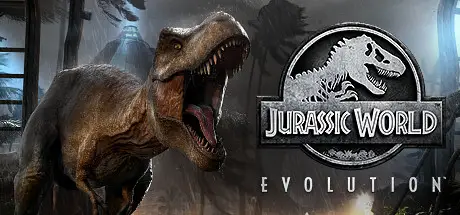


Opening
Let's be honest up front: Jurassic World Evolution is not a game for hardcore management-sim players. It is a dream machine that drags the Jurassic Park fantasy out of the cinema and drops it onto your desktop. Know what you are buying. You are buying the moment you dig up a fossil with your own hands, grow a Tyrannosaurus from a strand of genome, and then watch it pace the enclosure you built — and, on a bad night, shoulder straight through the fence. You are not buying a spreadsheet that wants you to optimise it.

The critical reception is split, and that split tells you everything. IGN famously handed it a 4.8, grumbling that there were too few interesting management decisions and too much fiddly busywork. OpenCritic settled at 71 with barely four critics in ten recommending it; Metacritic stopped at 69. Yet the same game holds an 87% positive rating on Steam across nearly fifty thousand reviews, sold a million copies in five weeks, and went on to multiple millions — Frontier Developments' most successful launch to that point. Cold faces from the press on one side, players' hard cash on the other. That gap is the key to the whole thing.

The answer is not complicated. It nails two things — dinosaurs and the Jurassic mood — to a degree few games of its era matched, and it treats management depth with a shrug. Come for the former and it pays you back many times over. Come for the latter and it will let you down. This review draws that line clearly: where it shines, where it falls short, and whether you are one of the people who should buy it. It is also where the series begins — the 2018 skeleton Frontier kept building on all the way to the third game in 2025, so talking about the original means talking about how the whole franchise was framed.
That framing matters because the strengths and the flaws you meet here are not isolated quirks; they are the blueprint. The dinosaurs that steal the show, the management loop that thins out, the campaign that behaves like an extended tutorial — every one of those traits gets either amplified or patched in the sequels, and the source of all of it sits in this first entry.
Read it as a game and as an origin story at the same time, and you will understand both why it sold by the truckload and why so many reviewers shrugged. Neither side is wrong; they were simply answering different questions about the same island.
Story | 5.5/10
Fabuła: 5.5/10Five islands that read less like a plot than a job-training checklist
Walk in expecting a story with a beginning, middle and end, and you will need to reset your expectations first. The campaign's spine is a march across the Five Deaths — the Muertes Archipelago of the films. You start on the tutorial-grade Isla Matanceros, grow each park to a star rating that unlocks the next island, and finish on the largest, nastiest plot of all, Isla Sorna. The whole arc behaves more like onboarding for a new "Jurassic park manager" than a narrative with a destination.

Every island is structured almost identically: lay down infrastructure, dig fossils and breed dinosaurs, keep visitors happy, take contracts for reputation, weather the occasional storm or breakout. What changes from island to island is climate, terrain and difficulty — not the story.
Plenty of critics flagged exactly this. The campaign reads like a stretched tutorial whose real purpose is to walk you to the doorstep of Challenge mode and Sandbox. It has no payoff you will remember. That is not a fumble; it is a deliberate trade. Frontier handed the narrative seat to the park you run yourself.

So the "story" here is emergent. You will not recall a cutscene, but you will remember the knot in your stomach the first time a hatchling Tyrannosaurus actually survived incubation, the scramble when a power cut let your carnivores loose, the quiet pride of finally pinning five stars on that last brutal island. The story does not live in the script. It lives in the park you ran with your own hands — and that is exactly why the dimension scores low while people still sink hours into it. If you have ever told a friend the tale of the time your whole park went sideways in a single thunderstorm, you have experienced this game's real narrative engine, and it is one no screenwriter authored.
What actually carries the drama: three departments and Malcolm's running commentary
The closest thing to narrative drive is the contract system run by three departments — Entertainment, Science and Security. Each issues its own missions, each wants something different, and those wants are designed to clash. Science nudges you toward hatching bigger, more lucrative, more dangerous carnivores to push research. Security wants your fences, patrols and tranquiliser response built up first. Entertainment only cares about guest satisfaction and how many revenue-spinning attractions you can squeeze in. Pleasing one means slighting the other two, and every decision is a walk along that tightrope. That tension is the smartest storytelling gesture the game makes.

And the figure who threads it into something with a pulse is Jeff Goldblum, back as Ian Malcolm. The chaos-theory mathematician who spent the films muttering that life finds a way becomes your full-time narrator here. With the original actor delivering those lines, that lazy, faintly mocking drawl lands the cinematic mood the moment he speaks. He is no background prop; he is the voice in your ear every time you expand the park or gamble on a risky decision, painting a cold mission list in dramatic colour.

The three expansions each graft on a fuller little story strand. Secrets of Dr. Wu sends you chasing Henry Wu's hybrid research; Claire's Sanctuary has Claire Dearing rescuing dinosaurs from Mount Sibo; Return to Jurassic Park restages the events of the 1993 film outright and brings back Sam Neill, Laura Dern and Goldblum to voice their roles. These DLCs are the most concrete narrative top-up the game has — the base story is genuinely thin, but with these strands added, the larger Jurassic jigsaw finally feels reasonably complete. Set beside Frontier's own, crunchier Planet Zoo, or the deeper sequel, this first game's narrative bones are clearly the thinnest. Of its three core weaknesses, story is the most visible.
Audio | 8.0/10
Dźwięk: 8/10A handful of notes and you are back in 1993: the pull of the Williams theme
You cannot talk about this game's sound without the John Williams theme — the melody that lodged itself in film history. The game leans on its variations constantly, and the first time you release a dinosaur into the park and the camera drifts back, those strings swell and snap you straight back to the awe of seeing a dinosaur lift its head on a cinema screen for the first time. This is not background filler. It is a key turned directly in your emotional memory.

The music does more than sound good; it carries the atmosphere. During ordinary operation the score is soft, curious, exploratory. The moment a storm warning sounds and the dinosaurs start to spook, it pivots into tension. The swell tracks your park's fortunes — gentle when it should be gentle, oppressive when it should press. Binding the score to your emotional rhythm keeps a potentially dull management loop wrapped in a film-grade sheen, and it is a large part of why the audio earns an eight. Most management games treat their soundtrack as background wallpaper you tune out within an hour; here the score is doing emotional work, quietly telling you when to relax and when to brace, and that alone separates it from the genre's usual indifferent loops.

Goldblum's voice, dinosaur roars and a thunderstorm: mood maxed out
Voice work is the other big plus. Jeff Goldblum returns as Ian Malcolm, and with the original actor delivering that languid, argumentative cadence, the fidelity of the licence jumps a tier — a point the player community brings up again and again, with more than a few citing "Goldblum's in it, what more do you want" as reason enough to buy. By Return to Jurassic Park, Frontier had pulled the 1993 cast back too, with Sam Neill and Laura Dern reprising their parts, turning that strand into the nostalgia high point.

Ambient and effect work keeps stoking that sense of presence. The low, pressuring roar of a dinosaur, the tremor of its footfalls, the crackle of sparks when one slams an electric fence, the rain and thunder of a tropical storm, the shriek of a breakout alarm — stacked together, they sell the "this park is about to go very wrong" dread. You are not just watching a park; you are listening to it run, and listening to it fail. The sound design understands that horror in the Jurassic films was always audio first — the shudder of water in a glass, the distant boom of footfalls — and it borrows that grammar wholesale, letting you hear the danger coming before you ever see it.

Compared with Frontier's own Planet Coaster on the same engine, the audio here leans far more toward serving cinematic mood than toward feedback for your management taps. Planet Coaster's sound exists to let you hear the crowds cheer and the rides whir; this game's sound exists to make you believe you are standing on an island of living dinosaurs. That difference in intent is the audio's signature. As for localisation, the game ships with text in several languages and keeps English voice acting front and centre — which is a strength, not a flaw, since the franchise's iconic characters voiced by their film actors is precisely the selling point. Even if you missed every English line, the roars, the thunder and that theme would be enough to flood your headphones with Jurassic. Sound is one of the few things here that critics and players barely argue about. In a game whose management depth divides the room, the audio is the rare element that simply works for everyone, and it does more heavy lifting for the overall impression than its modest place in a review checklist would suggest. Put on a good pair of headphones for this one; it was clearly built with that in mind.
Visuals | 8.5/10
Grafika: 8.5/10The 42 dinosaurs are the real stars: models, animation, even temperament feel alive
The most valuable thing on screen here is loaded entirely onto the dinosaurs. The base game carries around 42 species — from the nimble Gallimimus and Velociraptor to the lumbering Brachiosaurus and Triceratops, up to the headliners, Tyrannosaurus and Spinosaurus. Frontier's artists sculpted each one in ZBrush, Maya and Marmoset Toolbag, and the texture of the skin folds, the weight in the skeletal animation, the fineness of the behaviour have all been singled out, by press and players alike, as the single most successful thing in the game.

What makes it rarer still is that these dinosaurs read as creatures with moods, not as models that happen to walk. Their movement syncs with the environment's physics — sprinting, lowering to feed, squaring off, fighting in groups, idling when bored. Each one performs with personality. Paired with the territorial and social-need systems, you will see herd species cluster together and watch an antisocial animal turn aggressive the instant it is penned with the wrong company. That sense of living animals is something rival management games struggle to match, and it is exactly why you will drop to ground level and watch the fence line for far longer than the loop demands. There is a particular pleasure in simply parking the camera beside an enclosure and watching a herd graze, a behaviour the game never asks of you and rewards anyway — the kind of idle observation that turns a tycoon game into a wildlife documentary you happen to be directing.

The Cobra engine holds the scale, and one thunderstorm becomes a movie set piece
Underpinning all of it is Frontier's in-house Cobra engine, the same one behind Planet Coaster and Planet Zoo. Its strength is rendering large spaces, dense vegetation and crowds of busy objects — a whole tropical island of jungle, buildings, fences, guests and dinosaurs on screen at once, and the picture holds. At high settings the engine delivers high-resolution textures, soft dynamic shadows, convincing water reflections and dinosaur skin that responds to the light.

What truly pushes the visuals to "cinematic" is the dynamic weather married to a precise recreation of the films' iconography. Rain, fog and wind interact with the vegetation and ground in real time, and a tropical storm can flip your facilities and crack your fences — pair that with the silhouette of a Tyrannosaurus tearing free in the lightning and you have recreated the single most iconic horror beat of the Jurassic films with your own hands. The game lovingly rebuilds the giant gates, the Gyrosphere ride and the neon signage that fans clock at a glance. They are not asset-padding; they land squarely on the memory.

The honest weakness is not the fidelity but the management-layer UI. Menu density runs low and the hierarchy is a touch convoluted; key park data hides several clicks deep, and against shots that frame the dinosaurs with such care, the interface design is plainly the thing that got bumped to last. It is a small stumble, not a fatal one — your first reason to open this game is to look at dinosaurs, not tables, and at looking at dinosaurs it lands among the best of its era. Worth adding: the visual punch is not isolated. The Williams theme swells as the camera lifts off the ground to take in the whole park you built, and the music tows the image's epic register up another notch. Picture and sound are bound together, both serving the one job — making the film feel real. It is a presentation built to be felt rather than analysed, and on that count it remains, even years on, among the most convincing dinosaurs you can put on a screen.
Combat | 6.0/10
Rozgrywka: 6/10Entertainment, Science and Security at each other's throats — its cleverest idea
Pry the gameplay open and the standout is the three-department contract system. Entertainment, Science and Security each hand you missions, each want something different, and those wants are built to contradict. Science eggs you on to hatch bigger, more lucrative, more dangerous carnivores to advance research. Security insists you shore up fence strength, patrol teams and tranquiliser response first. Entertainment only cares about guest satisfaction and whether you can squeeze in another revenue-spinning attraction or shop.

Pleasing any one of them means neglecting the other two, and every decision is a walk along that wire. This three-way tug-of-war is meant to be the strategic heart, forcing trade-offs and forward planning.
A Tyrannosaurus rakes in tourist money, but the moment your fence is not strong enough, one storm sends it loose to eat the guests, and your security standing and park rating collapse together. That everything-is-connected design instinct is where the game is genuinely smart.

From fossil to headline dinosaur: the breeding chain is complete, but the late game is just clicking
The breeding chain itself is built out well and is the most rewarding link in the core loop. It runs like this: dispatch expedition teams to dig sites around the world, use the fossils you recover to extract genomes — each species has a genome map from zero to one hundred per cent, and the higher it climbs, the better the hatch rate, stability and lifespan. With enough genome you incubate the animal, and gene editing lets you bolt on traits: aggression, disease resistance, lifespan, even cosmetic colouring. Raising a single dinosaur from a chunk of rock into the park's headline attraction with your own hands is honest, tangible satisfaction. There is a real arc to it — the gamble of a low-percentage hatch, the relief when the egg holds, the small thrill of tweaking a colour pattern until the animal looks like yours and no one else's. For the first stretch of the game, that loop alone carries the experience.

Disaster response supplies the tension. Dinosaurs carry social and territorial needs, and mishandle their temperament and they grow agitated, ram the fences, break out. When it goes wrong you take direct control of ranger teams to repair fences and treat the animals, or fly an ACU security helicopter to tranquilise the escapee. These are the most cinematic, adrenaline-spiking moments the gameplay has — and crucially, the game lets you drop the management abstraction entirely and pilot the response yourself, which is when the sim briefly becomes an action film with you in the cockpit. The contrast between the calm of building and the chaos of a breakout is the closest the loop comes to genuine drama.

But the problem sits in that same loop. Once you have cleared all five islands, unlocked the main dinosaurs and learned the contract rhythm, what is left is mechanically repeating the same actions — click the dig, click the fossil, click the research, micromanage the rangers tending the dinosaurs. The departments' contracts are heavily templated, mostly push-this-metric-to-that-number or do-this-within-a-time-limit, and the novelty drains after a few cycles. IGN's 4.8 is aimed precisely here: too few interesting management decisions, too much fiddly busywork. Set against Frontier's own, crunchier Planet Zoo, the gap widens — Planet Zoo's economy, animal welfare and habitat design run far deeper and can hold you for hundreds of hours. This game's management is shallower, but Planet Zoo can never hand you that movie set piece of a dinosaur tearing through a fence in the lightning. Both sides trade something. Sort out which you want and the whole thing stops being a riddle — its ceiling was never in a spreadsheet; it was always in the dinosaurs you raised yourself.
Content | 7.0/10
Zawartość: 7/10Campaign, Challenge and Sandbox: a 22-hour main line, but the fun really lives in the sandbox
The content splits roughly three ways. First, the campaign, which walks you island by island across the Five Deaths, unlocking the next by completing department contracts and growing each park to a star rating. By HowLongToBeat's figures the main line runs about 22 hours, while wringing every island, dinosaur and challenge dry — the completionist run — pushes toward 70. Second, Challenge mode, added in a later free update, a timed management run under funding and disaster pressure that hands the harder players a long-term goal.

But the slice players agree is the most fun is the third — the sandbox you unlock on Isla Nublar. Here there is no resource limit and no schedule to chase; you simply build the Jurassic park of your dreams however you please — route the tour paths your way, raise whichever dinosaurs you like, scale the place as large as you want. Plenty of people only finish the campaign to unlock the sandbox, then pour dozens of hours into it. If the campaign is being pushed through a management lesson, the sandbox is finally being handed the keys, and the gap in freedom and creative room is an order of magnitude. That freedom to design every shop's look — its structure, its colours, its props — turns the game from a management problem with a correct answer into a Lego board to play on, which is exactly why most people's real playtime lands here rather than in the campaign. It is worth knowing this going in: the campaign is the price of admission, the sandbox is the show, and judging the game purely on its scripted islands undersells where its longevity actually comes from.

Which DLC to grab — or whether to just jump to a sequel: a clear-eyed buying note
The DLC here is fairly scattered, and buying piecemeal bleeds your wallet, so the better move is to grab the Complete Edition with every expansion in the box, or to clear the lot in one go during a sale.
The three main story expansions each have their hook: Secrets of Dr. Wu (20 November 2018) adds a hybrid-research line and new facilities; Claire's Sanctuary (18 June 2019) brings three new dinosaurs, two new islands and a fresh paleobotany mechanic; and Return to Jurassic Park pulls back the 1993 film cast to voice their roles, letting you rebuild the park inside the classic film's setting — near-essential nostalgia for fans. Beyond those sit a handful of pure dinosaur packs to pick by taste.

One clear-headed reminder to close on: the series is already three games deep. Jurassic World Evolution 3 (2025) scored 84 on OpenCritic, polishing this park-management formula firmer and fuller. So if you only want "the best Jurassic park management," it is entirely fair to look straight at the sequels. But if you favour the first game's film settings, want to walk the series from its starting point, or are simply here for the unfiltered flavour of the Five Deaths, the original still holds its place — the shallowest content pool of the three, yet the foundation stone of this whole "dinosaur licence plus approachable management" idea, the place every later game's skeleton grew out of. Picking it up today, with a Complete Edition routinely cheap on sale, is a low-stakes way to see where the whole thing started before deciding how far up the sequels you want to climb.





Komentarze 0
Chętnie poznamy Twoje zdanie
Dołącz do dyskusji i podziel się opinią o grze.
Nie ma jeszcze komentarzy. Napisz, co sądzisz o tej recenzji.