























Opening
Most games hand you a world that was never there. This one does the opposite: it takes the actual planet you live on and bolts a cockpit onto it.
Type in the airport code of your hometown, push the throttle, climb, and bank — and there it is, the river you cross every morning, the bridge you recognize, the block where you actually live, sliding past under the wing. No invented open world gives you that jolt of seeing the real thing rendered back at you. This is the single most irreplaceable trick in the game, and the one no sequel has managed to steal. It is not a clever map. It is the Earth.
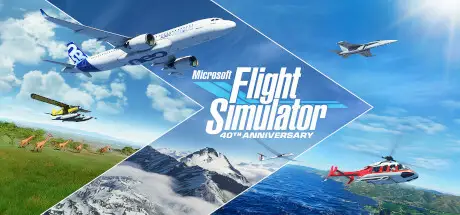
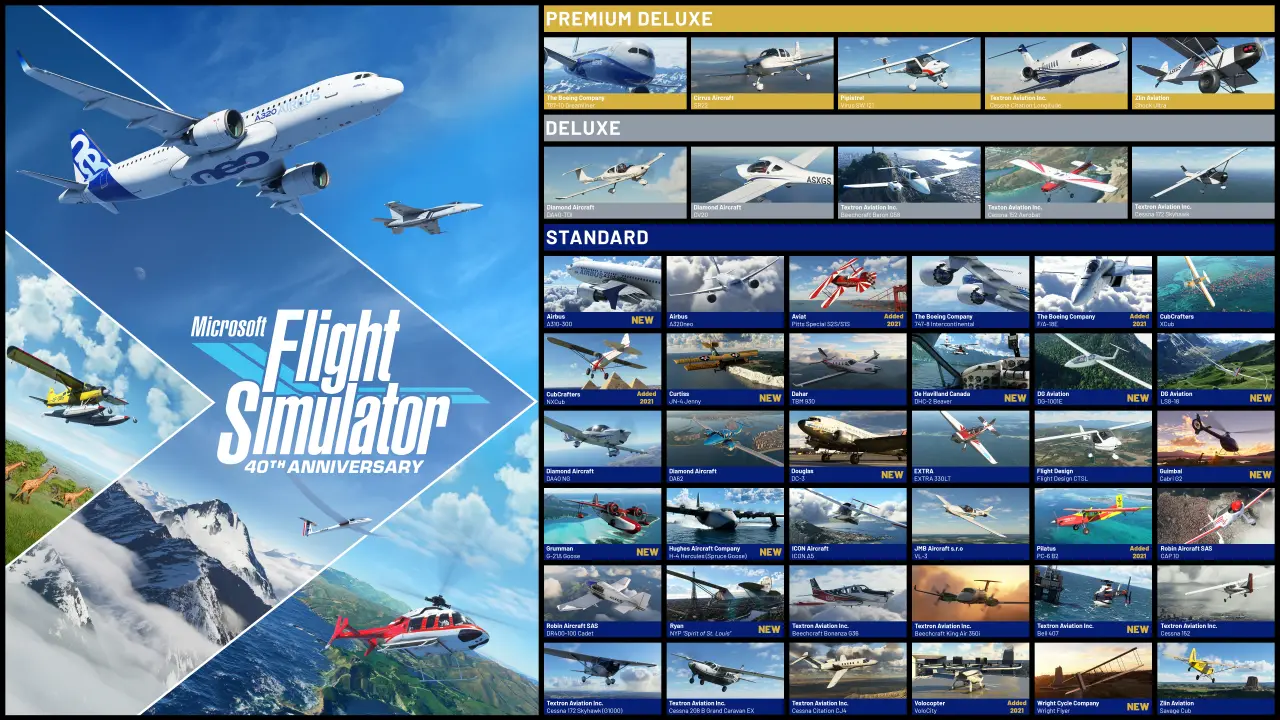
The 40th Anniversary Edition is the most complete this idea has ever been. On a planet already rebuilt 1:1, it drops in helicopters, gliders, and a whole row of aviation legends running from the Wright Flyer to the Spruce Goose. A staggering real-world simulator just turned into a museum of flight you can fly yourself.
Story | 5.5/10
Fabuła: 5.5/10There is no script here — the story is the real world
Hunt for a plot the traditional way and you will come up empty. No protagonist, no villain, not a single line of dialogue, nothing nudging you toward a next beat. That is exactly why this dimension takes the lowest score on the page. A 5.5, and it earns it honestly.
Loosen your definition of "story," though, and a different kind of narrative surfaces — one most games simply cannot offer. The telling lives in the world itself rather than in a screenplay. Every city you cross, every river you trace, every aircraft you climb into carries a real strand of history or geography behind it. Spend another hour up here and you walk away knowing the actual planet a little better. GCORES put it precisely: this is an honest portrait of ordinary life, with nothing exaggerated. It does not move you with conflict. It moves you with the fact that all of it is true.
And the route is yours to write. You pick where to take off, which skyline to aim for, whether to detour past some famous peak or follow a coastline just because it looks good from the air. Your flight plan is the outline you draft for yourself, beat by beat, with no editor pushing back. One pilot circles a childhood neighborhood until the fuel runs low; another retraces a legendary crossing; a third just chases the sunset west with no destination at all and calls it a good evening. The game stages nothing, yet it hands you the whole globe and lets you be the sole author of the trip. That is a strange, quiet kind of storytelling — authored entirely by your own choices — but for the right player it sticks longer than any scripted cutscene ever could.
The historical aircraft are how it actually tells a story
The 40th Anniversary Edition pushes this "reality as narrative" approach to its limit by parking a row of aviation legends in your hangar. This is where the edition finds whatever story it has.
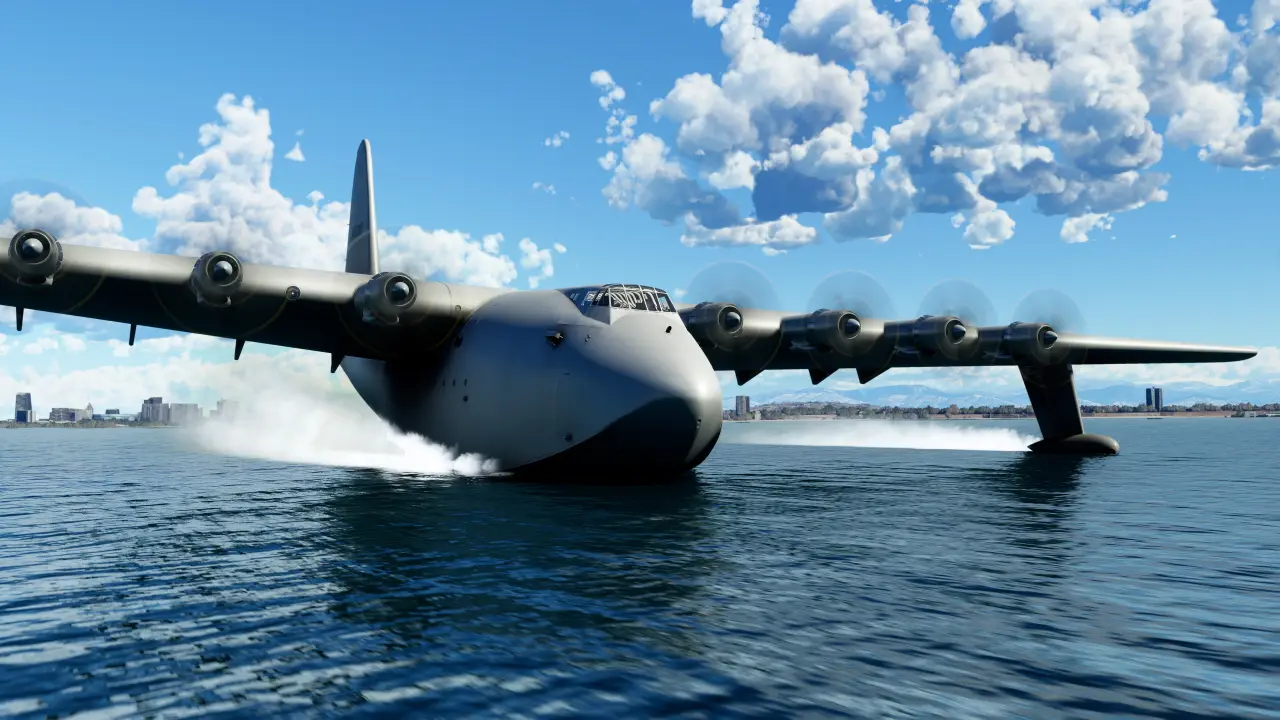
Climb into the 1903 Wright Flyer — barely more than a bicycle that flies — and feel how fragile humanity's first lift off the ground really was; the thing wobbles on the edge of falling out of the sky the entire time. Take the 1927 Spirit of St. Louis and retrace Lindbergh's lonely run across the Atlantic, hours of open water with nothing to look at and everything to lose. The one that lands hardest is the 1947 Hughes H-4 Spruce Goose, the largest wooden seaplane ever built, which flew exactly once and missed its war entirely. One reviewer caught the feeling cleanly: the fact that everyone can fly a plane otherwise piloted by a single man is extremely cool. That quiet democratizing of aviation history is what gives a dry "simulator" a pulse. The game does not narrate. It simply puts a piece of the past in your hands and lets you fly it.
The 24 classic missions hand free flight a thread to follow
Pure open-ended flight has one weakness — "I arrived, now what?" No applause, no next objective. It is the easiest place to feel lost.
The 24 classic missions pulled from the series' past are a deliberate patch on that gap. They give players who want a little pull a sense of where to go and what to finish, layering a structured path with a start and an end onto the bare freedom of the sky. Some recreate famous flights, others set you a tricky approach or a bush-strip landing — small, self-contained reasons to fire up the sim when the blank globe feels too open. They will not turn this into a game with a plot, but they do tie a gentle rein to the aimless drift, giving newcomers a heading and veterans a reason to revisit old set pieces. Set it beside something like Elite Dangerous, which at least offers factions, mission chains, and a felt sense of purpose, and the contrast is stark: in this dimension the game is a wholly different animal — it hands the entire right to narrate back to the real world and your own curiosity.
Audio | 6.0/10
Dźwięk: 6/10The score is functional — don't come for memorable themes
Let's be blunt up front. If you want a soundtrack you can lift out and replay months later, this game will let you down. Its music is mood wallpaper: calm, restrained, built to help you relax into the flight rather than to spike an emotion. That is the main reason audio lands at a 6.0 — not unpleasant, just unmemorable.
Next to peers whose theme tunes became series calling cards, it has all but given up on "musical storytelling." Which fits its whole temperament. This was never a game chasing emotional swings; it is a simulator chasing presence. The music stays quiet on purpose, clearing the stage so another kind of sound — the real world's — can step into the spotlight.
Picture yourself drifting over the Alps. A swelling orchestral cue would only break the calm. The game steps back and lets wind, engine, and your own breathing carry the scene, and that reticence is a design choice in its own right — silence used deliberately, the way a nature documentary trusts the landscape to do its own talking.
The real sound design hides in the engine, the wind, the tower
Set the score aside and you find a corner that is genuinely well made: the authentic noise. This is where the sound design earns its keep.
Every engine growls differently — a piston prop's chatter and a jetliner's shriek live in separate worlds, and you learn to tell which aircraft you are in with your eyes shut. As airspeed climbs, the wind noise outside the fuselage creeps up with it, a quiet gauge of how fast you are really going. Key the radio and air traffic control reads you the clearances, runway approvals, and headings line by line. GCORES singled out exactly this: the laborious tower-comms ritual is the badge of its hardcore realism, and the same wall that sends newcomers bolting down the runway before quitting. None of it is showy, but together it weaves a net of "I am genuinely in this cockpit." The new helicopters and gliders thicken that net further — the rhythmic slap of rotor blades overhead, the near-total hush of an unpowered glider where the loudest thing is your own movement, each adds its own distinct texture to the cabin.
Real weather and VR give the sound a direction
The audio is also wired into the live weather system. When a real thunderstorm is rolling somewhere, fly into it and you hit wind shear and turbulence — the airframe shudders, rain hammers the windscreen in dense bursts, the engine note strains against the gusts, and the flight turns genuinely tense. Sound here is not decoration; it is the signal that something has gone wrong, often before your instruments have caught up with it. You learn to fly partly by ear, which is about as "simulator" as a soundscape can get.
Strap on a VR headset with spatial audio and the immersion deepens again. You sense by ear which side the engine sits on, which direction the co-pilot's chime comes from, which gauge the alarm is firing from — the whole cockpit wraps around you in three dimensions. This is the most underrated and most "simulation"-defining part of the audio. Its strength was never melody. It is the conviction that you are actually strapped into that aircraft — engines roaring at your ears, wind rising with the speed, the tower crackling over the radio — until you forget you are sitting in a chair at home.
Visuals | 9.5/10
Grafika: 9.5/10The whole Earth is the visual — that is the floor for a 9.5
This game scores a 9.5 on graphics not because of any single effect, but because of a feat almost nobody else has pulled off: it rebuilt the entire real Earth, 1:1, inside the game.
The world holds over 1.5 billion buildings and 2 trillion trees, plus mountains, roads, and rivers — none of it procedural filler, all of it mapped to things that genuinely exist out there. GCORES described it as a real 4K capture of the planet's surface, where you watch everything from ice crystallizing on a high-altitude window to the world's landmarks passing beneath your feet one by one. Fly over a city you know, pick out that street and that tower, and the shock of seeing reality inside a game is something no fictional open world can hand you.
Better still, the light and weather are real too. Morning haze, the glare of noon, dusk clouds scorched gold and red, the river of city lights pooling on the ground at night — all of it shifts live with your real local time and the real conditions overhead. The same city flown at dawn and flown at sunset is two completely different pictures, and neither was storyboarded for you. That quality — visuals pushed around by the real world rather than handed down by a designer — is the most bewitching and least copyable layer of its look, and the reason screenshots from two pilots over the same airport rarely look alike.
The trick is turning satellite photos into solid cities in real time
Realism at this scale was never hand-built; no team could model the whole planet by hand. Behind it sits a piece of cloud-side magic.
The terrain data comes from Bing Maps, more than 2 petabytes of satellite and aerial imagery. Microsoft's Azure cloud, paired with photogrammetry AI from Blackshark.ai, takes those flat overhead photos and rebuilds them in real time into buildings with height and volume. Meteoblue's live weather then makes the clouds you cross over a place likely match what is actually there at that moment. Put plainly, its "graphics" are not painted — they are sampled from reality and computed by AI, and that is the fundamental break from how every traditional game renders a scene. Which is also why the surface manages to be both vast and detailed: photogrammetry nails the named towers and landmarks of big cities, while the AI fills in the data-poor countryside, forests, and small towns with something plausible, so wherever you fly the ground below is never a hollow texture. That "real data as the base, AI for the detail" approach is how it sustains an entire planet on sane storage and compute, streaming the world to you a tile at a time rather than shipping it all on a disc that could never hold it.
The 40th edition's patch finally treats its hardware appetite
Top-tier visuals come at a price, and this game's price has always been a monstrous appetite for hardware, especially VRAM — long flights or rapid swaps between high-detail scenes could fill the memory and crash it.
The 40th Anniversary Edition does real work here. It adds a memory defragmentation system aimed squarely at the crashes that came from maxed-out VRAM, and it folds in NVIDIA DLSS 3, leaning on AI-generated frames to lift the frame rate so high settings run smoother. The signal is clear: this edition is not just stuffing in content, it is genuinely tackling the old ailment of "gorgeous but greedy and occasionally unstable," letting more mid-range rigs share that real sky. And the optimization does not just crank the quality down for frames — it works while preserving as much of that top-tier realism as it can. Against a fellow Microsoft first-party showcase like Forza Horizon 5, which renders real scenery vivid and crowd-pleasing, this game runs the other route: restrained, documentary-grade, after truth rather than prettiness. So when it does hand you a moment too beautiful to seem real — a layer of fog burning off a valley, a runway lit gold at dawn — you know that was not the artists at work. The real world simply looked that good for an instant, and you happened to be flying through it.
Combat | 9.0/10
Rozgrywka: 9/10Its hardcore depth lives in those thousand-plus control surfaces
You can sum up the depth with one number: every aircraft carries over a thousand control surfaces a physics engine actually models. What sits in your hands is not a simplified flying toy but a system that runs uncomfortably close to real aerodynamics. That is the foundation under its 9.0 for gameplay.
What makes it rare is that all that depth is adjustable. The difficulty slides from full manual to full assist: the hardcore can switch off every aid and wrangle trim, throttle, flaps, and gear themselves, while a newcomer can flip on auto-trim and guidance and just enjoy getting airborne. GCORES flagged the most off-putting face of it — takeoff is no simple throttle-shove but a march through checks, settings, and tower comms, and plenty of beginners bolt straight down the runway and yank up before giving up. That friction is the barrier, and it is also the most hardcore, most satisfying thing about it.
Because of that unbroken spectrum from full assist to full manual, the game holds two entirely different players at once. Treat it as a gentle sightseeing trip with every aid on, drifting past the scenery; or treat it as a near-professional trainer, switching aids off one by one and seriously learning each gauge, each call, each approach rule. The same game can put you in the air in ten minutes or keep you studying for hundreds of hours without ever quite feeling mastered — and that enormous range from shallow to deep, sitting inside a single difficulty slider, is the real ambition in its design.
Helicopters and gliders are two brand-new flight logics
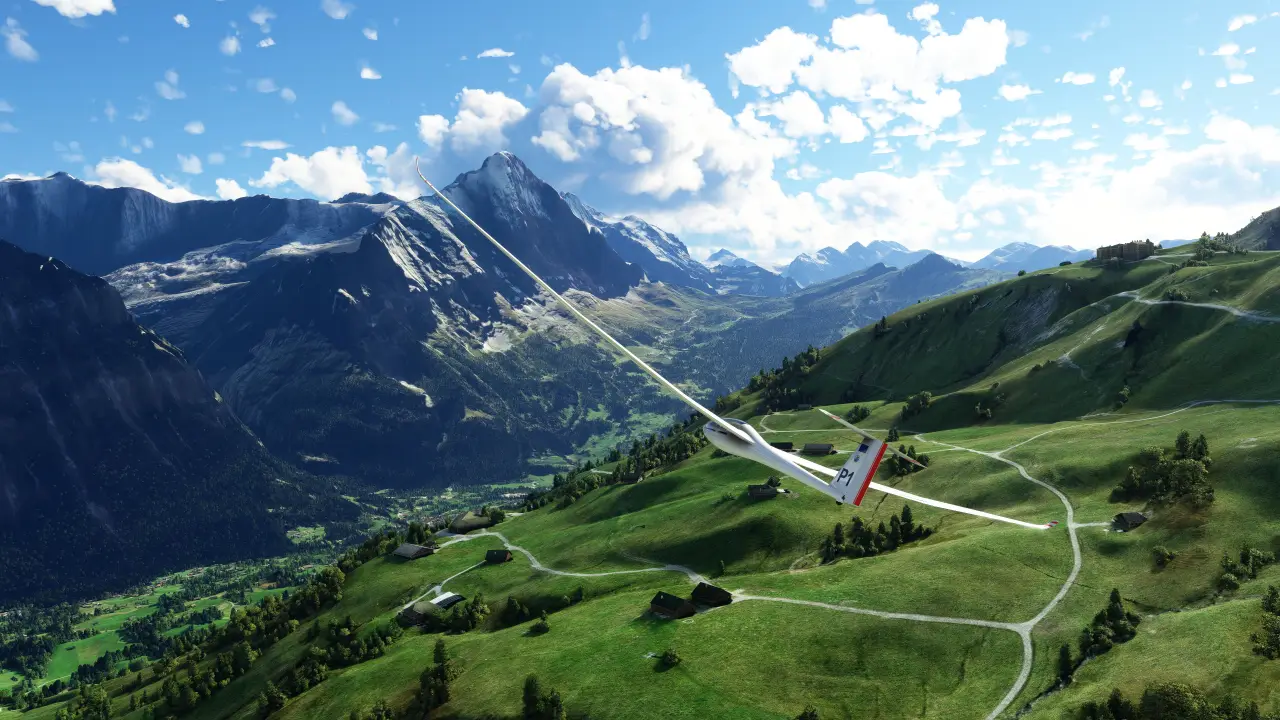
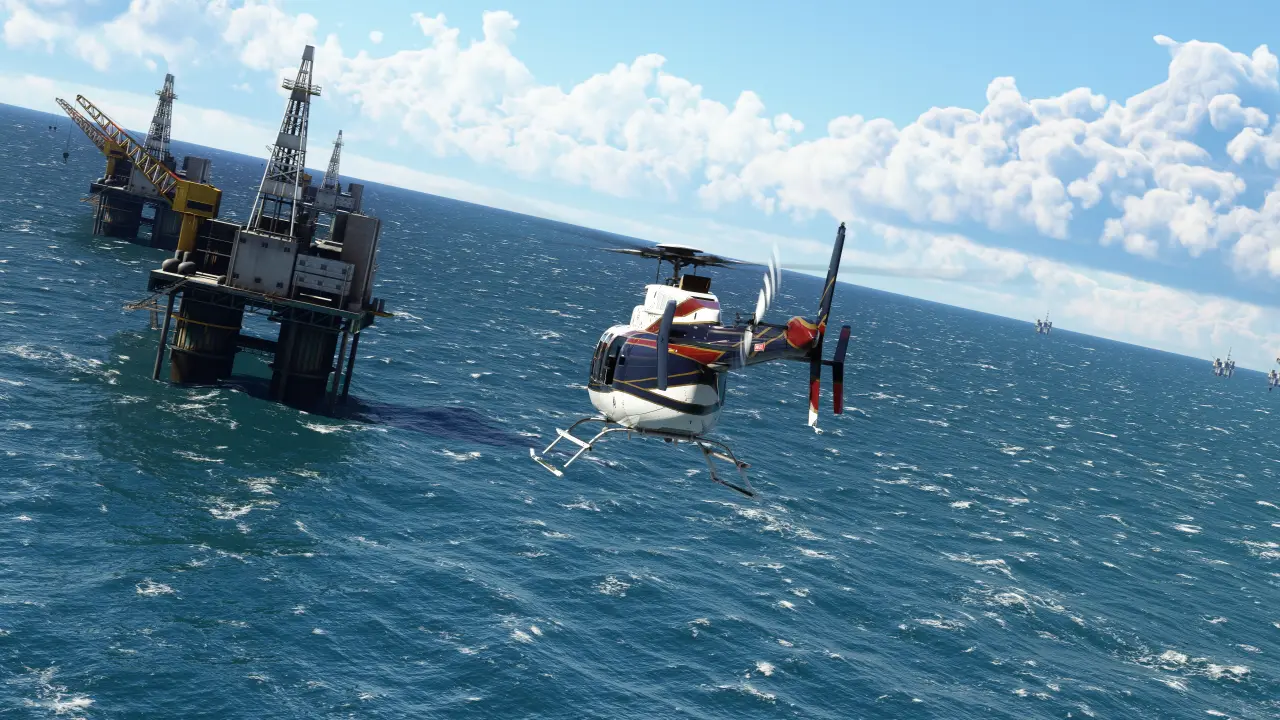
The biggest gameplay expansion in the 40th Anniversary Edition is the first-ever arrival of helicopters and gliders — a series first since 2006. They are not reskinned fixed-wing planes; each carries a wholly different flight logic.
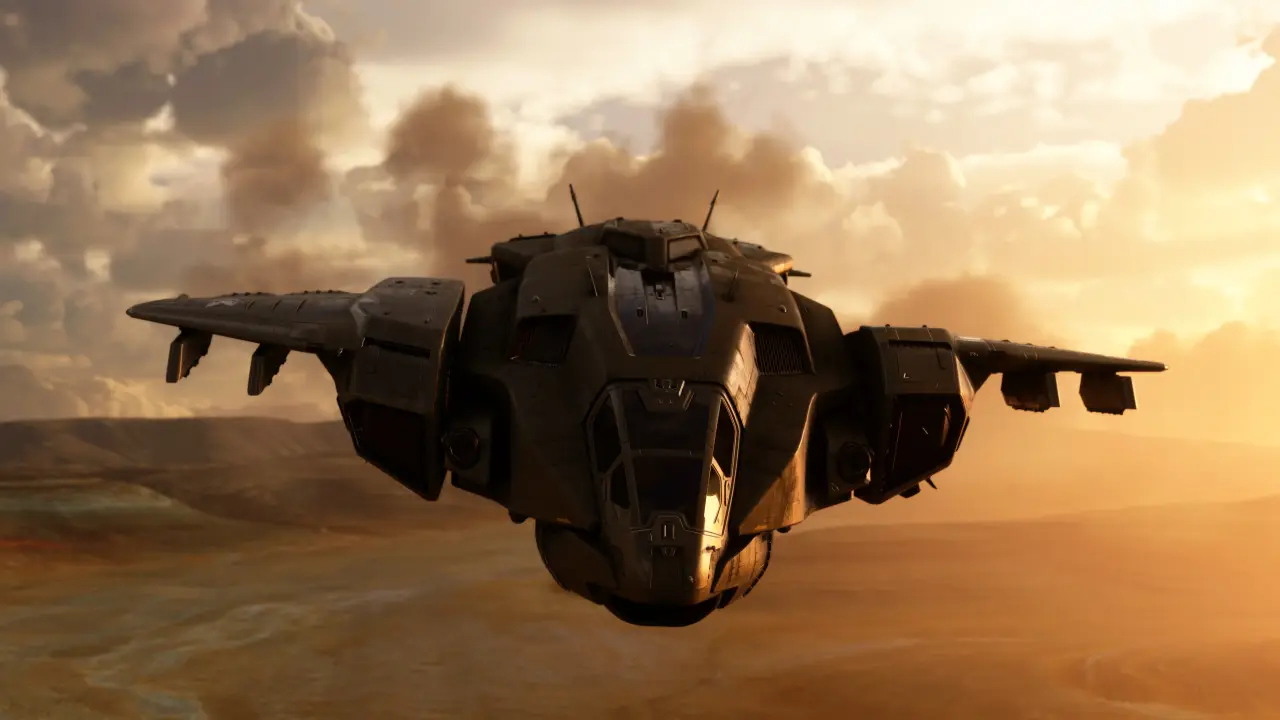
Helicopters start you from zero. Hovering, low-level maneuvering, fine torque control — it is a creature entirely separate from an airliner, and the first few minutes humble you. One reviewer said the most fun he had in the whole edition was flying a chopper through New York, that low, unhurried pace striking a strange peace against the city's usual din. The contrast is the point: a machine you expect to be frantic turns out to be the calmest seat in the game.
Gliders go further still. With no engine at all, you learn to read thermals and ridge lift, banking patience into altitude — it is, at heart, a negotiation with nature, and losing that negotiation means a slow sink toward the ground. The same writer admitted the glider demanded a surprisingly engaging back-and-forth of tilting the sticks just to gain speed. Neither aircraft is a garnish. Each rewires how you think about staying aloft, and together these two new lines widen what "flying" even means here by several orders.
Between depth and ease, it found a balance rivals didn't
It is not as if the hardcore flight-sim lane has no competition. X-Plane 12 is famed for the precision of its flight physics, DCS World digs deeper into military fidelity, and on any single axis it may not always rank first.
But its real trump card is cramming near-professional depth and approachable ease into one product, a pairing few manage. Add live real weather, so the wind, cloud, and visibility differ on every flight and you never fly the exact same leg twice, and you have a powerful long-term reason to keep coming back. A crosswind landing at your local field on a gusty afternoon is a different problem every single time, because the gust is real.
Rivals either pin you in the hardcore deep end or fall far short on the scale of the world. This one, with a 1:1 real planet and an adjustable flight system, finds a seat for everyone from the aviation obsessive to the weekend dabbler who just wants to drift over a coastline. That marriage of depth and breadth — rare on its own, rarer still at this scale — is the part of its gameplay that stays hardest to copy, and the reason it still anchors the genre years after release.
Content | 9.0/10
Zawartość: 9/10A whole planet is its explorable map
Talk about content volume and this game starts from a place nothing else can even pretend to touch: its "map" is the entire Earth, every continent, ocean, and city already in the box.
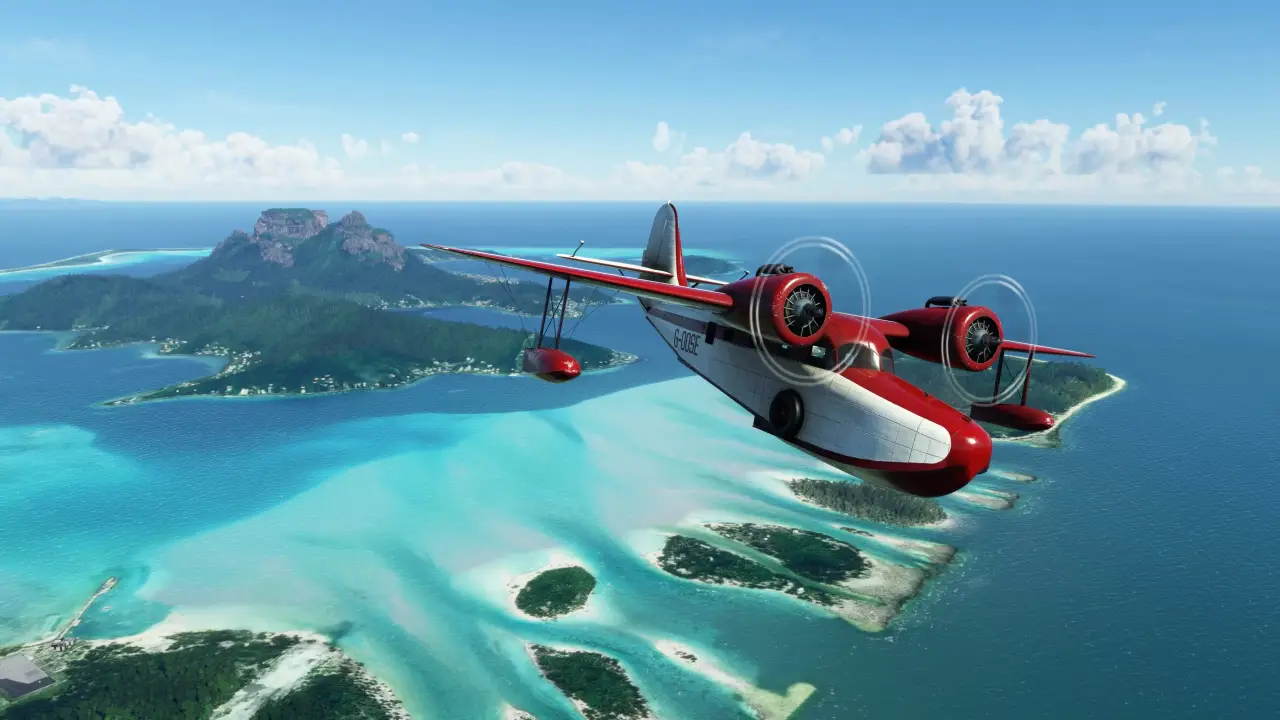
Other open worlds measure themselves in square kilometers; this one measures itself in a planet. From the Arctic ice cap to the dunes of the Sahara, from Himalayan peaks to lonely Pacific islands, any real place on the globe is somewhere you can simply fly over and look. There is no "edge of the map" to bump into — fly long enough in one direction and you come home from the other side. That near-infinite room means its lifespan is not counted in "hours to beat" but in how much curiosity you still hold for the world. For many players, just plotting a long transcontinental route and watching unfamiliar terrain unfold below is enough to burn through dozens or hundreds of hours, with the in-flight map doubling as a travel wishlist of places you now want to see for real.
And the map keeps growing. The game ships regular free "world updates" that pick a country or region and rework its terrain, landmarks, and airports to a finer grade, lifting that patch of ground another notch in fidelity. So even after you have flown the whole globe, come back later and some place you know may have quietly become truer and more detailed — a city that was a rough approximation last year now bristling with hand-finished landmarks. That "the map is always being completed" trait stacks a layer of depth in time on top of the physical "whole Earth" already there, turning the world into something closer to a living service than a finished product.
The 40th edition adds three brand-new content lines at once
In the words of frontline community players, the sheer volume of this update is almost overwhelming. It delivers three new content lines in one shot.
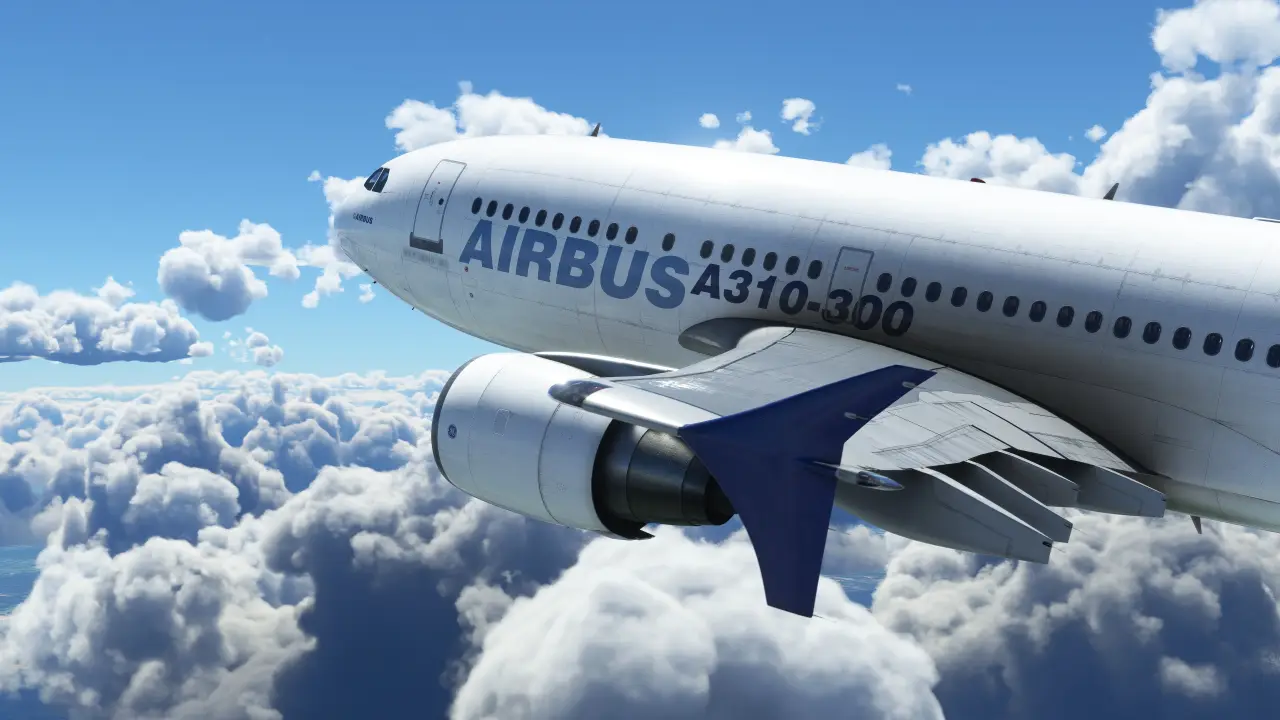
Lay the list out: 7 historical aircraft (from the Wright Flyer to the Spruce Goose), 1 faithfully rendered Airbus A310 widebody, 2 helicopters with 14 heliports, 2 gliders with 15 glider airports, 4 classic commercial airports (including Chicago's long-gone Meigs Field), and 24 classic missions drawn from the series' history. This is no toothpaste-squeeze patch; it carpets the past, present, and divergent play styles of "flight simulation" all at once. The heliports and glider fields meaningfully expand your takeoff and landing options, giving the new aircraft places of their own to belong rather than stranding them at the same handful of runways.
And the new content is not siloed. Historical planes bring nostalgia and education, helicopters and gliders bring fresh handling, the missions bring objectives — together they widen an already vast game into several different ways to play. A pilot who only flew airliners can now sightsee a city by helicopter, chase unpowered endurance in a glider, and feel century-old flight in the Wright Flyer. One purchase, several moods, and no two of those experiences asking the same thing of you.
Free, ongoing updates are its most underrated value
One last point, and the one most easily missed when content lands a 9.0: the updates are free.
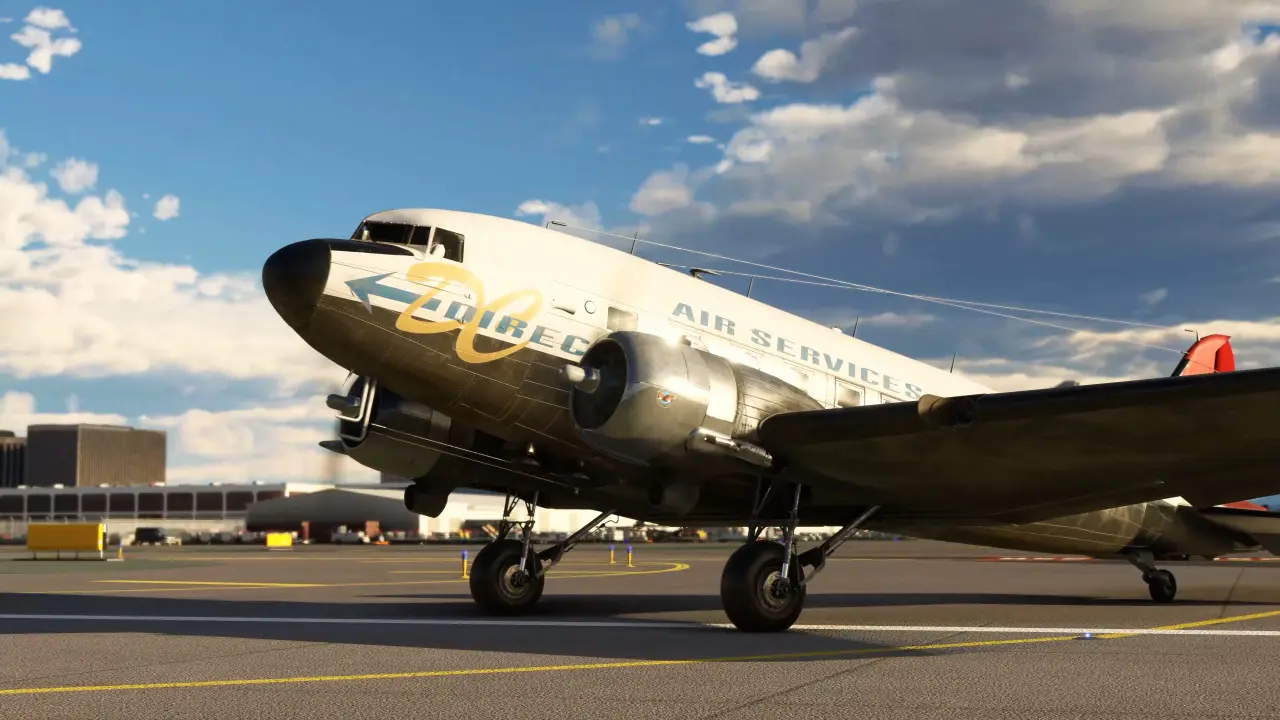
The 40th Anniversary Edition itself arrived as a free update pushed to every existing player — veterans paid nothing extra and simply received this whole batch of new content. That generosity is rarer than it sounds; plenty of live-service games would have walled the same haul of aircraft behind a paid expansion. Bought fresh on Steam, the "40th Anniversary Edition" is the complete entry-level package bundling the base game with these additions, and for a simulator you can sink hundreds of hours into that is no steep ask at all.
Set it against the 2024 sequel, whose reception actually slid on performance issues and missing airports, and the picture sharpens. The maturity and sheer thickness the 2020 generation plus the 40th edition ground out over repeated polish remain the steadiest, most worthwhile entry in the whole series. Stack all of that together and the 9.0 here rests not on the single gimmick of "big map" but on solid scale, real breadth, a generous update cadence, and a price-to-playtime ratio that quietly embarrasses most of its peers.






Komentarze 0
Chętnie poznamy Twoje zdanie
Dołącz do dyskusji i podziel się opinią o grze.
Nie ma jeszcze komentarzy. Napisz, co sądzisz o tej recenzji.