





















Opening
There is a specific quiet that settles over the screen the first time the electric chair powers up. No dramatic camera, no swelling music — just a warden reading out the charges, a prisoner strapped down, and a procedure that grinds forward like a document already signed and stamped. That is the moment the game stops being about management and starts being about your attitude toward management. You are not stacking rooms and running cables. You are deciding whether a prison should behave like a machine or like a society.

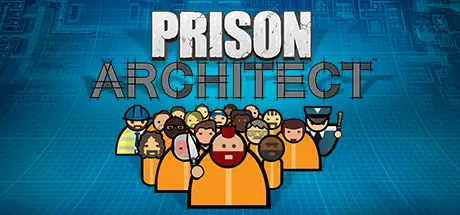
Prison Architect earns its reputation not by milking its subject matter for melodrama, but by refusing to. It folds executions, riots, mental breakdowns and punitive reform into your daily spreadsheet of decisions, and lets the weight arrive on its own schedule. At first you only want to avoid going bankrupt, losing power, or letting a fight break out. The thing that keeps you up at night is that the systems keep asking you the same question, over and over: safety first, or people first. A decade after its 2015 launch, that question is still why this one gets recommended. It is also why two players can pour the same hundred hours in and come out describing entirely different games: one ran a fortress of fear and barbed wire, the other a halfway house with classrooms and workshops, and the simulation honored both. The building is the same. The institution you chose to make of it is not. That is the trick the game pulls again and again, and it is the reason a top-down management title about prisons still holds its own against far glossier competition.
Story | 6.5/10
Fabuła: 6.5/10The story is not the main course — it is the appetizer
Story is not the main dish here; it is the cold appetizer that sharpens your palate. The campaign and its mission levels exist, very plainly, to teach: they walk you through the mechanics of running a prison one piece at a time, so do not show up expecting a spine of twists and character arcs dragging you forward. It is closer to a tutorial dressed as a set of levels, the kind that slips the fundamentals into your hands while you think you are just following a story, and on that narrow brief it works well enough to get you ready for the sandbox.

That said, it never phones it in. Its real strength is how dark the subject matter is allowed to stay. Death row, the chair, punitive reform, mental collapse — none of it gets prettied up. It is dropped straight into your management loop as an institutional reality you have to sign off on. The effect is strange: you are nominally there to learn a system and crunch numbers, yet value judgments and a thin thread of unease keep surfacing whether you want them to or not. The campaign even leans into that discomfort directly in places, framing chapters around the people on the receiving end of the institution rather than the one running it, so the lessons land with a moral aftertaste the mechanics alone would never carry.
How the dark material is left to ferment
Some moments cut deep. A doctor stands at a cell door, speaking softly to an inmate teetering on the edge of a breakdown, oppressive photographs propped nearby. Or the execution itself plays out with no theatrical camera and no mournful score — just a procedure advancing, step by cold step, to the end. The game never leans on great slabs of dialogue to crush your mood. It lets the subject and the scene ferment in you slowly instead.

Game Informer pinned it perfectly: great moments emerge naturally from well-made simulations, and this one is never short of them. Its drama is not a writer's pre-set beat. It is authored by the systems themselves — a single missed contraband sweep igniting a full riot, an inmate starved of freedom for too long tunneling out under cover of night.
That capacity to grow stories from rules, to have systems narrate fates, is the most valuable and least replaceable thing it does on the narrative front. The clemency hearings on death row carry their own quiet drama: an appeal pending, a date set, and the unsettling knowledge that the procedure will run regardless of how you feel about it. What sticks with you is never a line of dialogue but an incident you brewed and then had to clean up — and that is the story that belongs to your run alone, unrepeatable and unscripted.
What it cannot do, said plainly
The limitation is just as clear. Story is never the engine; most of the time it is in service of the play, laying track for the mechanics. Set against Rimworld, that other colony sim built on emergent narrative, the contrast is sharp: Rimworld lets stories bloom in every direction across a cast of colonists, while this anchors all of its narrative to the single subject of one prison — more focused and colder for it, but also narrower.

So if what you want is deep characterization and a main thread you will remember for years, this will not fill you up. The shortfall is real, but it is no fatal wound, because from day one the entire center of gravity was placed on how the systems speak.
A 6.5 for story is an honest seat: it does not fumble the ending and it does not coast — it simply never set out to be the lead. It is content to be the backdrop and hand the spotlight to the one thing that actually talks: the simulation. And there is something quietly fitting about that, because a prison drama told through ledgers and routines, rather than cutscenes, ends up implicating you in a way a scripted tale never could.
Audio | 6.0/10
Dźwięk: 6/10The sound stays out of the way — until the alarm hits
Sound is not the part of this game you walk away humming. Play for hours and you might not be able to call up a single melody, but you will absolutely remember the way the air seems to clench the instant an alarm goes off. In that beat the whole prison changes rhythm: figures break into a run, guards surge toward the incident, and your own hands tighten without being asked. There is no lush orchestra and no manipulative theme song, yet the audio shows up exactly where it is needed, every single time. That restraint is itself a kind of judgment.

The whole design leans functional. Its job is to serve the prison's daily churn — the unrest, the alarms, the texture of a crisis — rather than to shove emotion at your face with music. That is a genuinely smart call.
Your attention is almost always on deployment and decisions, eyes tracking hundreds of little figures, and a score that grabbed for the spotlight would only steal the focus you need to read the systems and catch the anomaly. The clink and shuffle of an ordinary day, the bark of a patrol dog, the dull thud of a door — these are the cues that actually matter, and they are mixed to be parsed rather than admired. It knows where it belongs, and it stays there without ever crossing the line into your thinking. Precisely because it holds back, when the alarm finally cuts through that low ambient hum, you snap straight back to a tense present and know something big is underway.
A weak hook is its honest shortcoming
For the same reason, it pays a real price on memorability. The audio's presence is clearly thinner than the gameplay's, and this is not the kind of game whose soundtrack you go hunting for to loop after you quit. What you carry out is the mechanics and those white-knuckle riot nights, not a cue or a refrain. Critics on both sides of the language divide landed in the same place here — domestic outlets flatly named the thin background music as a weak point years ago.

The shortfall is concrete: it cannot stand on its own as a highlight you replay in your head. Held up against the more atmospheric, more memorable score of a colony sim like Rimworld, this one is plainly more utilitarian and more plain. But the hit to the overall experience reads as "a missing spark" rather than "an active drag." Put another way, this is a sound design that understands its own weight — it never hogs the stage and it never goes missing, and in a game where reading the screen is everything, that discipline is worth more than a hummable theme. A 6.0 is exactly that middling seat: nothing fumbled, nothing flashy, and nothing you would ask it to change.
Visuals | 8.0/10
Grafika: 8/10The art is good because it is precise, not because it is flashy
The look here works on accuracy, not spectacle. That clean, cartoonish, almost comic-strip top-down style is so disarming that on first glance you will misjudge how heavy the subject is — you brace for a cozy little builder right up until the chair lights up for the first time. Cell blocks, the yard, workshops, the infirmary: every functional zone is compressed into a clear pictographic language, information laid out in tidy layers and waiting to be read. Nothing is rendered for its own sake; every line and colour on screen is there because it tells you something you need to act on.

None of that is muscle flexed with technology. It behaves more like a very good subway map — unflashy, almost plain, yet a single glance tells you where the congestion is, where the danger is, where you need to send someone right now.
For a management game this dense, being readable beats being dazzling by a mile. The optional 3D view exists, and it is a pleasant novelty, but it is telling that you spend almost all your time back in the flat top-down plane where the information is densest and the decisions are fastest. Once a prison swells to hundreds of little figures all scurrying at once, keeping rooms, foot traffic and hot zones legible is a genuine feat in itself, and the colour-coded overlays for security, deployment and utilities are doing quiet, heavy lifting to keep that legibility intact.
A face hidden in every inmate
The detail work is the rarer achievement. Reviewers singled it out at the time: a beard here, glasses there, a scar — small markers placed just well enough that every inmate reads as an individual with a face of their own. These are not decoration. They let you pick "the one who keeps starting trouble" out of a packed crowd, which quietly drags cold abstract security data back down onto specific, recognizable people you start to feel something about.

Better still, the breezy, almost cute surface is wrapped around a genuinely grim subject, and the gap is not a gimmick. It generates a low, steady unease: what your eyes register is neat layout and busy little sprites, while what actually runs underneath is punishment, coercion, breakdown and damage control. That deliberate distance is exactly what makes the cruel moments land colder.
You are never hit with gore, but the dawning realization of what those tidy blocks represent outlasts any realistic set piece. A photorealistic prison drama would have you flinch and look away; this one keeps you staring, because the cheerful sprites never let you off the hook by signaling "this is horror, brace yourself." The horror is in the bookkeeping, in the calm little icons ticking through a death-row schedule, and the art's lightness is precisely what makes that calm so unsettling.
It does not win on tech, and it is smart about that
If there is a knock, it is a clear one. This game never competes on visual technology, so anyone hungry for dramatic camerawork, fine materials or high-end presentation will read it as "fine, not stunning." The spread of platform scores backs that up: the mouse-driven PC version feels best, while controller play on console sheds a little fluidity and precision.

But none of that bruises the core experience, because the art is bent toward one goal from start to finish: making a wildly complex system readable. It never sacrifices function for looks, and it never abandons its style for function either.
An 8.0 here rewards exactly that "knows what it wants" restraint. There is craft in a UI that can surface a riot, a power failure and a budget crisis on one screen without ever turning into noise, and the game pulls it off run after run. Once the sequel pivots to full 3D and multi-floor builds, looking back at this first game's pictographic language only sharpens how distinctive it always was. Plain is not the same as cheap, and being precise is, in the end, a much harder thing to pull off well than being pretty.
Combat | 9.0/10
Rozgrywka: 9/10Architect and warden, welded into one job
Most builders hand you a single hat. This one straps two on at once. As the architect you pour foundations, route plumbing and power, carve out cell blocks and workrooms, and sign off on the placement of every wall and door. As the warden you hire guards, write the daily regime, balance the books, and decide what your prison actually runs on. Neither role sits in its own lane. They lean on each other constantly, and the lean is where the game lives.

Skimp on two guards today to save money and tomorrow a preventable riot hands you the bill, with interest. Lay out a wing the way it looks nice on paper and a day later the patrol routes simply do not work. That is the difference between this and a tidier management sim: a tidier sim lets you place a thing and move on. Here, everything you place grows consequences you did not ask for, and you spend the whole game tracing those consequences back to the wall, the door or the line on a budget that set them off.
Finance, needs, security and contraband, all biting at once
The strength of this economy is not the length of its feature list. It is the way the features mesh. Finance, facilities, prisoner needs, security, reform programs, dog patrols, power and plumbing — none of it stands alone. This, more than anything, is what still makes the game hard to clone in 2026: it winds a prison's chain of cause and effect so tightly that you can reverse-engineer every meltdown back to the one thing you missed.

Contraband shows that meshing off best. A metal detector arch scans whoever walks under it and has a strong chance of flagging metal tucked in a pocket, which triggers a search. The smart play is not to carpet the place in detectors but to drop them on chokepoints — the canteen, the yard, cell-block doors — so they bottleneck the flow and filter weapons before they sink deep into the facility. Prisoners actively route around a detector when they are carrying, which turns placement into a spatial puzzle rather than a checkbox. Pair it with dog patrols, sealed visitor booths and scheduled shakedowns and the whole thing becomes an arms race that never quite settles.
Escape, freedom, and the counter-intuitive fix
Nothing captures the design philosophy better than the Freedom need. Lock every door, strip free time out of the regime, and that need climbs and climbs. Then prisoners start stealing tools and digging escape tunnels, and your security falls apart from the one direction you were not watching.

The fix is the opposite of your instinct: hand back some free time, leave a few doors open, and the pressure bleeds off. That is the quiet thesis of the whole game.
The harder you clamp down for total control, the harder the systems push back. Run a maximum-security regime of fear and you spend your days suppressing the symptoms; lean into reform programs and decent facilities and you are treating the cause, at the cost of looser control. Neither is wrong. There is no free lunch between safety and stability, and learning to live with that trade-off is what turns a number-cruncher into something closer to a stance — a prison that ends up shaped like its owner.
A steep curve that earns its steepness
Be honest about the on-ramp: it is steep. For a stretch early on you carry a nagging "what did I miss" feeling, watching a prison you built carefully come apart for no obvious reason. But the panic is not noise — it follows rules. Once you internalize how the systems talk to each other, fixing a crisis feels direct and clean, like repairing an old machine that is fiddly but precisely engineered. Find the loose screw, tighten one spot, and the whole thing runs smooth.
Set against its peers, that focus is the selling point. Take Rimworld, the gold standard of colony sims: its systems are messier and its stories sprawl in every direction, and that chaos is its charm. Prison Architect makes the opposite bet, squeezing every cause into the single space of one prison, where the result is tighter and far more legible — every collapse traces back to a decision you can name. Workshop mod support, open since the early alphas, stretches the whole thing out for years more. A 9.0 here is well earned.
Content | 8.5/10
Zawartość: 8.5/10Content stacked in layers, not pinned to a checklist
The sheer amount of stuff here was never bolted on as a to-do list. It accretes in layers. You think you have signed up to build a prison, and then the queue reveals itself: smuggling, tunnels, riots, shakedowns, reform, disaster response, a budget that refuses to sit still. Pin down one head of the problem and another rears up somewhere else. The depth is not a number on a store page; it is the thing that keeps unfolding, layer after layer, once you actually sit down and play it for real.

The sandbox is plainly where the hours go. A prison is a space that grows problems on its own, and as long as the systems keep talking to each other, no two runs land the same. Change your security philosophy, change your layout logic, or just adopt a harsher or gentler stance toward the people in your care, and the whole run drifts. This is not reskinned maps. It is the same score handed to a different conductor — the tempo, the risks and the points of collapse all shift. Plenty of players sink dozens of hours into a single prison and then start a fresh one just to try a different style, and the game rewards that curiosity instead of punishing it, because each new approach exposes a corner of the simulation the last run never touched.
Expansions that keep widening the plate
The base game already eats time, but the run of expansions released after the franchise changed hands widened the plate considerably. Second Chances, out in June 2021, dropped in a full suite of rehabilitation programs that lift prisoners' mental health and mood and lower the odds they reoffend — finally letting you run a prison built around reform rather than a warehouse for bodies. A free update shipping alongside it added custom intake, so you can schedule and throttle who arrives at the gates.

Going Green, from January 2021, layered in solar power and the option to put inmates to work farming for food and profit, bolting a self-sufficiency economy onto the whole operation.
From the psych ward pack through to the gangs pack, that update cadence rolled on for years before the sunset update finally closed the book in May 2023. Each pack tended to add not just objects but a new pressure to balance against the old ones, so the prison you ran in 2019 plays differently from the one you run now. More than a decade of support is its own argument for the underlying design — few management games hold heat that long — and the 2016 BAFTA for a persistent game recognized exactly that longevity.
More content also means the pressure never lets up
Abundance is a virtue with a tax attached. The more there is, the more the information pressure stays on, and the late game in particular tips you into a state where you are not managing so much as firefighting. Handle the riot that just kicked off, watch the deficit widen, replan the cell block the fire just gutted — three things pressing at once. The game does not lighten the load for you. Everything that goes wrong, you sort, queue and digest yourself.

That will wear some people down, but it is not a fatal flaw — provided you came for the complexity in the first place. The thing plays like a tin of salty snacks you cannot finish in one sitting: you meant to glance at whether the prison was ticking over and somehow you have cleaned up three incidents, rerouted two pipes and redrawn a wing, and the sky outside has gone light.
Content lands at 8.5 on that "one more crisis" thickness, plus years of expansions with real meat on them. The Steam Workshop, open since the early alphas, adds a long tail on top: community mods that retheme, rebalance or pile fresh systems onto a base that was already generous. Very few builders of this vintage still have an active, thriving mod scene, and that alone tells you just how much game is genuinely here to chew on.






Komentarze 0
Chętnie poznamy Twoje zdanie
Dołącz do dyskusji i podziel się opinią o grze.
Nie ma jeszcze komentarzy. Napisz, co sądzisz o tej recenzji.