






















Opening
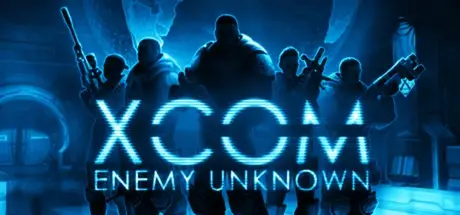
Almost everyone who plays XCOM: Enemy Unknown ends up doing the same thing. You rename the soldiers after people you actually know. And then, late one night, the sniper you have been calling by your best friend's name for twenty hours takes a shot the game tells you has a ninety percent chance to land, misses, and gets dragged down by a Chryssalid — gone, permanently, no reload, because you turned on Ironman. You will feel that one. That small, real ache is the whole magic trick.

This is not a game that tells a story by writing one. Firaxis took the 1994 cult classic that scared off newcomers with its spreadsheets and carved it down into something tighter, more readable, and still ferociously deep — then pulled off the thing almost no rival in the genre manages: it lets the mechanics grow the story for you. Permadeath, interlocking trade-offs, and an honest hit chance you can see on the screen all braid into one rope that makes every decision cost you something.
The credentials back that up. It scored 89 on Metacritic, holds a 93 percent positive rating across more than forty thousand Steam reviews, swept twenty awards at E3 2012, and walked off with a BAFTA for Best Strategy Game in 2013. But none of those numbers explain it as well as the moment that sniper went down. That is the lens this whole review looks through: a game whose worth is measured less in resolution or runtime than in how much a string of code can make you care.
Story | 8.5/10
Fabuła: 8.5/10The plot is a hook, not the point: aliens land, you build XCOM, you storm the mothership
On paper the story fits in a sentence. Aliens launch a global invasion, the world's governments quietly stand up a paramilitary outfit called XCOM, and you — the Commander — run the resistance, reverse-engineering enemy tech, shooting down UFOs, and finally assaulting the alien Temple Ship for a last stand against the Ethereal leadership. Around that spine sit a few recurring voices: Dr. Vahlen, a scientist a little too thrilled by alien hardware; Shen, an engineer who keeps flinching at the ethics; and a Central Officer who is never more than a voice in the dark.

If you come looking for twists and a tear in the third act, you will leave disappointed. The script is thin, the characters are sketched through functional radio chatter, and the staging is plain.
Firaxis knew exactly what it was doing. The budget that a different studio would have poured into cutscenes was instead handed, wholesale, to the systems. This is a design choice you have to read with a critic's eye: it is not that the team could not write a good yarn, it is that they deliberately gave the job of telling one to you.
The real story is the one permadeath writes for you
The most moving narrative device here lives in no scripted line. It lives in permadeath. A rookie only rolls a class on the first promotion, so you cannot draft a perfect squad — you fight with whoever the dice grow for you. That quirk turns every soldier into a one-off. The sniper who walked out of three straight missions untouched and earned a colonel's rank, the heavy who keeps bailing you out with a rocket at the worst moment: these are not stat blocks. They are people you have carried for dozens of hours and can name on sight.

Ironman mode pushes the idea to its edge. The game saves automatically and refuses to let you load, so a death is final. Every battlefield call now carries real weight. Do you push your ace sniper forward for a cleaner firing angle? Do you expose a soldier to save a bleeding teammate? There is no correct answer, and any of them might cost you someone you have grown attached to. When that soldier finally falls, the game carves his name and rank onto a memorial wall, and you go quiet for a second. No written script delivers that, because you are the one who made it happen.
Next to the same year's Fire Emblem, who weaponizes permadeath harder
2012 had another tactics game that wore permadeath as a badge: Nintendo's Fire Emblem: Awakening. Both make death irreversible, but they handle it in opposite ways. Awakening hands you a Classic and a Casual switch, and most players, gut-punched, simply restart the map to keep a unit alive; on top of that its cast is the work of writers, with portraits and romance arcs, so your attachment is something the script built for you.

Enemy Unknown walks the other road. Its soldiers start blank — no portraits, no lines, no backstory — and every ounce of feeling is something you projected, because you renamed them, because you watched them climb from green recruit to grizzled veteran. It outsources the writer's job to mechanics and to the player. The result is that a plain-faced XCOM sniper can lodge in your memory harder than many fully voiced, motion-captured leads in much bigger productions. That is the smartest and most underrated thing about its storytelling: it never set out to tell you a story. It built you a machine that keeps generating them. Years later, players still trade tales of the squad they lost on the final mission or the rookie who somehow survived an impossible run — campaigns no writer scripted, and all the more memorable for it.
Audio | 8.0/10
Dźwięk: 8/10McCann's score turns "humanity's last stand" into sound
Michael McCann wrote this music, the same composer behind the cold cyberpunk of Deus Ex: Human Revolution, and here he reaches for a similar palette: low synth foundations laced with sparse strings. The mood is not chest-thumping heroism. It is lonely, pressured, the sound of a species down to its last cards. Watch the globe in the base interface flush red as panic spikes across the nations, and that slow, restrained main theme makes you feel the weight of an entire civilization riding on your decisions.

The cleverness is in the restraint. The score knows when to step back and let you do the math on a hit chance in silence, and it knows when to swell and let the afterglow of a costly win hang in the air.
For a turn-based game, music that serves the pacing instead of papering over dead space is a genuinely mature, confident piece of craft, and it sets the tone long before a single shot is fired.
The music shifts with the fight, until even your thinking time feels tense
The defining trait of turn-based play is that it does not rush you — in theory you can stare at the screen for ten minutes before you move. That should be relaxing. Enemy Unknown uses its audio to make even that idle thinking time feel urgent. While your squad creeps forward unspotted, the score nearly vanishes, leaving footsteps and ambient hum, and that calm-before-the-storm quiet raises the hair on your neck. The instant you trip a pod and a cluster of aliens unfolds out of the fog, brass and percussion slam in and snap the whole scene from stealth to a fight for your soldiers' lives.

That dynamic shift makes the music a barometer for the battle. Add soldiers barking tactical calls in accented voices — covering, moving, target confirmed — plus the short, ugly cry when one takes a round, and the battlefield's sound design is layered and full. The signature shot-cam, which dives in to ride the bullet, gives the impact of a hit or a miss a real cinematic crack, dragging the cold logic of a dice roll into something visceral.
Worth singling out is how the audio amplifies the horror underneath all this. When the wet skitter of a Chryssalid drifts out of the fog, or a Thin Man hits the ground with a joint-popping crunch, your spine chills before you have even seen the thing — threat arriving through sound ahead of sight, which lets a top-down turn-based game flirt with the textures of survival horror. The clipped alarm tone when a nation's panic is about to boil over does the opposite job just as well: it physically hurries you into a decision. For a genre often accused of being dry and analytical, that is a remarkably emotional use of sound.
One caveat for Chinese-speaking players: there is no Chinese voice track, so the story and command barks lean on English, with localization living mostly in the text — worth knowing going in.
Visuals | 6.5/10
Grafika: 6.5/10Unreal 3's cold sci-fi looks fine, but in 2026 it shows its age
Enemy Unknown runs on Unreal Engine 3, and its art direction is a cool, grounded science fiction: gunmetal bases, cities crumbling under night skies, aliens with a slick bioluminescent sheen. In 2012 this was perfectly presentable and the mood landed. But let us be honest — viewed in 2026, the material fidelity, the character models, and the animation all wear the stamp of their era. Soldiers have plain, interchangeable faces, and the scenery does not survive a close-up. That is the main reason this category lands where it does on the scorecard. It is not that the game looks ugly. It is simply that, by the visual standards of today, it plainly looks its age.

So if you are a graphics chaser arriving with 2026 standards in your eyes, it will very likely let you down. The flip side is that this game's appeal never rested on its looks. Its idea of "good-looking" is functional: you can read the cover, read the firing lines, read who is standing where. And because the art stays restrained and the information stays legible, it actually holds a steadier frame than many flashier contemporaries — which, for a game where you stare and judge for hours, matters more than texture resolution. A decade on, you can still parse the state of every tile at a glance. That is a different kind of good visual design.
That shot-cam is a piece of staging the genre rarely attempts
The bones may be old, but one flourish still impresses: the cinematic camera on every shot, the shot-cam. When your sniper squeezes the trigger, the camera dives in and rides the bullet across the battlefield, and you watch it bury itself in an alien skull or — in that lethal ten percent — sail past an ear. This cutscene-style move takes the abstract math of a hit roll and films it as a punchy, almost theatrical moment, and it became the visual signature of the whole series.

The UI deserves equal praise. A game that runs both tactical combat and strategic management at once carries an enormous information load: which continents your satellites cover, which nation's panic is about to boil over, where research stands, whose armor needs an upgrade. Firaxis lays all of that out with unusual clarity — the globe interface tells you what matters at a glance — and that legibility is a big part of why such a hardcore strategy game plays so approachably.
The tactical layer is just as readable. Every tile shows you its hit percentage, the facing of its cover, and the enemy's line of sight, laid right in front of you so you can price out a move without burrowing through menus. For a game where a single percentage point can decide a battle, that "see everything at once" clarity is not garnish — it is part of the core experience, the difference between a tense calculated gamble and a frustrating guess in the dark.
The deductions are worth stating plainly. The map pool is limited, so on long campaigns the scenery starts repeating and a faint "this supermarket again" fatigue creeps in.
The console versions on PlayStation 3 and Xbox 360 look close to the PC build, but in late-game set pieces, with the screen full of enemies and explosions, the framerate can dip and the action stutters between turns — so if you want it smooth and you have the choice, the PC version is still the place to play, and it is also where the modding scene keeps the visuals and interface fresh years after release.
Combat | 9.5/10
Rozgrywka: 9.5/10Two actions and one Overwatch turn every step into a life-or-death problem
The tactical layer is the heart of this thing, and its rules are startlingly clean. Your squad is usually four to six soldiers, dropped onto a grid and advancing one careful step at a time, each with two actions a turn — one usually spent moving, the second to move again, fire, reload, or drop into Overwatch. Overwatch is this game's modern take on the old reaction fire, and it is one of the most powerful tools on the field: leave one or two soldiers watching before you move or end your turn, and they will open up automatically on any enemy that wanders into their cone. A deceptively simple ruleset opens into a bottomless tactical space.

What makes every step a life-or-death problem is the hit-chance system. Whether you connect comes down to range, cover, flanking, and elevation all at once. Swing around an enemy's flank and your odds jump while crits start landing — but getting there usually means exposing yourself to someone else's line of fire.
Cover comes in half (yellow shield) and full (blue shield), and the instant an explosive lands or a Chryssalid lunges into melee, the thickest wall is worthless. Every turn you are weighing "fifteen percent more accuracy if I step out" against "and eat a round doing it," and that constant micro-pressure is the root of the addiction.
Four classes, two loops: strategy and tactics feeding back into each other
A rookie only rolls a class on the first promotion, and the four play very differently. Assaults run a close-range weapon and a sprint-and-fire skill to close and strike in a single turn, carving into the back line; Heavies haul rockets and Suppression, the workhorses for shredding cover and tearing down buildings; Snipers perch on high ground and tag targets across half the map with Squadsight, the carry of the late game; Supports bring smoke, medkits, and extra actions, the glue that keeps a squad breathing. Four classes, two skill trees each, plus a soldier's innate Will (which governs resistance to mind control and panic), and every six-person squad grows its own distinct chemistry.
That chemistry matters because the enemy roster keeps escalating to punish a one-note strategy. Early on you are trading shots with timid Sectoids; a few months in, Thin Men are rappelling onto rooftops to flank you and spitting poison; by the back half you are dreading the Chryssalid that turns your dead into shambling zombies, and the Ethereals that can simply borrow your best soldier and turn his own weapon on the squad. Each new species forces a rethink of loadouts and positioning, so the tactical layer never settles into a solved routine — the moment you feel comfortable, the game introduces something built to break your comfort.

Above the tactical layer sits an entire strategic one. Inside the underground base players nicknamed the Ant Farm, you research alien tech toward laser and plasma weapons, build gear, blanket the continents with satellites to spot UFOs, and scramble Interceptors to shoot down craft. A sixteen-nation Council grades and funds you monthly, and any country whose panic boils over quits the XCOM project, cutting off its money and recruits. The beauty of these two loops is how they savage each other: lose an ace sniper on the tactical layer and the strategic layer is short one soldier who can win a hard fight; choose armor before satellites on the strategic layer and you have decided what your squad can even bring to the next one. Nothing here is an isolated decision.
Against the sequel XCOM 2, the original wins on cleanliness
Plenty of people ask whether the original is still worth playing now that XCOM 2 (2016) exists. The relationship is interesting. XCOM 2 builds on the original's skeleton by addition: concealment and ambush, timed objectives, flashier trooper modification, a more aggressive pace overall — but in doing so it squeezes the margin for error lower and treats newcomers more harshly. The original's edge is precisely its cleanliness. It is the most fundamental, least cluttered, most transparent form of this formula.

If this is your first brush with modern turn-based tactics, veterans will almost always hand you the original first — not because it is more sophisticated, but because it is the most legible. You can see exactly how each rule works before deciding whether to climb into the sequel's tenser rhythm. The two are not replacements for one another; they are two expressions of the same philosophy. Chew through the original's "every decision has a cost" core, and only then can you really appreciate the flourishes the sequel stacks on top.
Content | 8.5/10
Zawartość: 8.5/10A first run is twenty-odd hours, but difficulty freedom is the real engine
Counting only the campaign, a first run of Enemy Unknown takes roughly twenty-two to twenty-five hours. That number badly undersells how long it can hold you, because its real content does not live in run length — it lives in difficulty and replay drive. The game ships with four tiers, Easy, Normal, Classic, and Impossible, and stacking the Ironman switch (auto-save, no reload) on top produces a brutally steep spectrum of experience, from a relaxed story-mode stroll to something that has you reaching for a new keyboard.

Permadeath makes every playthrough its own story — this run you lose your sniper and have to grind through on the heavy, the next you might walk a full veteran roster out the door intact. That "no two runs alike" quality is why so many people stretch a twenty-something-hour campaign into forty or sixty-five. The alien bestiary keeps refreshing your tactics, too: from the mind-merging Sectoids to the poison-spitting Thin Men, the corpse-zombifying Chryssalids, and finally the Ethereals who seize control of your own soldiers — every new foe you unlock forces a fresh look at your roster and your approach.
Enemy Within: if you only play one version, play this one
You cannot talk about this game's content without the Enemy Within expansion (2013). It is not the kind of lazy pack that bolts on a few extra items; it all but reactivates the base game. It threads an entire new system set into the existing campaign: a resource called Meld is dropped onto the battlefield on a timer, forcing a choice between playing it safe and gambling on a rush to grab it before it self-destructs; banked Meld can rebuild a soldier into a mechanized MEC trooper (trading agility for firepower and survivability) or buy gene mods like jumping higher or seeing through the fog.

The bigger addition is the human paramilitary group EXALT, which opens a full espionage subplot — you send agents to infiltrate and raid their cells, a dimension of play the base release simply did not have. Throw in a new mechanical alien, new maps, and new missions, and the expansion earns a fresh run even from veterans.
What makes Enemy Within more than a content dump is how its new resource rewires the original's calculus. Meld sits out in the open on a timer, which means the expansion is constantly tempting you to break the careful, cover-to-cover discipline the base game trained into you. Do you hang back and play it safe, or sprint a soldier into the unknown to grab a canister before it self-destructs and unlocks a MEC trooper that could carry the rest of the campaign? It is a small addition that quietly reshapes every mission's risk-reward math, which is exactly why it is the definitive way to play. So the version advice is plain: buy the Complete Edition that bundles the base game with every add-on, or at minimum make sure your copy includes Enemy Within, and get a decade of this game's accumulated depth in one purchase.
The rest of the add-ons are smaller. The Slingshot pack is a three-mission story line that brings in a new character, Zhang, and patches a little flesh onto the thin narrative; the Elite Soldier pack is a cosmetic pre-order bonus.
And Second Wave, unlocked free via patch after launch, is a set of advanced difficulty options that crank up randomness and challenge — a tool for hardcore players wringing out the last of the replay value.
The weak spot, stated plainly: multiplayer is a ghost town
With the praise out of the way, the flaws belong on the table too. The clearest weak spot is the multiplayer mode: it exists, but critics and players alike treat it as an afterthought — middling balance, thin content, a community that has been quiet for years, basically nobody coming in for it. This game's soul is its single-player campaign from start to finish, and you can comfortably pretend the multiplayer is not there.

The other issue, surfaced on long campaigns and mentioned earlier, is the limited map pool and the repetition it brings in the back half. These blemishes are not fatal, but an honest review has to be clear about them: this game's depth is staked entirely on the "systems times difficulty times permadeath" combination, not on a pile of maps and modes. Decide which kind of "lots to do" you actually want before you buy.





Komentarze 0
Chętnie poznamy Twoje zdanie
Dołącz do dyskusji i podziel się opinią o grze.
Nie ma jeszcze komentarzy. Napisz, co sądzisz o tej recenzji.