 Star Trek OnlineFetching price~ $0.00
Popularne zestawieniaZobacz wszystko
123456789101112
12 Best Mystery Games on PC (2026)
12 Best Space Sim Games on Steam (2026)
12 Best Story-Rich Games to Play (2026)
12 Best Turn-Based Tactics Games on Steam (2026)
12 Best Puzzle Games on Steam (2026)
12 Best Games to Play with Friends on PC (2026)
12 Best JRPGs on Steam (2026)
12 Best City Builder Games on Steam (2026)
12 Best Zombie Games on Steam (2026)
12 Best Free Indie Games on Steam (2026)
12 Best Short Indie Games to Try (2026) — Done in One Evening
12 Best Cozy Games on Steam (2026)
Popularne podobne gryZobacz wszystko
Games Like PowerWash Simulator - 12 Best Relaxing Cleaning and Restoration PicksGames Like ARC Raiders - 12 Best Extraction and Co-op Survival ShootersGames Like PEAK - 12 Best Co-op Climbing and Survival PicksGames Like R.E.P.O. - 12 Best Co-op Horror PicksGames Like Clair Obscur: Expedition 33 - 12 Best Turn-Based RPG PicksGames Like Path of Exile 2 - 12 Best Action RPG and Loot PicksGames Like Road to Vostok - 12 Best Hardcore Survival Shooter PicksGames Like Mina the Hollower - 12 Best Top-Down Action and Zelda-Like PicksGames Like Slay the Spire 2 - 12 Best Roguelike Deckbuilders to Play NextGames Like Resident Evil Requiem - 12 Best Survival Horror PicksGames Like Baldur's Gate 3 - 12 Best CRPGs and Turn-Based RPGsGames Like Monster Hunter Wilds - 12 Best Co-op Hunting and Action RPG PicksGames Like Hollow Knight: Silksong - 12 Best Metroidvania Picks (2026)Games Like Dead by Daylight - 12 Best Asymmetric & Co-op Horror PicksGames Like Final Fantasy VII Rebirth - 12 Best Action RPG & JRPG PicksGames Like Forza Horizon 6 - 12 Best Open-World Racing & Driving Picks (2026)Games Like Solarpunk - 12 Best Cozy Survival and Crafting GamesGames Like 007 First Light - 12 Best Stealth and Spy GamesGames Like Subnautica 2 - 12 Best Underwater and Alien-World Survival GamesGames Like Hell Let Loose - 12 Best Tactical Milsim Shooters
Popularne recenzjeZobacz wszystko

Hades II — Recenzja

Clair Obscur: Expedition 33 — Recenzja

Katana ZERO — Recenzja

The Long Dark — Recenzja

Shift At Midnight — Recenzja

Middle-earth™: Shadow of Mordor™ — Recenzja

The Mermaid Mask — Recenzja

Killing Floor 2 — Recenzja

The Outlast Trials — Recenzja

American Truck Simulator — Recenzja

Voidling Bound — Recenzja

Go-Go Town! — Recenzja

Desktop Explorer — Recenzja

Dead as Disco — Recenzja

Crushed In Time — Recenzja

Beastro — Recenzja
"Amazon’s New Phone" Makes a Comeback: Is AI Trying to Bypass the App Store?
Start with terminal positioning: if smartphones truly want to become all-day gateways, the core is not piling on specs, but controlling the chain of access. Reuters, citing people familiar with the matter, reported that more than a decade after the Fire Phone failed, Amazon is testing plans to return to the smartphone market. This time the project is code-named “Transformer” and is being advanced by the internal ZeroOne team responsible for breakthrough device R&D. The lead is J Allard, who previously worked on Microsoft’s Zune and Xbox. That lineup makes at least one thing clear: Amazon is not just casually testing the waters this time, but building it to the standards of a new platform project.

In terms of vision, Bezos has long wanted to bring the kind of omnipresent voice assistant seen in Star Trek into reality, and now generative AI has finally given it a credible technological window. According to people familiar with the matter, this new phone will deeply integrate AI capabilities, and its goal may no longer depend on the traditional app store model. Put simply, instead of having you install a bunch of apps and log into them one by one, it would use AI directly to handle shopping, watching Prime Video, and even ordering food through partner services such as Grubhub. The idea is a lot like regrouping scattered forces, trying to bypass the most entrenched positional warfare in today’s smartphone ecosystem.
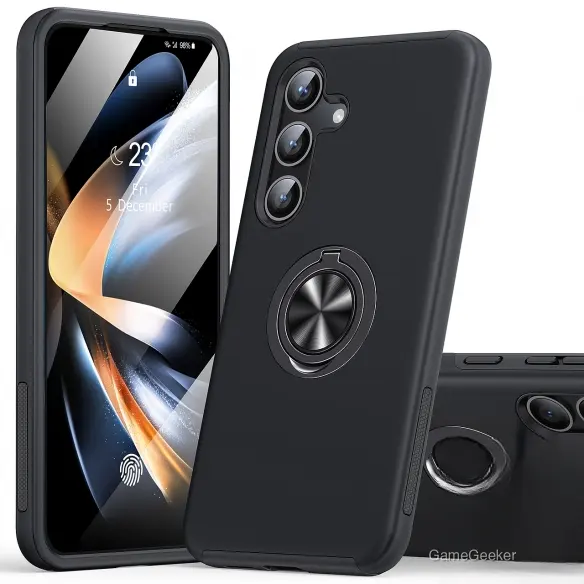
At the tactical level, the key to this path is not “whether it can be done,” but “whether users are willing to hand over the gateway.” Amazon’s strength is that Alexa and its own service ecosystem are already fairly complete, and the new phone could also sync with home voice assistants to form a continuous terminal experience from the living room to life on the go. But the problem is equally clear: a phone is not a smart speaker. Users rely on high-frequency functions every day, including communication, payments, maps, and social networking. If so-called “de-app-store-ization” ends up merely wrapping common operations in a layer of AI, then it could easily become a concept-first approach lacking real rigor.
Now look at the device platform itself: the project is still in the testing stage. The team is studying both a traditional smartphone form factor and a more simplified “minimal phone” option. What the final product will look like, how much it will cost, and when it will launch have all yet to be decided. If anything, this suggests that Amazon is still searching internally for the most suitable battleground rather than rushing a half-finished product to the front line.
For users who follow consumer tech and platform ecosystems, my view is straightforward: don’t rush to take sides at this stage—first see whether it can truly make AI-based service access work smoothly. If it can only complete Amazon’s own closed loop, then it is more like an upgraded membership remote control; if it can reliably connect to multiple types of partner services and truly eliminate the friction of registration, jumping between pages, and downloading, then it would qualify as a real variable in the next round of smartphone form-factor competition. The Fire Phone lost thoroughly back then. If Amazon wants to turn things around this time, it will not be through gimmicks, but by turning control of the gateway into an effective offensive.
Star Trek OnlineFetching price~ $0.00





Komentarze 0
Chętnie poznamy Twoje zdanie
Dołącz do dyskusji i podziel się opinią o grze.
Brak komentarzy. Dodaj swoją opinię.