
Aktualność
Bunny Garden 2 Adds Twin-Tail Lolita Roro in New Update
Bunny Garden 2's new 10-second trailer shows a twin-tailed lolita character in a sweet-yet-cutting promo. With six heroi
















In platformer games, you always want to jump off the very last pixel of the edge to grab that almost unreachable hidden coin; in the real-world hardware scene, someone has directly upgraded the “hidden coin” into an ultimate treasure chest—a discontinued flagship ASRock RX 6950 XT OC Formula graphics card for only $15.49, and it has already been successfully powered on and running. This kind of insane bargain-hunting experience could be written as a legendary side quest even in Cyberpunk 2077. On April 6, Fast Technology mentioned several “ultra-cheap treasure” incidents reported by Reddit gamers, among which the most explosive was a player with the ID “Open_Advice_1411,” who was casually digging through a second-hand store shelf and somehow pulled out a flagship-level monster priced at just over 100 RMB. Compared with today’s high-end cards that easily cost several thousand to tens of thousands, the price gap feels like jumping straight from the tutorial level into the final secret stage, making you suspect some NPC’s price-tagging script wasn’t coded properly.
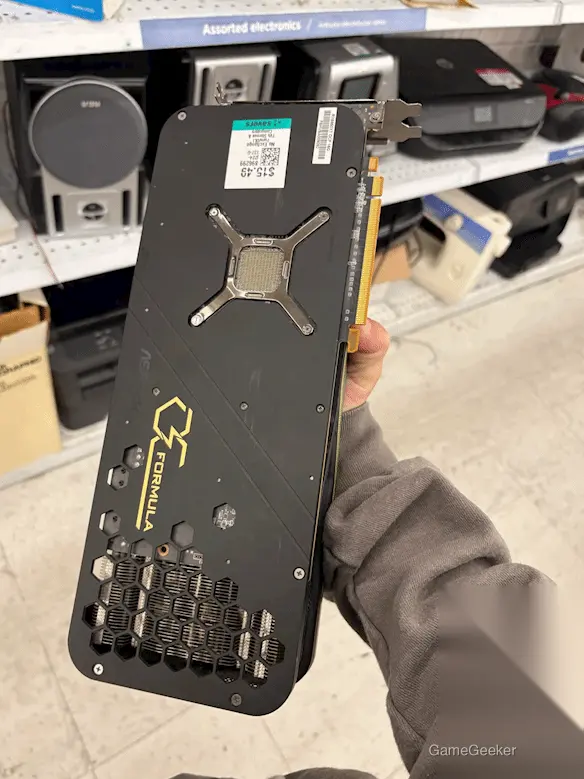
Looking at the specs, this RX 6950 XT OC Formula is exactly the kind of ultimate key prepared for “hardware puzzle-solving” players: a luxurious 21-phase power design, three 8-pin power connectors, dual BIOS plus triple-fan monster cooling. The whole card is like a boss-fight weapon built solely for pushing frame rates to the limit. The boost clock was factory overclocked to 2495MHz, making it a sprinter even among the flagships of its day. Even now, it can still easily dominate most AAA titles at 2K resolution; with the right pairing, cranking up the graphics in Cyberpunk 2077 or other visual monsters will still light up Night City’s neon in dazzling fashion. More importantly, after this card, ASRock never again released a new flagship overclocking model under the OC Formula name, giving this card the inherent vibe of a “limited-edition endgame completion badge” from a product-definition standpoint.
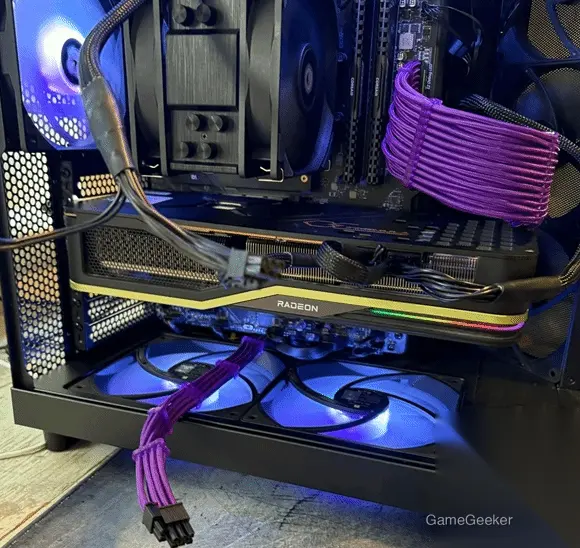
The player has already brought the card home, successfully powered it on, and confirmed that the fans and RGB lighting effects are all functioning normally, but no stress-testing or burn-in has been done yet. So this is more like having just unlocked a hidden level entrance without actually challenging the traps and mechanisms inside. Based on experience, high-end second-hand cards of unknown origin may have issues such as slight VRAM errors, partial degradation in power phases, or a history of prolonged high-voltage overclocking abuse. Whether it turns out to be a “no-damage clear” or “only one HP bar left” ultimately depends on subsequent long-duration load testing. From the perspective of both a gamer and a hardware enthusiast, I’d recommend starting with games at low to mid load, then gradually increasing graphics quality and resolution, watching the temperature curves and stability. Treat the entire testing process as a puzzle level in itself, eliminating potential traps step by step, which is far more sensible than jumping straight into FurMark and roasting it to the redline.

From a buying-advice standpoint, this kind of extreme bargain hunt isn’t really reproducible; the average player can hardly expect to stumble across a discontinued flagship for $15.49 at a thrift store. A more realistic approach is to treat this as a “platformer-style Easter egg story,” a reminder to sharpen your eye for details when dealing with the second-hand market. Instead of fantasizing about the next god-tier 6950 XT-class card dropping from the sky, it’s better to learn how to judge whether a cooler has been tampered with, whether the power connectors show signs of discoloration, and whether the nameplate specs match the actual PCB—turning the entire inspection process into a real-world puzzle mini-game. On the other hand, judging from ASRock’s subsequent shift to the Taichi branding, the traditional OC Formula flagship route of “maxing out components to the ceiling” is gradually being replaced by product lines that focus more on balance and brand identity. This reflects the tug-of-war between cost and performance for GPU manufacturers and also means that truly “hardcore, luxurious, collectible” cards will become increasingly rare. Encounters like this one will only grow more like those one-time-only hidden levels in games.





Komentarze 0
Chętnie poznamy Twoje zdanie
Dołącz do dyskusji i podziel się opinią o grze.
Brak komentarzy. Dodaj swoją opinię.