
Aktualność
Grab two free PC games before Epic's clock runs out, while Undertale and Divinity: Original Sin 2 are 75% off
Astral Ascent and LUFTRAUSERS are free to keep today, while two of PC gaming's most celebrated RPGs cost less than $14 c















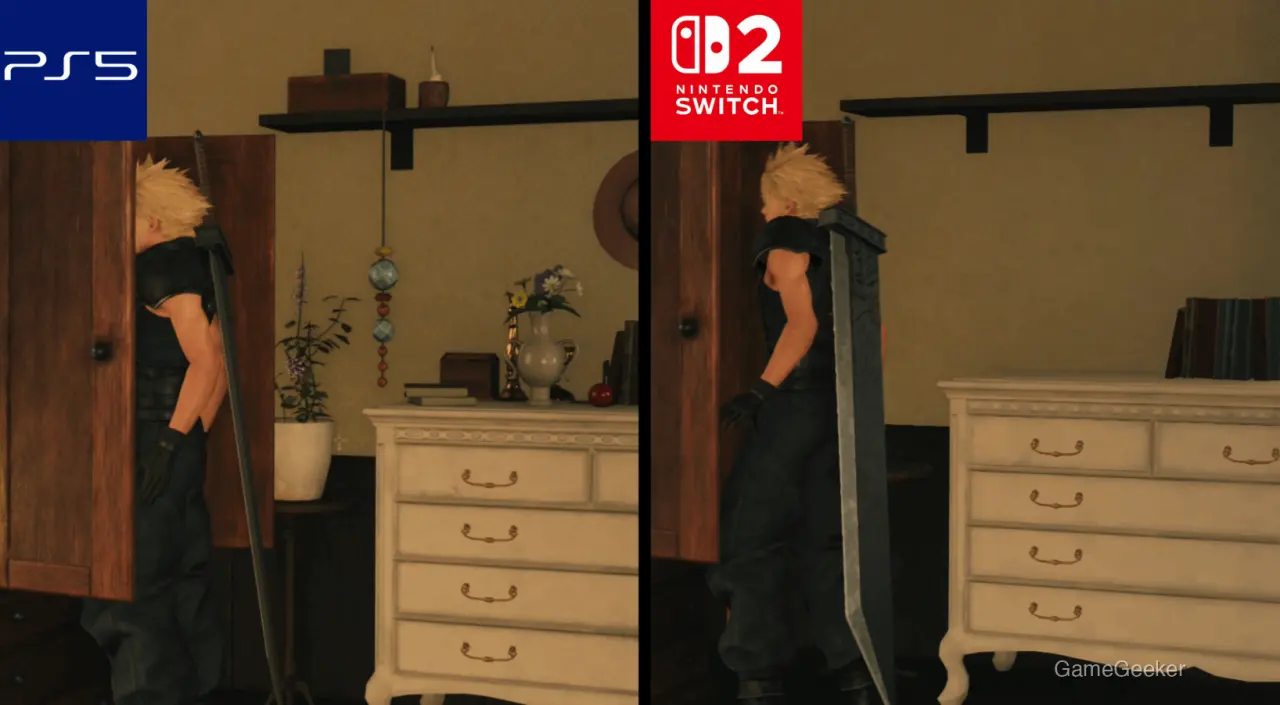
After players shared side-by-side images of Final Fantasy VII Rebirth on Switch 2 and PS5, debate over the port’s performance quickly heated up in the community. The comparisons focus on indoor scene detail—tabletop objects, wall décor, and material textures—and the discussion surged right after this latest wave of images spread.
I’ve played from the early Chinese Paladin trilogy to today, so I’m particularly sensitive to this kind of “one-cut-fits-all” reduction of detail. In wuxia, what matters is not only the moves but the atmosphere around them; visuals work the same way in games. What really sustains immersion is often not the protagonist’s face model, but the everyday traces in the corners. In this case, players are not nitpicking: the amount of visible information in the same scene has clearly shrunk.

From the current comparisons, the PS5 version keeps more complete detail on dining tables—fruit, a soup pot, and a vase—as well as indoor plants and ornaments. In the Switch 2 version, these elements are directly removed. Layering in sofa and carpet textures is also simplified, and wall decorations are removed to varying degrees. The visual result is straightforward: the space no longer feels full, but empty. Beyond platform loyalty, players are really asking one thing—was this a reasonable trade-off, or not enough investment in the port?

Taken calmly, cross-platform ports always have cost ceilings, and performance budgets must be split across frame rate, resolution, and loading stability. The issue is where cuts happen. If trimmed content stays at the edges, players usually understand. But once cuts weaken scene storytelling and everyday texture, it feels like a wuxia film missing wind, rain, and footsteps: the show remains, but the flavor fades. For a game like Final Fantasy 7 Rebirth, known for presentation and world texture, detail loss being heavily scrutinized is entirely normal.
Community opinion is currently split into two camps. One says, “If it runs on handheld, that alone is a win.” The other says, “If it launches on a new platform, optimization quality should match modern standards.” I lean toward the middle: supporting multi-platform releases is fine, but “it runs” should not be treated as “it’s finished.” Chinese players have seen too many “ship first, patch later” cycles in recent years, so this kind of content removal feels discouraging—not because people are picky, but because they fear a return to old industry habits.

If you’re considering a purchase, check three points first:
If you want the most faithful presentation and environmental detail right now, the safer choice at this stage is still the PS5 version. If you prioritize playing anywhere, keep watching Switch 2 update performance before deciding to buy.



Komentarze 0
Chętnie poznamy Twoje zdanie
Dołącz do dyskusji i podziel się opinią o grze.
Brak komentarzy. Dodaj swoją opinię.