Aktualność
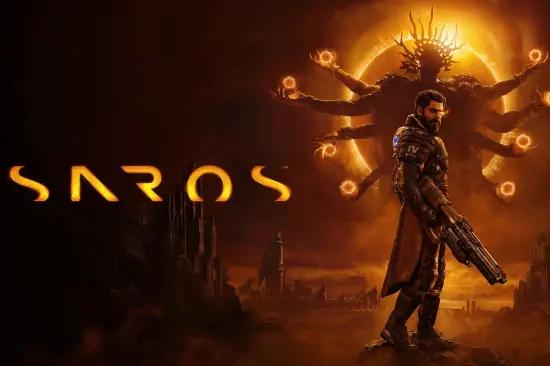
Salo Cycle scores perfect marks as PS5's toughest shooter of the year
Sony's first-party title *Sharo Cycle* review embargo has lifted, with Dailystar awarding a perfect
















After rain, asphalt roads reflect light, neon signs press down layer by layer, and when headlights streak across the windshield, your attention gets swallowed bit by bit. It feels a lot like the opening of a great horror game—not because something suddenly jumps at your face, but because the environment slowly drags you in. When I saw multiple Japanese media outlets’ preview impressions of Forza Horizon 6, my first reaction was this word: immersion—and the kind of immersion you can physically feel.
Recently, Japanese media such as Game Spark, 4Gamer, and IGN Japan shared exclusive preview coverage of the game. Their stance was remarkably consistent: the game isn’t without small flaws, but what truly sends a chill down your spine is Playground Games’ grasp of “realism.” In particular, the details of Japanese roads and infrastructure have been recreated with striking accuracy. Even signs that Japanese players are so used to seeing every day that they subconsciously ignore them have made it into the game. IGN Japan put it perfectly: “These signs are so common that you normally wouldn’t pay attention to them, but when you see them again, you’re surprised that they really appear in the game.”

What’s even more unsettling is that what’s being praised this time isn’t just that it “looks like Japan,” but that it “feels like you’re really driving in Japan.” 4Gamer’s examples were very specific: the Tokyo skyline, the Bay Bridge, expressways, and the Shibuya scramble crossing—these are all highly recognizable slices of urban life. Many open-world games like to prop themselves up with big landmarks; from a distance they look impressive, but up close the details feel hollow, like there’s nothing behind the backdrop. So far, the signal Forza Horizon 6 is giving off is clearly not that.
But what truly moved me wasn’t the city. Game Spark placed more emphasis on the realism of the countryside and mountain areas, which also happen to be the places most likely to expose a development team’s true skill. Deep mountain forests, sheds storing logged cedar, the thatched houses of Shirakawa-go, Hirosaki Castle with cherry blossoms drifting through the air, bamboo groves, and even snow-covered tracks reminiscent of the Japanese Alps—if these elements were merely piled together as assets, they would feel fake. But once the spatial relationships, the character of the roads, and the layering of the scenery all fall into place, the whole world wraps around you with a slow, simmering sense of pressure, like being boiled alive in warm water.

Looking back on it, this is actually the exact step the Horizon series most needed to take. Previous entries were great at making “beautiful tourism commercials,” but judging from the feedback of Japanese media this time, it has begun to approach “a spatial memory that locals would recognize as authentic.” The difference between the two is huge: the former is visually stunning, while the latter feels convincing when you’re driving through it. For a racing game, realism is not just about sharper textures, but about making players instinctively feel—even at high speed—that this road, this mountain, this intersection should look exactly like this.
Of course, everything the reviewers have experienced so far is only a very small portion of the game, so I should stay a bit cautious. A stunning preview phase does not mean the full version is guaranteed to become a masterpiece; we’ll still have to see whether the map size, event design, and long-term content can hold up. But if these impressions are any indication, then Forza Horizon 6 really is already showing the makings of a blockbuster—and not the kind built on sheer noise, but the kind that seeps out little by little through the details.
If you’re a player who loves open-world driving and already has a natural fondness for Japanese settings, then this is clearly a game worth watching closely. Its biggest appeal may not be “how fast the cars are,” but “how real the roads feel.” When a racing game starts making local media repeatedly praise its road signs, bridges, and mountain road textures, I get more excited than I do from seeing however many supercars it has. Because that kind of authenticity is the hardest thing to fake.



Komentarze 0
Chętnie poznamy Twoje zdanie
Witaj! Napisz, co sądzisz o tej grze — pierwsza osoba może się mile zaskoczyć.
Nie ma jeszcze komentarzy. Napisz pierwszy.