Aktualność
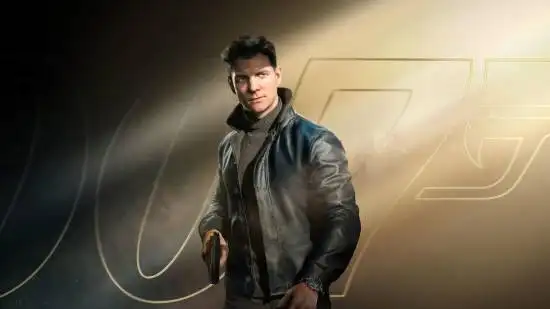
007 First Light Drops to $24.69 in Its First-Ever Sale, Beating the Previous Low
007 First Light gets its first discount, with Green Man Gaming stacking an extra 18% off the 20% official price cut plus
















Polyarc has unveiled Moss: The Forgotten Relic with an official trailer, confirming a launch window of this summer for PC (Steam), PlayStation 5, Xbox Series X|S, and Nintendo Switch 1/2. According to the trailer and official description, this is not just a straight port of the VR originals. Instead, it rebuilds the Moss series for traditional platforms by combining Moss, Moss: Book II, and the Twilight Garden DLC into a newly reworked, complete action-adventure package.
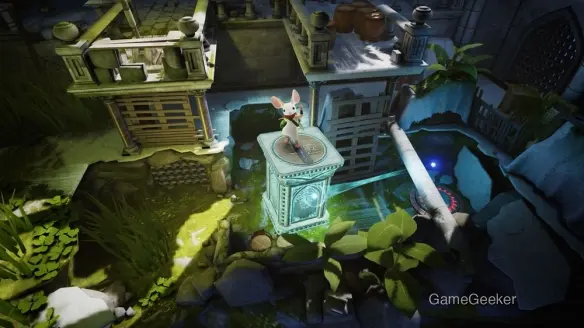
The key decision here is obvious, and it is the right one to focus on: Polyarc is not merely transferring a well-regarded VR game onto flat screens. It is rethinking the series' defining "dual" gameplay structure for players on console and PC. You control Quill through exploration, combat, and puzzle-solving, while also acting directly on the world as a guardian guiding her forward. In design terms, that means one layer of character control sitting on top of another layer of environmental interaction. Mishandled, that kind of split input can easily break a game's rhythm. What Moss has historically done unusually well is make players feel as if they are both reading a fairy tale and physically turning its pages.
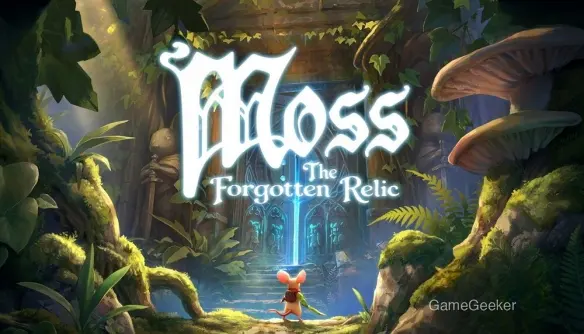
That is why the line about the game "coming to PC and home consoles for the first time" matters more than standard marketing copy usually does. Behind it is a broader rework of interaction mapping and camera language. Polyarc says Moss: The Forgotten Relic includes newly designed cutscenes and camera systems, along with upgraded visuals and enhanced content optimized for each platform. The original VR versions naturally relied on head-tracked perspective, spatial distance, and player presence. Once that experience moves to TVs and monitors, the old visual grammar cannot simply be reused without losing clarity or dramatic impact. Whether this overhaul works will depend on whether Polyarc has properly redefined the boundary between watching and participating.
Structurally, the package makes a lot of sense. Moss, first released in February 2018 on PS VR and PC VR, was a single-player action-adventure puzzle game about Quill setting out to save her uncle Argus. Moss: Book II then follows her as she is hunted by a bird tyrant commanding a mysterious army and seeking the glass relic she carries. Those storylines already had continuity. By merging them with Twilight Garden into one seamless experience, Moss: The Forgotten Relic starts to resemble a more complete director's-cut version of the series. What used to be split across separate releases and a VR-specific ecosystem now becomes easier to enter, with cleaner narrative flow, smoother progression, and stronger emotional build.
Officially, this new trailer is also being positioned as the first real showcase of the Moss fairy-tale world and its distinct mechanics. The story still unfolds inside a living fairy tale storybook, with mythology and ancient magic intact. That continuity matters. The series has earned more than 160 awards and nominations, and Polyarc describes it as one of the most acclaimed modern indie adventure franchises. The awards are not the main point, though. The more important part is that Polyarc is finally turning what was once a premium experience with a hardware barrier into an action-adventure game that mainstream players can understand more easily.
For newcomers who never touched the VR releases, this looks like a notably worthwhile all-in-one catch-up edition. For returning players, the value proposition depends more on how much you care about upgraded visuals, reworked camera presentation, and cross-platform adaptation. Either way, the core identity seems intact: exploration, environmental puzzles, combat, and direct interaction between player and protagonist, all inside that storybook framing.
The people most worth watching launch details are fairly clear. First, players who like mid-sized action-puzzle games and are comfortable with a more fairy-tale narrative tone; games like this usually succeed through level design and interaction ideas rather than sheer scale. Second, anyone who was interested in Moss before but never owned PS VR or PC VR hardware, because this release effectively removes the series' biggest access problem. On the other hand, players who mainly want intense combat feedback or a huge open map should probably keep expectations in check. Moss has never been about systemic complexity. Its strength is the combination of guidance, presentation, and companionship.




Komentarze 0
Chętnie poznamy Twoje zdanie
Witaj! Napisz, co sądzisz o tej grze — pierwsza osoba może się mile zaskoczyć.
Nie ma jeszcze komentarzy. Napisz pierwszy.