
Aktualność
GTA San Andreas Is Still Running in a Yemeni Internet Cafe Five Years On
Five years after a Reddit plea, Mohammed opened Yemen’s Power Net in August 2021 with support from t
















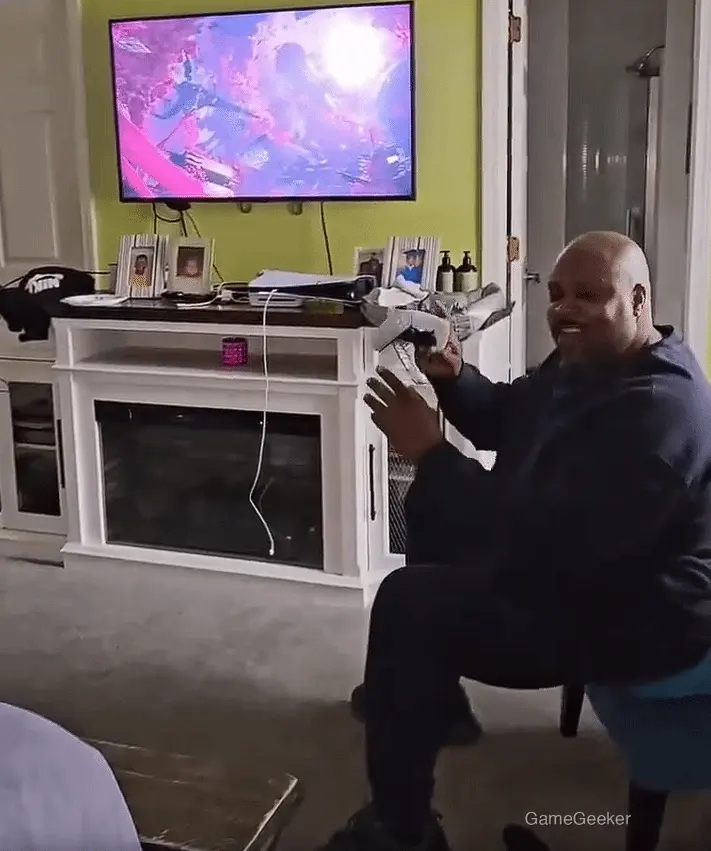
A video that’s been circulating on the wider internet recently left me, an old gamer who’s been making game content for years, feeling a bit dazed: a Black guy who’d been serving time in prison for 27 years gets out, sits down in front of a TV in the living room for the first time, picks up a controller for the first time, and plays a PS5 for the first time. In the footage the creator shot, he’s practically being “pinned to the couch” by the visuals and the control scheme. That mix of unfamiliarity and excitement on his face instantly makes the generational leap of more than 20 years in gaming feel tangible.

What moved me most in the video wasn’t the surface-level reaction of “he’s shocked by next-gen graphics,” but his instinctive body language of reaching out to point at the screen and constantly exclaiming. As someone who’s been playing all the way from the PS1 and Famicom era up to now, I know very clearly what 27 years means: from chunky pixels to real-time ray tracing and ultra‑fast SSDs; from the cautious days of memory cards to today’s brain‑off peace of mind with cloud saves and cross‑platform online play. For this player who has just returned to society, he’s been thrown straight from a world frozen in the 1990s into the gaming universe of 2026.
In the discussion sections on social platforms, players quickly found a shared topic: if it were you, wouldn’t your first game after getting out have to be GTA? Some people half‑jokingly said that since you’ve already experienced an “open world” in real life, you’ve got to find a place in the virtual one to let it all out without consequences. Others seriously pointed out that the GTA series is probably the best representative of the “evolution of open‑world console games” over the past twenty‑plus years. From GTA3 to GTA5, and on to the next entry everyone’s waiting for, just by comparing them side by side you can immediately see the iterative trajectory of technology, storytelling, and interaction design.

Looking at this from an “indie + strategy” angle, I instead started thinking about another question: if you had the chance to throw a completely “blank” adult into today’s game library, where should they start? With a mega‑IP like GTA, or with some small‑scale but exquisitely designed indie game? For this player who’s been incarcerated for 27 years, those indie gems on PS5 with thoughtful tutorials and friendly pacing might be more suitable than dropping him straight into a content‑overloaded AAA sandbox—just like how a newbie getting into roguelikes doesn’t necessarily have to start with the one that’s cranked up to max difficulty.

At the end of its report, GamerSky threw out a question: do you think the progress games have made in these 27 years is shocking enough? If you only look at graphics and hardware muscle, the answer is obvious; but from a creator’s perspective, what I care more about is whether games, as a medium, have leveled up in what they mean to people. When someone who’s been away from society for 27 years can, through a highly integrated entertainment platform like the PS5, instantly plug into today’s cultural context, social patterns, and aesthetic tastes, that in itself is powerful proof of the “value of games.” Maybe for him, which game is “the first one” doesn’t really matter; what matters is that this door is still here—and it’s so much wider than it was 27 years ago.


Komentarze 0
Chętnie poznamy Twoje zdanie
Witaj! Napisz, co sądzisz o tej grze — pierwsza osoba może się mile zaskoczyć.
Nie ma jeszcze komentarzy. Napisz pierwszy.