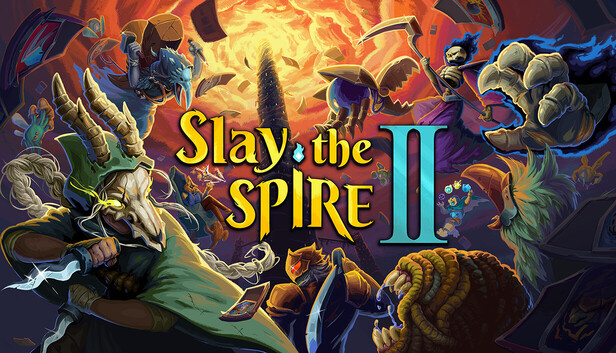
 Slay the Spire 2Fetching price~ $24.99
Popularne zestawieniaZobacz wszystko
123456789101112
12 Best Mystery Games on PC (2026)
12 Best Space Sim Games on Steam (2026)
12 Best Story-Rich Games to Play (2026)
12 Best Turn-Based Tactics Games on Steam (2026)
12 Best Puzzle Games on Steam (2026)
12 Best Games to Play with Friends on PC (2026)
12 Best JRPGs on Steam (2026)
12 Best City Builder Games on Steam (2026)
12 Best Zombie Games on Steam (2026)
12 Best Free Indie Games on Steam (2026)
12 Best Short Indie Games to Try (2026) — Done in One Evening
12 Best Cozy Games on Steam (2026)
Popularne podobne gryZobacz wszystko
Games Like PowerWash Simulator - 12 Best Relaxing Cleaning and Restoration PicksGames Like ARC Raiders - 12 Best Extraction and Co-op Survival ShootersGames Like PEAK - 12 Best Co-op Climbing and Survival PicksGames Like R.E.P.O. - 12 Best Co-op Horror PicksGames Like Clair Obscur: Expedition 33 - 12 Best Turn-Based RPG PicksGames Like Path of Exile 2 - 12 Best Action RPG and Loot PicksGames Like Road to Vostok - 12 Best Hardcore Survival Shooter PicksGames Like Mina the Hollower - 12 Best Top-Down Action and Zelda-Like PicksGames Like Slay the Spire 2 - 12 Best Roguelike Deckbuilders to Play NextGames Like Resident Evil Requiem - 12 Best Survival Horror PicksGames Like Baldur's Gate 3 - 12 Best CRPGs and Turn-Based RPGsGames Like Monster Hunter Wilds - 12 Best Co-op Hunting and Action RPG PicksGames Like Hollow Knight: Silksong - 12 Best Metroidvania Picks (2026)Games Like Dead by Daylight - 12 Best Asymmetric & Co-op Horror PicksGames Like Final Fantasy VII Rebirth - 12 Best Action RPG & JRPG PicksGames Like Forza Horizon 6 - 12 Best Open-World Racing & Driving Picks (2026)Games Like Solarpunk - 12 Best Cozy Survival and Crafting GamesGames Like 007 First Light - 12 Best Stealth and Spy GamesGames Like Subnautica 2 - 12 Best Underwater and Alien-World Survival GamesGames Like Hell Let Loose - 12 Best Tactical Milsim Shooters
Popularne recenzjeZobacz wszystko

Hades II — Recenzja

Clair Obscur: Expedition 33 — Recenzja

Katana ZERO — Recenzja

The Long Dark — Recenzja

Shift At Midnight — Recenzja

Middle-earth™: Shadow of Mordor™ — Recenzja

The Mermaid Mask — Recenzja

Killing Floor 2 — Recenzja

The Outlast Trials — Recenzja

American Truck Simulator — Recenzja

Voidling Bound — Recenzja

Go-Go Town! — Recenzja

Desktop Explorer — Recenzja

Dead as Disco — Recenzja

Crushed In Time — Recenzja

Beastro — Recenzja
*Slay the Spire 2* Patch Disaster! How Did 15,000 Negative Reviews Happen?
When a core engine card gets changed to the point where “it just doesn’t run anymore,” the blow lands harder for deck-climbing players than a simple numerical nerf ever could. It’s like taking the feel of Slay the Spire and forcefully twisting it into a completely different ruleset—of course players are going to explode!
What ignited the controversy this time was a balance patch for the EA test branch of Slay the Spire 2. Note: this was the test branch, not a live server update. Even so, after the first wave of patches went live last Friday, just one weekend later Steam had already received roughly 15,000 new negative reviews, and the game’s rating in the China region dropped to “Mixed,” with a 55% positive rate.
So where exactly did things go wrong? It comes down to two words: game feel.
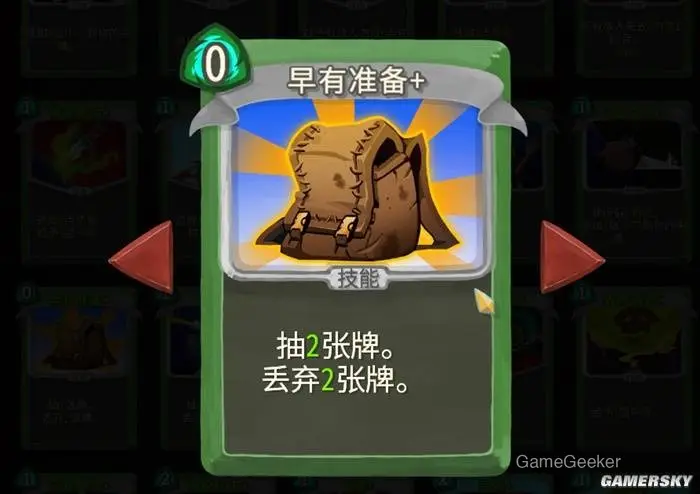
A lot of players are unhappy because several key engine cards for multiple characters were reworked or weakened—almost every character’s “engine” got hit. The most typical example is the Hunter’s “Prepared.” Originally, it was a 0-cost “draw 2, discard 2,” a very smooth instant cycling tool; after the change, it became discard 2 first, then recover energy next turn. Put plainly, it no longer helps you find answers on the current turn, and the whole tempo drops by a beat.
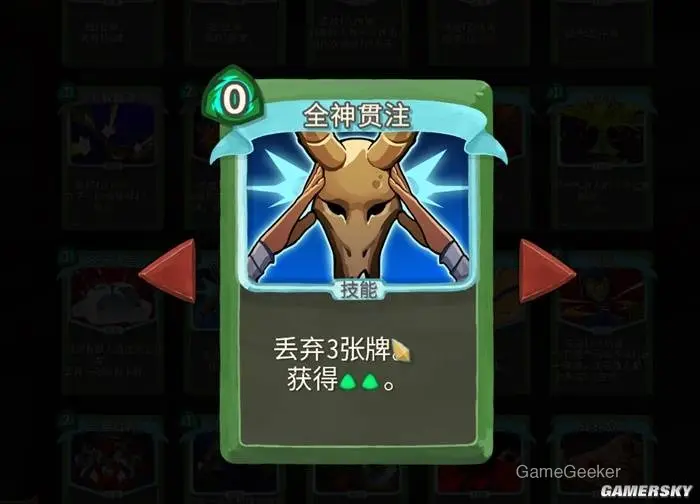
To talk about this, we have to look at the current environment in Slay the Spire 2. The original article mentions that the current version uses a base resource setup of 3 energy and 5 cards per turn, but the starter decks and relics are relatively weak, and the overall numbers are conservative; meanwhile, normal enemies and elites still apply plenty of pressure. The result is that conventional offense and defense often aren’t enough, so naturally players start looking for “infinite” solutions or close approximations.
Lead developer Anthony’s thinking is also very clear: one of the goals of these changes is to stop players from building “infinite” archetypes too easily. The problem is that if base resources are already tight, and the developers also remove the smoothest engine tools first, it feels a lot like tearing down the bridge and then telling you to swim across.
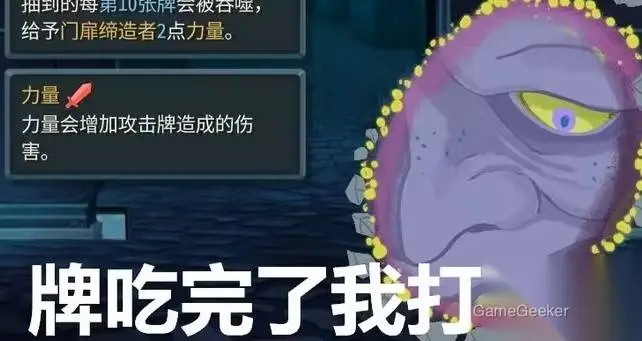
What makes it even more intense is that some bosses and elites were also buffed in the test patch. The article specifically mentions the “Gateforger,” whose new ability directly devours the player upon drawing their 10th card, which is almost explicitly aimed at high-frequency cycling and infinite strategies. It reminds me of one of the easiest traps for some roguelikes to fall into: instead of increasing challenge, they tell you at the systems level, “Don’t play like that.” Conceptually it’s like a highly targeted puzzle-solver, but in terms of experience, it really can make players feel like they’re being “taught how to play the game.”
Interestingly, Chinese players are especially sensitive to this kind of change. The reason isn’t hard to understand: the Slay the Spire series has always had a deep deckbuilding and theorycrafting culture, and the community watches details, value curves, and route planning very closely. The article also mentions that the game involves around 3 million players, more than half of whom are described as Chinese players. Once balance changes touch the very foundation of whether a deck can “run,” the feedback is naturally going to come fast and hard.
And there’s another more practical issue right now: the risk-reward balance for elites doesn’t really add up. The original text says that on the first floor, more than 90% of players choose to avoid elites and take question-mark routes to build up instead. That already shows the environment isn’t really encouraging direct confrontation. If, on top of that, you keep weakening engines while increasing monster pressure, it’s not surprising that players feel frustrated.
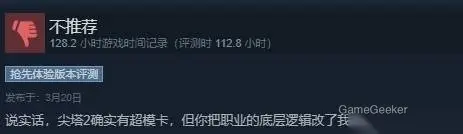
That said, it’s also a bit much that many people are treating this as proof that the final release is doomed. The developers have already specifically published A Letter to Chinese Players, and according to communication on Tieba and through official channels, this test version is more like an “experimental field” used for a kind of extreme stress test. In other words, this backlash doesn’t necessarily mean the live version will copy these changes exactly.
My advice is simple: if you’re already playing, you can wait and watch another two rounds of test feedback instead of rushing to declare the whole project dead; if you’re the kind of player who plans to jump in only after the EA experience stabilizes, then continuing to wait is actually the more comfortable choice. After all, what has always made Slay the Spire 2 valuable is not a single fixed answer, but that spark of design where “even this one tiny card can be played in ten different ways.” Let’s hope Mega Crit doesn’t patch away that spark while trying to fix everything.
Slay the Spire 2Fetching price~ $24.99 W promocjiSlay the SpireFetching price~ $24.99-75%






Komentarze 0
Chętnie poznamy Twoje zdanie
Dołącz do dyskusji i podziel się opinią o grze.
Brak komentarzy. Dodaj swoją opinię.