

DLCDarkest Dungeon®: The Color Of Madness~ PLN 12.33~ PLN 6.16-50%→via GOG
“The hardcore strategy roguelike that built party psychology into a system that turns on you, wringing real dread out of permadeath and negative feedback”

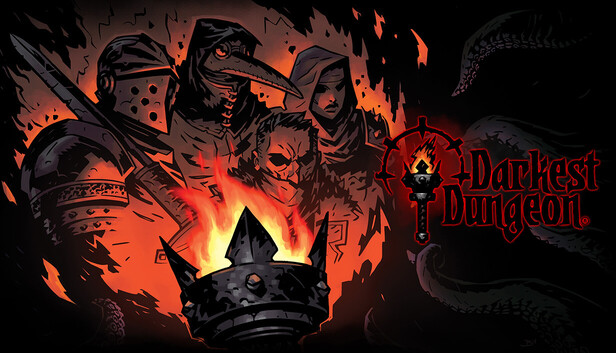
Wind the clock back to January 2016, when Darkest Dungeon launched in full, and nobody on the market had dared to make a party's mental health into a core system that turns on the player. On an indie budget it did what the blockbusters would not touch — it put the psychological cost of adventuring on the table and made you answer for it. A decade on, imitators keep arriving (Iratus: Lord of the Dead is all but a direct homage to its rank-based combat), yet not one has truly reproduced that grooming-loss-guilt emotional loop. An 84 on Metacritic, a 93% recommend rate on OpenCritic across 80 reviews in the Mighty tier, a 91% Steam positive — those numbers are shorthand for a reputation that has outlasted the cycle.
Its commercial run is just as hardcore. A project that started from roughly ten thousand backers and 313,000 dollars on Kickstarter went on to sell over six million copies of the base game — sixteen million counting DLC — and pick up a NAVGTR award for role-playing along the way. It is a textbook case of indie long-game thinking, proof that a small team with a distinctive enough style and a coherent enough system can build a benchmark that stays green for ten years.

This is not a game for everyone, and its audience boundary is unusually crisp. If you relish a high-risk gamble, if you are willing to pour real feeling into a single squad, if a clutch Virtue flip on the edge of a wipe gives you a satisfaction nothing else can, then it will be the most unforgettable thing in your library — you will remember every hero who died on your watch. An 8.7 on Douban and a standing reputation in Chinese circles as the benchmark of the roguelike turn-based RPG are exactly that crowd's chorus.
But if what you want is a brisk push forward and steady positive feedback, if you cannot stomach the frustration of one random chain of crits wiping out hours of grooming, it will very likely send you ragequitting. Its negative-feedback design is a sharp double edge; some take to it gladly, some feel insulted, and even among the top Douban blurbs you find the wry line that you "go in a normal person and come out mentally ill." So before you buy, ask yourself honestly: are you here to enjoy control, or to experience losing it? Knowing which side you fall on matters far more than fussing over the exact score.

If you commit, the version advice is simple: start with the base game, and once you have confirmed this loop is for you, add the two core DLCs, Crimson Court and Color of Madness, which expand difficulty and content substantially; the Shieldbreaker is optional, and the Butcher's Circus PvP is free, so just take the update. That combination gives you the fullest, longest-haul experience on offer.
As for placement in the series, one fact is worth weighing: the 2023 sequel, Darkest Dungeon II, swapped the estate-management premise for a road-trip expedition roguelike and landed an 81 on OpenCritic with a 75% Steam positive — both short of the original, with players visibly split. That is not to say the sequel is bad; it is to say the original's particular recipe — minding an estate, raising a band of people you cannot bear to lose, then watching them march off to die — has yet to be bettered.
So even in 2026, getting into this series through the first Darkest Dungeon is still the best way to taste its core appeal. The thing no one has copied — building a hero's breakdown into a system that turns on you and laces every retreat with guilt — is exactly why it still stands. And its most direct rival, Slay the Spire, for all its excellence, can never carry that weight, because a run there is discarded the moment it ends and leaves no emotional debt behind.

Comentários 0
Queremos saber sua opinião
Participe da discussão e compartilhe sua opinião sobre este jogo.
Ainda não há comentários. Seja o primeiro.