























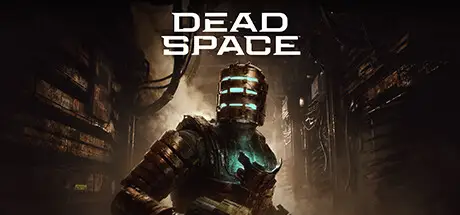
Opening
Most beloved games are propped up by the hardware they shipped on; strip away the nostalgia and the seams show. The 2008 Dead Space was never one of those games, and the 2023 remake exists to prove it.
Motive poured the USG Ishimura back into the Frostbite engine fifteen years on, and the blacks got blacker, the blood got thicker, and the Plasma Cutter settled into your hands with real weight. That was the dangerous part. The fastest way to ruin a horror remake is to buff the dread until it gleams and file the teeth down until they are blunt.
This one does neither. It knows exactly which screws to tighten and which not to touch at all. A 96.6% critic recommendation, OpenCritic's top "Mighty" tier, nines across IGN and the Chinese outlet GamerSky — they all point at the same verdict. This is a remake with the discipline to leave a masterpiece mostly alone, and the surest way back aboard that ship today.
Story | 8.5/10
História: 8.5/10The plot stays put; the silent man finally speaks

The creative director set the rule plainly: the foundation does not change, because that story is too iconic to mess with. So the spine survives untouched. Engineer Isaac Clarke boards a mining ship that has gone dark, hunting for his partner Nicole and for the truth about the alien artifact called the Marker. The deeper into the hull you push, the clearer it gets that this was never a rescue. It is a descent that was decided long before you arrived.
What changed is the telling. The original Isaac was a helmet with a cutting tool, mute for the entire run. Here he is fully voiced, with Gunner Wright back from the sequels, and the team kept him on a leash — he talks only when the scene demands it. That sliver of a voice is enough to give his bond with Nicole some heat. She stops being a name read off an audio log and becomes a person worth dying for.
It is the most divisive call in the whole remake. Eurogamer argued the new voice occasionally thinned the horror, since silence is its own kind of pressure. That is the minority report, though. Most of us took the clarity over the quiet.
When you cannot trust your own eyes

What separates Dead Space from a plain monster chase is that it never lets you be sure of what is real. The Marker is the series' load-bearing mystery — part alien object, part mind-rotting signal. The remake uses Isaac's voice and the new crew side missions to sharpen the question hanging over everything: how much of what you are seeing has the Marker quietly rewritten?
The final reveal lands cold because of that groundwork. Nicole has been dead the whole time; she took her own life rather than turn. The Nicole you have been chasing is a hallucination the Marker stitched together, tangled up with Dr. Cross, and the artifact has been steering Isaac from the first chapter. Realizing you were played for twelve straight hours chills harder than anything that lunges out of a vent. The monsters fade; the sense of being deceived stays.
The optional side missions thread crew logs and corpses into something like a group portrait, so the Ishimura stops being a level and starts being a place people lived and died in. Clear the right conditions and you unlock a brand-new secret ending the original never had — a hook the 2008 game simply could not offer.
Two roads, one with Capcom on it
Set it beside the year's other revered horror remake, Resident Evil 4, and the split is obvious. Capcom's is action storytelling — brisk, dense with set pieces, Leon's swagger worn right on the surface while he stays in control. Dead Space takes the other road, spending its energy on dread and creeping doubt, its hero pulled along by something he cannot see. Both are the best horror remakes of 2023. One spikes your adrenaline; the other freezes your spine. One is a tight thriller you cheer through, the other a thing you do not finish alone with the lights off.
The difference runs deeper than tone, into where each game sources its tension. Resident Evil 4 trusts momentum — dense crises and lavish spectacle shove you forward so fast there is no room to stop and doubt. Dead Space does the opposite, deliberately handing you long stretches alone in empty corridors so the uncertainty can ferment, until you start questioning everything you have seen. That inverted use of pacing is its cleverest, least imitable trick.
Horror that respects your intelligence

What ties all of this together is a refusal to spell things out. Dead Space tells most of its story sideways — through text logs left on bodies, audio recordings of crew members in their last hours, scrawled warnings on bulkheads, the simple staging of where corpses fell and what they were reaching for. The remake's new side missions deepen that environmental storytelling without ever turning it into a lecture; you assemble the Ishimura's collapse yourself, log by log, and the picture you build is grimmer for the effort it took. Nothing is narrated at you, and that restraint is exactly why the dread feels earned rather than imposed. It is a horror story that trusts you to do the connecting, and the version of events you carry out of the ship feels like your own discovery rather than a cutscene you were handed. That trust is rarer than it sounds — plenty of horror games panic and over-explain the moment the player might be confused, and the spell breaks every time they do. Dead Space holds its nerve, and is far scarier for it.
Audio | 9.5/10
Áudio: 9.5/10A pile of sound nominations, and not one of them undeserved

Dead Space picked up nominations for Best Audio Design at The Game Awards 2023, plus nods at the D.I.C.E. Awards and the Game Audio Network Guild. None of that is decoration. The sound is the load-bearing column the whole horror experience rests on. Play a stretch with the audio off and the Ishimura collapses from the scariest ship in gaming into an ordinary derelict factory. More than half of what makes it terrifying, you hear rather than see.
The cleverest thing about the mix is how rarely it leans on a cheap jump. A drip in the pipes, a skitter somewhere up the ventilation, a dull thud behind a far door, Isaac's own breathing climbing toward a wheeze — none of those harm you on their own. Stacked together they weave a specific pressure: the enemy has not shown up yet and your palms are already wet. That is the exact quality Chinese outlet 3DM kept circling back to in its review. The game conjures an atmosphere instead of springing a trap.
The jolts exist, but the game refuses to overspend them. Dead Space understands that the real fear does not live in the scream — it lives in the long, uneventful silence before it. It waits until you have walked a dead corridor too long and your nerves have started to slacken, then it cashes in. Because the runway is long and quiet, the hit lands clean. That patience with silence is the one trick the budget scare factories never learn.
Sound that breathes when you do

Better still, the soundscape is not a fixed backing track. It is alive.
The remake's Intensity Director reads Isaac's stress in real time and bends his heartbeat and breathing to match. When a pack of Necromorphs has cornered you and the ammo counter is bottoming out, that quickening, heavying gasp in your ear is not a pre-baked cue — it is the system answering your actual predicament. For the first time the audio is tied straight to the play state, and the fear gains a physical pulse. You start to recognize your own panic by the sound of it, which is a deeply unsettling thing for a game to teach you about yourself.
Underneath it all sits Jason Graves' original 2008 score, the strings that became the series' calling card, with new material layered in for the remake. It almost never grandstands. Most of the time it simply goes silent and hands the stage to the room tone; only when the Necromorphs swarm do those shrieking strings detonate, like a blade drawn across a nerve you forgot was exposed. That trick of selling motion through stillness gives the horror a clear rhythm of breath.
Held up against Alien: Isolation, the other game that earns its keep on sound, the two are kindred spirits in claustrophobic space horror. Isolation works you over with the Xenomorph's footfalls echoing down a duct until you stop breathing; Dead Space uses Necromorph crawl and Isaac's gasps to turn the ship into a coffin that exhales. Both prove the same law: out here, the best horror is not what you saw. It is what you heard.
Visuals | 9.0/10
Gráficos: 9/10Frostbite turns darkness into a solid object

The first thing the remake does to you is the light. Frostbite relit the entire Ishimura, and in those compartments where the Necromorphs finished their work, the dark is rendered down to the grain. This is not a dimmer switch. It is black with volume and weight, surging over you and pulling back as the emergency strobes stutter. Dynamic volumetric light, real-time shadow, and that grime layer of blood and oil sweating off every metal surface all combine to make the ship's horror something you could nearly reach out and touch.
The texture earns its keep; it is not just pretty. A flickering corridor, a slab of red leaking past a far hatch, a bead of blood drifting through a weightless room — none of these are set dressing. Each one whispers that something might come apart in the next second. The image here is not a backdrop. It is part of the fear itself.
The Ishimura's level design deserves its own credit. The planet-cracker is built to feel both monumental and obscene — vast mining rigs, knotted ductwork, weightless bays where loose parts and bodies hang in the dark, each corner narrating without a word what happened here. Cross the medical deck stacked with cadaver bags, or stand at the observation window over the mining arm, and the collision of industrial scale and snuffed life rolls over you. These rooms stick not because they are beautiful but because they are unsettlingly real, and the remake stitches the whole vessel into one seamless space so you always feel you are inside a single enormous machine that once ran and is now dying.
4K with ray tracing, or 60fps — pick your poison

On consoles the picture splits into two modes worth weighing. Quality runs 4K at 30fps with ray tracing, where the reflections and shadows make the ship most convincing; Performance drops to 1440p at 60fps without RT, and the aiming and dodging snap tighter. For a horror game built on precise dismemberment, that smoother 60fps mode is usually the safer bet, since one frame of lag can be the difference between a clean cut and a lost arm. Worth flagging: Performance can dynamically dip toward 976p under load, and the Series S gets a single pared-back mode.
The PC build supports higher resolutions and an uncapped framerate, ray tracing included, and lands well overall. There is one avoidable shame, though: at launch it shipped without an FOV slider, which left some players feeling boxed in and a little queasy over long sessions. Critics on both sides of the Pacific flagged it. For an over-the-shoulder horror game, that is a feature that should have been in the box.
Plot it on the 2023 map and it trades blows with Resident Evil 4 from a different corner. Capcom wins on photoreal faces and lighting; Dead Space wins on a wholly its-own industrial-ruin aesthetic — rusted steel, sprayed viscera, a darkness with no floor — a strain of eerie beauty you will not find anywhere else.
The detail buried in the interface

One underrated stroke is how completely the remake folds the interface into the world. Isaac's health is not a number in a corner; it is the glowing spinal strip on the back of his suit. Ammo, map, and shop all project as holograms thrown out of his body, hanging in the air in front of him. That means every moment you spend checking your vitals or rummaging for supplies, nothing on screen breaks the spell — your eyes never leave that hostile world for an abstract overlay. Even pausing to read a log keeps the camera live and the danger present, so there is no clean exit from the dread.
This diegetic HUD was groundbreaking in 2008, and the remake re-renders it with finer light and material so it stays one of the most elegant immersive interfaces in the medium. The map projection in particular is a small marvel — a holographic line that unspools from Isaac's chest to point the way, so you never have to break for a menu screen even when you are lost. It is precisely these buried details, the ones you stop consciously noticing an hour in, that make the Ishimura's horror feel so seamless and so complete.
Combat | 9.0/10
Jogabilidade: 9/10Forget the head; aim for the limbs

A lifetime of shooters has wired your muscle memory to the skull. Dead Space wants you to unlearn that, and it punishes you until you do. Its combat runs on strategic dismemberment: against a Necromorph, headshots barely register, so you carve the limbs off one at a time. Take its legs and it cannot close on you; take the arm that swings and the threat is gone. The remake adds a new layer to that reflex with the Peeling System. You can now strip a Necromorph's flesh away in stages — skin to tendon to bare bone — and every creature was rebuilt around it, so wounds genuinely break, tear, and shatter. Where each shot lands and which layer it peels is right there on the body, pain and strategy bolted together.
Holding the whole loop up is the series' signature tool, the Plasma Cutter, with its horizontal and vertical firing modes mapped to limbs that spread sideways or stand upright. Just choosing whether to cut across or down is a snap decision. Add Stasis to slow enemies and the environment, and Kinesis to grab and hurl objects, and the rhythm clicks into place: slow it, sever it, finish it.
Ammo is forever tight, so every shot has to be budgeted — which is exactly where it parts ways with the brainless spray of a power-fantasy shooter. The economy goes deeper than bullets, too. Health packs, Stasis charges, and the credits you spend at the store are all scarce, and the upgrade bench forces hard choices about which weapon to invest in and which to leave underfed. Run dry at the wrong moment and you are improvising — booting a severed Necromorph limb across the room with Kinesis to use as a free spear, or stomping a downed body for the scraps it drops. That improvisation under pressure is the texture of the whole game, and it never lets up.
A ship that will not let you memorize it

If combat is the skeleton, the Intensity Director is the breath that keeps it alive. The system procedurally schedules Necromorph spawns and attack patterns, and folds smoke, particles, sound, and lighting into the same live mix. The upshot: a corridor you just scrubbed clean is not guaranteed safe on the walk back. The ship never settles into a script you can rote-learn. Against the original it reads as all-gas, no-brakes, and it makes higher difficulties and a second run feel genuinely different rather than a level you will eventually solve by memory.
Exploration got the same overhaul. The zero-G sections borrow the thruster-driven free flight from Dead Space 2 — the director's promised "much more 360-degree freedom" — pushing combat and puzzles into three dimensions and giving the wreck real depth. Drifting through a vacuum bay with no up or down, hunting for a panel while debris tumbles past your visor, is a different kind of tension entirely from the corridor fights, and the remake leans into it more than the original ever could.
The original's clunky Power Node door-sacrifice is gone, replaced by a smoother security clearance system: Isaac unlocks higher tiers across the run and doubles back to open rooms that were sealed before. The whole vessel is one seamless, loadless space, so it truly feels like a closed world that keeps running rather than a string of disconnected stages stitched together by loading screens.
Lay its feel beside Resident Evil 4 and the personalities diverge. Capcom's is snappier and more theatrical, Leon's executions and parries all performed swagger that rewards meeting enemies head-on. Dead Space pours its effort into precise planning under scarcity — it does not let you feel powerful, it makes you do the math, weighing ammo against health over and over until you handle each encounter like the engineer you actually are. Neither feel outranks the other; one is adrenaline, the other a cold sweat. That math-first philosophy is also the reason Dead Space has stayed so unmistakable and so hard to replace after all these years — plenty of games let you spray happily, but only here does every trigger pull start with a tally of ammo, distance, and which limb to take.
Content | 6.5/10
Conteúdo: 6.5/10Twelve chapters, one weekend, exactly enough
Dead Space is not one of those hundred-hour open worlds. Its scale is restrained and precise. The main story runs about twelve hours; tack on some side work and a normal clear lands near fifteen. Max every weapon, gather every audio log, comb every corner of the Ishimura, and meet the secret-ending conditions, and a 100% run sits around twenty. The campaign splits into twelve chapters, paced with care — from the ship's early, uncanny quiet, through the thickening Necromorph encounters of the middle, to the suffocating zero-G and vacuum stretches, the pressure climbs one rung at a time.
That "beat it over a weekend" heft is a relief in an era of games demanding hundreds of hours of grind. It does not pad, it does not stall, it spends every hour where it counts — and picked up on a sale, it is about the best value in the horror aisle going. There is a real argument that this length is the genre's sweet spot: long enough to build dread and let the ship's geography sink in, short enough that the tension never curdles into routine. A survival-horror game that overstays its welcome stops being scary, and Dead Space knows precisely when to end.
What is rarer is that those twelve hours have almost no trough. The upside of a linear run is that the designers control every beat: when to tense you up, when to grant a breath, when to throw a brawl, all charted out. You never bleed off your nerve grinding repeated side quests or trudging across a map. The Ishimura holds a high concentration of dread end to end, and that is the linear horror game's greatest edge.
A reason to backtrack, and a little padding
The remake's real content upgrade over the original is that it gives you a reason to double back. The new security clearance system nudges you to retrace your steps once the story moves on, since rooms that were locked before tend to hide weapon schematics, power nodes, and audio logs, lending fresh value to corridors you have already walked. The new optional side missions round out the crew — a security officer's last stand, the struggles of the medical and engineering staff — assembled piece by piece until the Ishimura reads as a place with flesh and history.
An honest note belongs here, though. The original's pacing was already full, and a few of the remake's added quests and collectibles do, at times, feel like length for its own sake; the back half can drag a touch. That is the consensus on both sides of the Pacific, and one of the few soft spots in the design. It packs the ship fuller, but not every bit of filler was equally necessary, and a stricter edit might have left the experience leaner and sharper. None of it is enough to sink the pacing, but it is the seam where you can feel the remake reaching for more game than the original strictly needed.
It keeps you with depth, not volume
Worth singling out is the difficulty ladder and New Game Plus. Finish a run and you carry your maxed weapons into a harder second pass to unlock that secret ending and meet the Ishimura at its truly vicious. The most hardcore mode squeezes saves and supplies hard, pushing the survival to its edge and making veterans who thought they had the combat memorized sweat all over again. That "keep them with depth and challenge, not raw quantity" instinct is of a piece with the restrained scale. It does not try to bury your time under a heap of busywork; it asks you to want back on that ship, and to see something new in it each time through the lens of a steeper difficulty. Stacked against Resident Evil 4, also a fifteen-to-twenty-hour affair, Dead Space runs the same line — wring the value out through replay and high difficulty rather than open-world acreage — and for this genre that is exactly the right call. A scary game is scariest when it is tight, and padding it out with map markers would only dilute the very thing you came for. Restraint, here, is a feature and not a shortfall.






Comentários 0
Queremos saber sua opinião
Participe da discussão e compartilhe sua opinião sobre este jogo.
Ainda não há comentários. Conte o que você achou desta análise.