























Opening
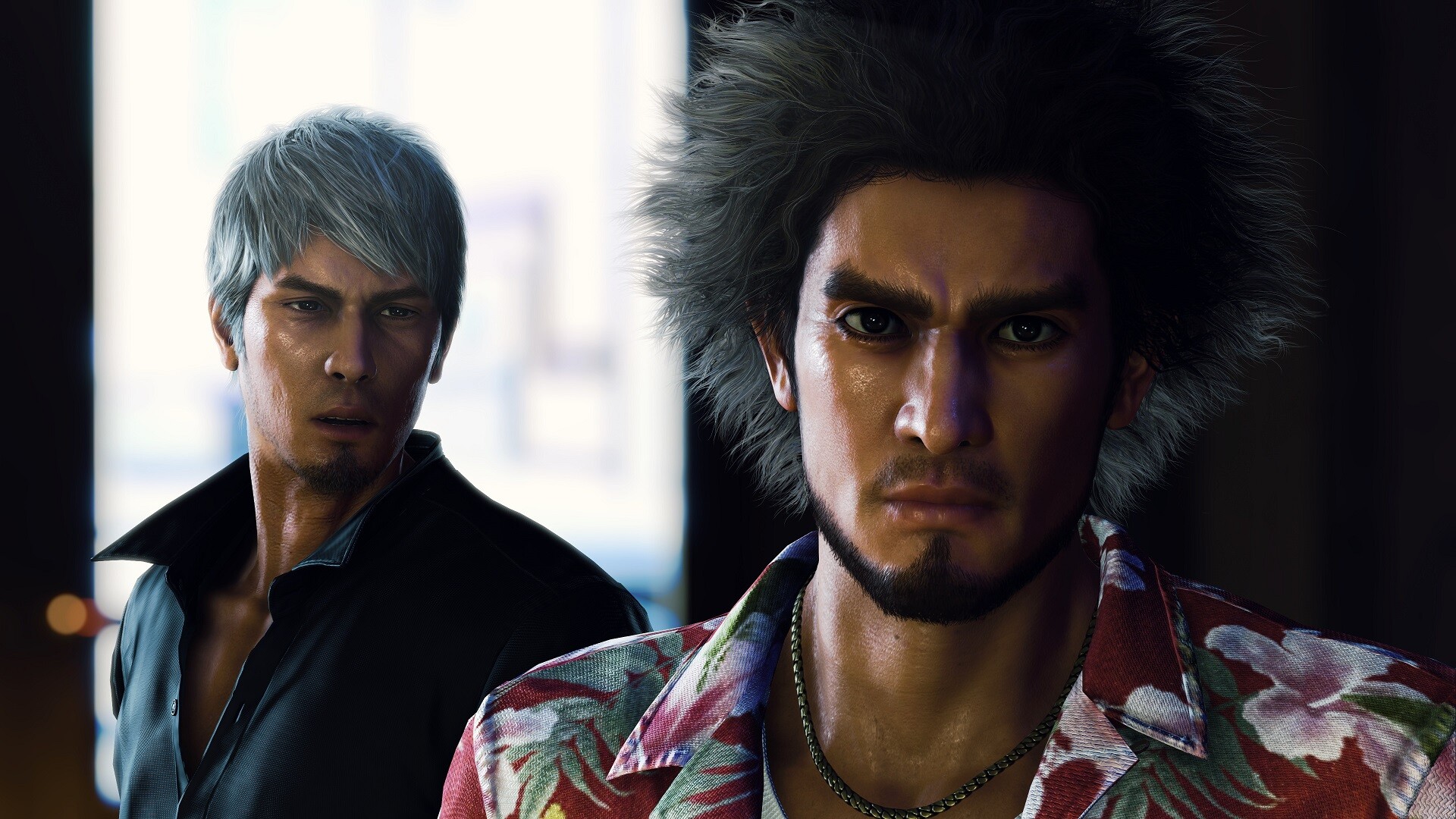
There is a quiet moment, early on, where Ichiban Kasuga and his companions stand shoulder to shoulder on a seaside street at night, the lights catching every bit of exhaustion and stubborn hope on their faces. What struck me first was not that Like a Dragon: Infinite Wealth knows how to stage a scene like a television drama. It was that the series has finally polished its turn-based combat until it feels, unmistakably, like Like a Dragon being itself.
That distinction matters. The previous entry pulled off a bold reinvention, trading street brawling for a menu-driven battle system. Infinite Wealth is not asked to surprise us again. It is asked to prove the road can run further, and for the most part the answer is yes.
The bright island setting of Hawaii folds the chaos, heart, and absurdity the series is known for into a more open, more tourist-friendly stage. Larger districts and busier streets turn exploration itself into a steady, effective reward. It looks good. It also holds up over a long playthrough, which is harder.
What kept making me stop, though, was the familiar contradiction at its core. On one side are side stories and battle theatrics so exaggerated they verge on playful nonsense. On the other, the game can lower the emotional register to something hushed and heavy through nothing more than a face, a voice, and a patient camera. In other hands that mix falls apart. Here it has become the signature.
Story | 6.5/10
História: 6.5/10The story is the most complicated, and the most divisive, part of Infinite Wealth. Ichiban Kasuga's search for his mother runs alongside Kazuma Kiryu's own reckoning, and a dual-protagonist structure carries enormous character appeal almost by default. As long as the cast holds up and the party banter has spark, the emotional drama this series does best is rarely going to look bad, even when the larger plot wobbles.

A strong, fresh opening
The early hours lean into grounded, social themes, and that choice gives the narrative a sharper, more current edge than a purely familiar setup would. It feels, for a good stretch, like the writers are reaching for something with more real-world texture than the franchise usually risks. The dual leads anchor that ambition: Ichiban's open-hearted optimism and Kiryu's quieter, heavier presence pull the tone in two directions that keep playing off each other in productive ways.
That tension is the engine of the opening. When the game lets these two characters simply share a scene, history pressing down on one and hope buoying the other, the writing finds a register most RPGs cannot reach. It is the kind of setup that makes you trust the back half before you have seen it, because the foundation feels so deliberately and carefully laid.
What makes it work is restraint. The opening does not rush to spectacle; it lets situations breathe, lets characters react in real time, and trusts that you will care about people before it asks you to care about plot. For a long, lovely stretch, that patience pays off beautifully and the story feels like it is building toward something genuinely new for the series.
Where the sharpness softens
And that is precisely where the trouble starts. The most consistent criticism across coverage is that the later hours retreat into the series' familiar comfort zone. The problem is clear enough: the real-world texture and the character questions built up early on are not dug into further so much as folded back toward a path the audience already knows by heart.
The effect on the experience is direct. The characters still carry emotional weight, but the plot's direction loses its capacity to surprise. It plays like a drama with a beautifully set-up first half that starts writing toward the safe option once it has to land the ending. The performances stay strong; the structure underneath them gets cautious, and you can feel the gears shift from invention to maintenance.
It is a particular kind of disappointment, the sort you only feel because the opening set the bar so high. A weaker beginning would have made the conventional back half pass without comment. Here, you notice the retreat precisely because you had been promised, and shown, that the game was capable of more.
Carried by its cast
Is that a fatal flaw? For players who come primarily for story, it edges close. For the game as a whole, it falls short of dragging the experience down. The charm of the two leads, the interplay among the party, and the emotional set pieces still cover an enormous amount of ground, enough to keep the whole thing from ever feeling dull even when the plot plays it safe.
The lingering disappointment is one of ambition. Given the scale and reach this series now operates at, you want it to hold those sharper incisions open a little longer rather than easing back into the comfortable in the final act. The talent to go further is visibly present; it simply is not deployed all the way to the finish.
It still moves you. It just does not cut as deep as the opening promised it might, and that gap between promise and payoff is the single honest reason the story sits lower than the rest of the package. The cast carries it home regardless, which is exactly why the shortfall stings rather than sinks.
For all that, it is worth keeping perspective. A back half that plays it safe is still a competent, often affecting piece of work, and most of the genre would be glad to ship its weakest stretch. The criticism here is a criticism of unrealized greatness, not of failure, and that is a far more flattering place for a story to land than it sounds.
Audio | 8.4/10
Áudio: 8.4/10The sound design in this series has never been the type to elbow its way to the front and show off. It tends instead to hold the emotion steady at the moments that matter most, and Infinite Wealth is no different. The audio works quietly, in service of everything around it, and that restraint is exactly why it lands as reliably as it does.

Voice work that makes characters stand
The voice acting and vocal performances keep their reliably high standard, and a large share of why the cast feels solid comes from how the lines are delivered: the pauses, the bursts, the way a sentence pulls its punch at the last second. You may not walk away from a battle humming a tune, but you will remember why a particular scene worked. For this kind of character drama, that is more than enough, and arguably it is the whole point.
That precision matters most in the dual-protagonist scenes, where two very different deliveries have to share the same exchange without flattening each other. The performances keep both leads distinct, and that separation does a quiet amount of the storytelling on its own. You always know whose scene it is by the rhythm of the voice alone, which is a subtle but real achievement.
It is worth saying that this consistency is harder than it looks. A cast this large, carrying a tonal range this wide, could easily slip into a few flat readings that puncture the illusion. From what the coverage reflects, that almost never happens here; the performances hold their level scene after scene, which is exactly the kind of dependability that goes unremarked until it fails.
A score that serves the tone
The music's value shows up mostly in how it serves the mood. Battle, side-story, and city-ambience tracks have to cover exaggerated comedy and serious emotion at once, which is a bit like asking one band to switch genres mid-set without losing the room. From what the coverage reflects, the execution is dependable, and that constant tonal switching is itself part of the series' identity rather than a bug in it.
Sound effects pull real weight too. The impact of close-quarters blows and the feedback on flashy skills help the turn-based system hold onto its street-level, physical sense of contact. This is not a game that buries you in lavish audio to assert its presence; it makes sure the heft of each strike reads clearly instead, so that even a menu-driven fight keeps the texture of an actual scuffle.
The honest limitation is that the music plays more like a steady, dependable contributor than a standout people will single out and replay on its own. Does that cost a little wow factor? Yes, a touch. Is it anywhere near a problem? Not remotely. The sound does its job, and it does it with the kind of taste that is easy to undervalue precisely because it never shows off, which in the end is the highest compliment you can pay a soundtrack built to serve the scene.
Visuals | 8.7/10
Gráficos: 8.7/10The best-looking thing about Infinite Wealth is not raw technical muscle. It is that the Hawaii setting finally lets the series breathe different air. For years the appeal of these cities came from night, neon, narrow alleys, and an almost overwhelming density of human warmth. Spread out a bright island landscape and the whole impression changes. Not more lavish. More open, more relaxed, more willing to let you stand still and take it in.
A setting that changes the air
The waterfront, the street scenes, and the bustle of the open districts together hold up a strong sense of being a tourist somewhere real. Location recognition climbs noticeably, and the visual feedback while exploring is more immediate. Each district feels like a place you can actually remember rather than a functional backdrop attached to a quest. That is a meaningful step up from a series already known for memorable cities, and it reframes exploration as something you do for pleasure rather than logistics.
The change is felt most in how willingly you slow down. You crest a rise, the volcano and the high-rises line up in the same shot, and the natural reaction is to stop chasing objectives and just look around for a while. A world that earns that pause is doing something right with its art direction, regardless of polygon counts. The island reads as a destination, not a level, and that distinction does an enormous amount of quiet work.
It helps that the lighting leans into the postcard quality without tipping into the artificial. Mornings feel like mornings; the glare off the water has weight to it. The result is a place that photographs well from almost any angle, which is exactly what you want from a setting built to be wandered.
Performances that still carry scenes
The series' consistently high standard for facial animation, cutscene staging, and camera language is fully intact. The main-story beats still have that near-cinematic push, and the pressure in a tense indoor standoff, read entirely off the characters' expressions, remains the most reliable proof of how good this staging engine is. When the writing wants you to feel the weight of a quiet confrontation, the faces deliver it without a single line of dialogue.
This is where the dual-protagonist structure pays visual dividends too. Watching two leads share a frame, each carrying a different history in their posture, gives the direction more to work with than a single hero ever could. The camera knows when to hold on a face and when to pull back, and that restraint is what makes the big emotional beats land rather than overplay.
The craftsmanship extends to the smaller moments as well. A flicker of doubt, a suppressed smile, a glance held a half-second too long, these are the details that make the cast feel like people rather than models, and the game spends its animation budget exactly where it counts.
Where the novelty fades
If there is a nit to pick, it is not whether the game looks good. It is whether the freshness holds. Bigger districts and busier streets are very effective on first sight, but over a long playthrough the visual surprises inevitably taper off. The practical effect is that late exploration leans more on the content itself than on scenery alone to keep pulling you along, and you notice the shift when it happens.
That is not a structural wound, though. It first nails the opening impression and the first twenty-odd hours, planting the look squarely among the strongest in the series before any fatigue sets in. By the time the novelty cools, the rest of the package has more than enough momentum to carry the visuals the rest of the way.
In other words, the art direction does its most important job, which is making the early hours unforgettable, and then gracefully hands the load to systems and story. That is a perfectly reasonable arc for a game this size, and it never undercuts the genuine strength of what the setting accomplishes up front.
And the strength is real. Long after the novelty has settled, the world still reads as coherent and lived-in rather than a checklist of distinct biomes, which is its own quiet form of staying power. The setting may stop surprising you, but it never stops feeling like a believable place, and that baseline credibility is what lets the rest of the game lean on it so heavily without ever feeling exposed.
Combat | 9.0/10
Jogabilidade: 9/10If the previous game was telling players "look, we can do turn-based," Infinite Wealth is saying something more confident: and we have gotten good at it. The clearest sign of that is a battle system that no longer asks you to stand in place and pick from a menu. You move, the field matters, and every turn carries a little more weight than it used to. It is the kind of change that sounds incremental in a patch note and feels transformative the first time it saves a fight you were about to lose.

Movement and distance reshape every turn
The headline change is freedom of position. Characters can reposition before they act, and distance genuinely affects how attacks land. That single adjustment layers a new question onto each turn: do you fight for the better spot, or eat the damage to act now? Do you chase the area-of-effect payoff, or deal with the immediate threat in front of you? A few steps in any direction and the flavor of the encounter shifts entirely.
It sounds like a minor tweak on paper, but in play it is substantial. It drags the series' old sense of bodies actually present in a brawl back into a turn-based frame. You are still weighing jobs, party composition, and progression routes, yet the fights rarely curdle into the formulaic button-pressing that long JRPG sessions can become. The closest image I have is a chess match where a piece suddenly grabs a chair and charges forward: ridiculous, but effective, and weirdly tactical at the same time.
The beauty of it is how readable the system stays despite the added dimension. You are never lost in a fog of positioning math; you can see, at a glance, who is clustered and who is exposed, which makes the decisions feel like reflexes rather than spreadsheet calculations. That clarity is what keeps the new freedom from becoming a chore.
A reward loop that keeps pulling you back
Underneath the spectacle sits a genuinely complete loop. Jobs, character growth, and side systems feed one another so that you can almost always find a reason to keep going for another stretch. Adjust a build, try a new role, push a teammate's progression, and the next encounter feels meaningfully different. That sense of forward motion is the engine that carries the long runtime, and it rarely sputters even when the campaign stretches into dozens of hours.
Crucially, the depth never tips into busywork for its own sake. The systems interlock cleanly enough that experimenting feels like play rather than management. You tinker because the payoff is visible on the very next turn, not because the game is nagging you to optimize a number. The loop respects your curiosity instead of punishing it.
What impressed me most was how the loop survives the long haul. Many RPGs front-load their best toys and then coast; here the job and party systems keep opening new combinations late enough that the hundredth fight can still surprise you. There is almost always one more build to test, one more synergy to chase, and that steady supply of "what if" is the real reason the runtime never feels like an obligation.
Where it sits against its peers
Measured against a strict, purist turn-based design, Infinite Wealth is not necessarily the more rigorous system. Against the most stylish menu presentation in the genre, it is not the outright leader on flair either. What it has instead is its own register: more grounded, more knuckle-to-jaw in its texture, with a roughness that suits the world it takes place in.
That texture is the point. The combat is mature now, and it is mature in a way that feels true to what this series has always been about rather than borrowed from elsewhere. It does not chase the genre's leaders so much as carve out a lane only it could occupy, and that confidence shows in every encounter.
The honest weak spots are minor, and from everything the coverage surfaces, there is no real structural flaw to point at here. It simply works, and it works like the series at its best. If you came expecting a compromise after the reinvention, what you actually find is a system that has settled into itself and grown quietly, genuinely better.
Content | 8.8/10
Conteúdo: 8.8/10A pleasure cruiser sits moored beside a sunlit beach, skyscrapers and a volcano sharing the same frame in the distance, and the instinct is immediate: forget the main story for a while, just wander. The volume of content in Infinite Wealth is an extension of that instinct. It is not merely that there is a lot to do. It is that the game keeps manufacturing the urge to take one more look, again and again, until the hours have quietly piled up behind you.

Layers that keep stacking up
Main story, side stories, mini-games, collectibles, and progression projects pile on top of one another, and multiple outlets have called the result one of the largest entries the series has produced. That reputation is earned. Wherever you stand on the map, there is usually a thread within reach, and pulling one tends to reveal three more behind it. The density is the kind you feel in your peripheral vision the whole time you play.
What makes the bulk work is how the pieces interlock rather than simply coexist. You might log on intending to nudge the plot forward, get snagged by a side story, finish that and casually grab a collectible, and find that the resources you picked up are exactly what you needed to retune the party. Then the evening is gone. It happens naturally, almost without you noticing the seams between one activity and the next.
That seamlessness is the real achievement. A lesser game would let all this content sit in disconnected menus, each demanding a separate mental gear-change. Here the activities hand off to one another so smoothly that a detour rarely feels like a detour. You are always, somehow, still making progress on three things at once.
The cost of abundance
Size is never an unconditional virtue, though. The more systems and information the game throws at you, the easier its pacing is to scatter. The effect on the experience is direct: if you prefer a tight, linear march, this everything-everywhere design constantly splits your attention. It is the buffet problem. With this many good options on the table, it is easy to overeat and lose the thread of what you came in for.
Is that fatal? Not at all. This series has always specialized in turning the tangents into a core part of the fun, not a distraction from it. The side activities keep the signature, almost playful energy of the franchise, and they mesh with city exploration and character growth into a genuinely complete case for long-term investment rather than a pile of disconnected busywork.
Still, it would be dishonest to pretend the abundance has no downside. There were evenings I meant to advance the plot and simply did not, not because the side content was bad but because there was so much of it that the main thread quietly slipped out of focus. Whether that reads as a flaw or a feature depends almost entirely on the kind of player you are.
Built for the long haul
The supporting digital-edition extras and the steady drip of progression resources reinforce the same idea: this is a game designed to be lived in rather than sprinted through. If you accept that it is not a title you finish in one focused push, the sheer weight of content reads as value rather than bloat almost every time you sit down with it.
The honest caveat is simply expectation. Come in wanting a lean, focused campaign and the abundance will feel like friction at every turn. Come in wanting a place to disappear into for dozens of hours, and the same abundance becomes the whole reason to stay. The exact same design lands as a strength or a weakness depending on what you walked in hoping for.
Most of the time, on that second framing, the volume pays off handsomely. The game gives you an enormous, lively space and trusts you to make your own rhythm inside it, and for the players it is built for, that trust is precisely the point.
It also ages well, which not every content-heavy game manages. Because the activities feed the core systems rather than sitting beside them, the side content stays relevant deep into the runtime instead of becoming early-game filler you outgrow. That sustained usefulness is what turns a big game into a long one in the good sense, and it is a large part of why the hours keep adding up without ever feeling padded.






Comentários 0
Queremos saber sua opinião
Participe da discussão e compartilhe sua opinião sobre este jogo.
Ainda não há comentários. Conte o que você achou desta análise.