
















Opening
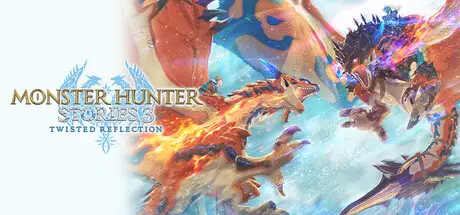
A spin-off has no business growing up this gracefully, and yet here we are. For seven entries I had filed Monster Hunter Stories under "the cute one" — the turn-based detour you hand a kid while the grown-ups go back to swinging hammers at Rathalos. Twisted Reflection spends about ten minutes politely dismantling that assumption. Twin Skyscale Rathalos hatch in the kingdom of Azuria, an omen old enough to scare a king into a genuinely cruel decision, and suddenly the bright fairy-tale palette is carrying a great deal more weight than I ever expected it to.

What hooked me, though, is mechanical. Capcom took the one thing every Monster Hunter veteran knows in their bones — the hunt as a reading contest — and rebuilt it as a turn-based mind game where you guess whether the beast in front of you will lead with Power, Technical, or Speed. Guess right and you press the advantage; guess wrong and no amount of grinding saves you from eating the hit. Bolt on Habitat Restoration, a system that lets you nurse crystal-blighted ecosystems back to breeding health, and you get a pairing I genuinely haven't met in another monster-taming RPG — and the real reason I happily stayed for seventy hours. There are sacrifices, too, and big ones: multiplayer and the high-rank endgame are simply gone. Whether this is the entry for you hinges entirely on what you came here wanting, so let me walk you through all of it.
Story | 9.0/10
História: 9/10The day twin dragons hatch, this series finally agrees to grow up
The cold open does all the heavy lifting. Two extraordinarily rare Skyscale Rathalos are born in Azuria, an event ancient prophecy insists precedes catastrophe, and the king's response is the kind of choice that knocks the air out of you. You don't begin as a carefree village kid; you begin as a royal heir, freshly named captain of the Rangers, already carrying the weight of keeping humans, monsters, and nature in balance. That is a heavier opening hand than this franchise has ever dealt.

The word that matters here is heavy. Wings of Ruin, the previous chapter, was pure sunshine — a chummy party laughing its way to saving the world without ever breaking a sweat. This time the entire continent is being eaten alive by a blight called Crystal Encroachment, species are going extinct in droves, and two desperate kingdoms are circling each other over the dwindling resources left to survive on. War darkens every conversation, and even the lighter scenes carry an undertow of dread. The 3DM verdict summed it up as "fused into one," and that lands: people and monsters, two nations, mechanics and narrative, all braided into a single theme rather than running on parallel tracks.
A road movie wearing a kingdom's politics
Structurally it is a textbook hero's journey, but the smart move is the dual thread. One strand is statecraft: Azuria and Vermeil, two rivals learning the hard way that distrust between them is a luxury a dying world can't afford. The other is intimate — you and your party chasing a fabled "sanctuary," crossing one new region after another, the whole thing playing out like a road movie.

Eleanor, the princess of Vermeil, is what makes that strand sing. She is no ornamental travel companion; her stance keeps grinding against yours, her motives stay tangled, and the slow thaw from distrust to genuine partnership is the most charged relationship in the whole script. GamerSky handed the game an 8.5, praising exactly this — that it "balances the macro picture of nations with the small road-trip of a party discovering new lands." I'm with them. The grandeur never costs it that private warmth of a few people walking a long road together.
Rudy and the Rangers are the best-written supporting cast in the trilogy
If the storytelling is the leap forward, the characters are the most concrete part of that leap. The protagonist now has a voice and a defined personality — no more silent slate — and that single change drags the whole story's intimacy up a notch. Rudy, your Palico attendant, is more than a mascot, and the other Rangers each arrive with their own history and their own unhealed wounds.

PlayStation Universe flatly called it the trilogy's best work on party members, every one of them granted a full arc instead of a job title. What stuck with me is how often the big decision points are colored by where these people came from, rather than dialogue stapled on to push the plot — you can feel the writers establishing the characters first and then letting the story flow out of who they are, instead of the reverse. Capcom clearly wants you to remember the company you kept, not just the monsters you tamed; what lingered for me after the credits was a handful of faces from the road, not the particulars of any single fight.
It isn't flawless: you'll see one twist coming a mile off
I won't pretend it's perfect. RPGFan's 92-point review flagged at least one major turn as thoroughly predictable, and any seasoned JRPG player will smell it coming long before the cast does. The other wobble is tonal friction: it wants to talk about war, extinction, and sacrifice while still wearing the series' whimsical look and leaning on lighter comic beats. The gear-shift between those registers isn't always smooth, and a couple of times a scene that should have gutted me got undercut by a gag landing one beat too soon. It's a real flaw, not a fatal one, but it's there.
Even so, weigh those scratches against the whole package and the conclusion holds firm. This is the consensus best story Monster Hunter Stories has ever told, and it isn't close.
My 9.0 isn't handed out for shock value or for some unprecedented narrative swing. It's for finally treating a premise the studio could easily have phoned in with genuine respect — and, more than that, for making its people breathe, argue, and matter long after the monsters stop being the point.
Audio | 9.0/10
Áudio: 9/10The battle themes and that ending song outlived the credits in my head
Let me lead with the verdict: the music is the one department I struggled to fault at all. RPGFan scored the soundtrack a 95 — higher than the game's own 92 overall — which almost never happens, and it tells you the score got singled out as a genuine highlight rather than a footnote. Deep into the back half, the moment a key boss theme kicked in, the "okay, this is for real now" tension arrived through the music a full beat before anything on screen confirmed it. That's a composer doing the foreshadowing the cutscene hasn't gotten to yet.

The ending theme is the rarer triumph. A vocal track lands over the story's final beats and catches every ounce of feeling that seventy hours had been quietly stacking up; I'll admit it got me.
Music here isn't wallpaper. It's doing narrative work, swelling at the peaks and pulling back into silence when the scene needs room to breathe, and the restraint is as impressive as the bombast.
Give the hero a voice and the whole series gains emotional weight
This entry makes one change that matters enormously for the series: the protagonist finally speaks. PlayStation Universe singled this out, noting that a voiced, clearly characterized lead reads more like a mentor guiding you through tutorials than a hollow vessel you puppet around.

The knock-on effect is bigger than it sounds, and it took me a few hours to register just how much it changes the texture of every scene. Once your hero talks back and takes positions, the exchanges with Eleanor and the rest of the Rangers acquire real back-and-forth, and the mature material finally has something to push against — you simply can't carry a war story on a mute lead who nods along. The voice work is lively across the board, the principal cast nails its emotional beats, and the quieter line readings, the hesitations and the swallowed words, do as much work as the shouting. That's a large slice of why the narrative stands up at all; a good chunk of the credit for this whole reinvention belongs to the performances, not just the script.
Against Pokémon and Digimon, its hook is "the battle is the score"
Look sideways at the taming-and-collecting crowd. Pokémon Scarlet and Violet and Digimon Story: Cyber Sleuth each have iconic melodies, but their music mostly exists to set a mood and then get out of the way. This game works differently: it laces the score tightly to the rhythm of turn-based combat itself, so every real duel carries its own emotional arc, the music climbing right alongside you as you read attacks, fill the Kinship Gauge, and finally unleash a ride-on combo. The track is reacting to your decisions, not just looping in the background, and that tight coupling is its real signature in the genre.
So I land on a 9.0 for audio, and I'd have argued for higher if a single department could carry the score. It doesn't coast on one banger or a lone viral boss theme; the entire body of music and voice work serves this more grown-up story cleanly, from the uneasy strings of the twin-dragon prologue to the cathartic release of that vocal finale. That kind of top-to-bottom cohesion — score, performance, and narrative all rowing in the same direction — is genuinely rare among monster-taming RPGs, and it's a big part of why the whole thing punches above its spin-off weight.
Visuals | 8.5/10
Gráficos: 8.5/10RE Engine's bright palette, and monsters with real presence
For visuals Capcom leaned on its in-house RE Engine, and the result reads as vivid color and expressive faces, that storybook art identity you'd recognize from a single screenshot. The clearest gain over the last game, though, is the monsters themselves — the Monsties carry far more presence this time, and the staging of a Rathalos spreading its wings or an Elder Dragon making its entrance hits with a theatricality Wings of Ruin couldn't muster.
I especially appreciated the attention paid to creature scale and texture. Gliding across the overworld on a dragon you personally raised, half of that "this is my partner" feeling is delivered by the art — the glint on the scales, the stretch of the wings, the way a big Monstie's weight registers as it banks into a turn. The look never chases realism; it pushes cel-shading to its strengths, saturated and soft-lit, every visual choice serving a tone that's bright and fantastical without ever feeling weightless or generic the way a lot of stylized RPGs do.
PC specs and optimization: it runs, just don't expect it to coast
Now the practical hardware talk. On PC the floor is a GTX 1660 (6GB) or an RX 5500 XT, the recommended tier is an RTX 2060 Super or RX 5700 XT, with 16GB of RAM, 50GB of storage, and an SSD strongly advised rather than optional. Per Capcom's own figures, low settings target 1080p at 30fps and the recommended build manages 1080p at 60fps on high — and note that's 1080p, not 4K, so calibrate your expectations accordingly before you go in chasing a crisp high-refresh showcase that the requirements never promised.
In practice, PC and Steam Deck performance has split the room. Plenty of players have reported stutter and frame drops that take some menu-fiddling and a few dialed-back settings to settle, whereas the Switch 2 and PS5 versions hold steadier out of the box. So if you're on PC with a machine that isn't brand new, go in clear-eyed: this is not the install-and-glide poster child for optimization, and you should budget a little time tuning it before you judge how it actually looks in motion.
A tiny flaw worth naming, and how it stacks against the genre
One more nitpick before the verdict. RPGFan pointed out that some armor accessories obscure character faces during dialogue.
It's a slightly self-defeating problem in a game that cares this much about its cast — you lean in to read an expression and your own gear is in the way of the very performance the writers worked so hard on.
Set beside its turn-based peers, Persona 5 Royal's approach of weaponizing UI and menus into a loud stylistic signature is arguably the flashier identity, the kind that screenshots itself. This game takes the other path entirely, winning on overall fantastical atmosphere and the sheer heft of its monster designs rather than interface flair — a quieter, more painterly kind of confidence that's no less valid. Weighing the craft, the tech, and the optimization shortfall together, I give the visuals an 8.5. They're handsome and distinctive, the creatures especially, and the act of riding one you raised yourself sells the fantasy on art alone — but the rough PC performance is the ceiling that keeps it from climbing any higher for now.
Combat | 9.0/10
Jogabilidade: 9/10Power, Technical, Speed: a three-way bluff that smuggles the hunt into turn-based combat
If you remember one thing about how this plays, make it the triangle: Power beats Technical, Technical beats Speed, Speed beats Power, round and round.
Pick the same attack type as your foe in a given turn and you trigger a head-to-head clash, with the countering side coming out on top and the loser staggered for it.
The beauty of it is that brute stats won't bail you out. PlayStation Universe nailed the loop — the core is "learning how monsters attack." You study each creature's habits, clock the tells, predict which type it's leaning toward this turn, and answer with the move that suppresses it. Guess wrong and even an over-leveled team eats a clash it should have won. That's mainline Monster Hunter's reading game rephrased in turn-based grammar: instead of frantic dodges and last-second positioning, you sit down and do the math on this one punch, then live with the result. It scratches the same itch the action games do, just with the panic swapped out for deliberation.
Poach an egg, hatch it, channel its genes: any dragon can become your ace
Outside of combat, raising monsters is the real soul of this entry, and egg poaching is its most addictive ritual. You sneak into dens, steal the eggs, hatch them into Monsties of your own, and field up to six at once.
The depth lives in the Rite of Channeling, which lets you pass a strong specimen's best genes into another monster you actually like the look of — a logic that openly echoes Persona's fusion, except the end product is a creature you ride into battle and watch grow. You're never forced to bench a favorite just because the meta wants something uglier. Pair that with the new field hatching and field training, where you can incubate eggs out in the world and grind stats on the spot while different regions hand out different attribute bonuses, and the upshot is that nearly any dragon you take a shine to can be muscled into a viable ace. That "looks and power, no compromise" breeding freedom is the single biggest reason it kept me around for seventy hours when I'd planned on twenty.
Habitat Restoration: you stop harvesting monsters and start gardening an ecosystem
This is the new system I most want to single out. OpenCritic's summary called out Habitat Restoration by name as the thing that evolves the entire taming loop, and it earns the spotlight. In short, Crystal Encroachment leaves habitats barren and populations collapsed, and you reverse that by releasing surplus Monsties to repopulate a region.
The cleverness is the positive feedback loop: the better you restore an area, the more likely rarer, stranger species are to appear there, so you're effectively growing the ecosystem back to life and then fishing new partners out of it. Late in the game I caught myself detouring back to early zones I'd seen blighted, just to check whether the Monsties I'd released had bred into new packs out there — and the "I grew this place back" payoff is something straight catching can't touch. That flips the usual taming script of "catch it and move on" — you're not the predator of this world's wildlife, you're its gardener. Stitched to the triangle reading game, this is the combination I flagged up top: among turn-based taming RPGs, nobody else is doing quite this right now.
A dragon-back overworld, and the warts it can't shed
Exploration evolved alongside the breeding. Monsters earn their keep outside battle — you glide on a Rathalos, ride thermals to stay aloft, and lean on partners to climb, swim, and smash through obstacles, so traversal across the big map is more vertical and fluid than before. PlayStation Universe's line that "flying around on a Rathalos never loses its charm" still held true for me dozens of hours in.
But the warts need airing. First, AI party members are barely steerable, occasionally making suboptimal calls that drag long fights into wars of attrition while you watch helplessly. Second, the Invasive Species encounters communicate their rules poorly, and when a puzzle goes unexplained it becomes a brick wall that sends you reaching for a guide. Third, there's no true free flight, and the loop does start to repeat itself late on. Even so, assemble combat, breeding, and exploration together and this is the deepest, most tightly meshed the series has played — a 9.0 from me.
Content | 6.0/10
Conteúdo: 6/10Seventy hours of main story, with thirty more if you want it all
Start with the hardest number. GamerSky described the campaign alone as "a seventy-hour experience."
And if you intend to mop up the side content, the collecting, and the breeding for a true completion, expect to bolt on another thirty hours or so on top of that, easily pushing past the hundred-hour mark. For a single-player JRPG with no multiplayer padding inflating the figure, that is a seriously meaty serving, and notably it's all single-player meat rather than co-op busywork.
Those seventy hours are packed, too, and rarely feel padded for the sake of the runtime. With multiplayer cut, the entire budget was poured into the solo experience, so side-quest density outside the main path is far from thin, the monster collecting and breeding give you plenty to chew on between story beats, and new regions keep unfolding one after another at a steady clip. Measured purely by the blunt metric of "how long does one playthrough last," it absolutely justifies the standard edition's price, sitting comfortably at the thicker end of what current single-player JRPGs are willing to offer.
Plenty of buddy quests, but the quality never matches the count
The side content is where I'm of two minds. GamerSky noted the buddy quests come in real variety — surveys, cave expeditions, even races — so on paper they've escaped the usual fetch-quest monotony. That's the good half.
The bad half is that RPGFan bluntly called the basic side quests unmemorable, and I felt exactly the same after a few dozen of them. They're abundant and varied in their dressing, but virtually none are the kind you'd actually recall a week later or bring up unprompted with a friend. They function as filler — something to level on, farm materials from, and tick progress forward — rather than the deliberately polished content the main path so clearly gets. Quantity to spare, quality that's merely fine: that's the cleanest one-line summary of this game's side offerings, and it's the gap between a great game and a near-flawless one.
Cutting multiplayer and the high-rank endgame is its biggest concession
This is the core reason I scored content a 6.0, and it has to be said plainly. The previous game had multiplayer; this one drops co-op entirely, and there's no high-rank postgame to mirror the mainline grind either. Windows Central explicitly listed "the omission of high-rank postgame content and multiplayer" as a clear regret.
What does that mean for you? It means that once you clear the campaign and most of its sidequests, the long-tail content meant to keep you hooked for months simply thins out, and there's no co-op safety net to fall back on. For players conditioned to grind high-difficulty quests on an endless loop and hunt alongside friends for hundreds of hours, this entry's ceiling arrives a lot sooner than they'll expect, and that's a genuine adjustment if the prior games were your live-service comfort food. It bet everything on solo story and breeding depth — it won decisively on density and narrative, and it lost, just as decisively, on raw longevity.
Picking among three editions, plus that save-carrying free trial
Lastly, the practical buying notes. The regional Steam store lists three editions: Standard at ¥298, Deluxe at ¥388, and Premium Deluxe at ¥428. Worth flagging that the step-up editions mostly add cosmetic outfits and accessories with zero bearing on the core playthrough — if you're watching the budget, Standard is all you need.
There's also one thing I'd strongly suggest sampling first: a free trial launched on February 5, 2026, and its save data carries straight into the full release. So you can download the trial, feel out whether the triangle reading and egg poaching actually click for you, and only commit your money if they do — not a minute of progress goes to waste either way. It's about the most generous demo arrangement a publisher can offer, and it takes a lot of the risk out of a ¥298 purchase. Weighing the generous size against the forgettable side quests and the missing endgame, content lands at a 6.0 — the one department that keeps this from being a top-to-bottom triumph.




Comentários 0
Queremos saber sua opinião
Participe da discussão e compartilhe sua opinião sobre este jogo.
Ainda não há comentários. Conte o que você achou desta análise.