























Opening
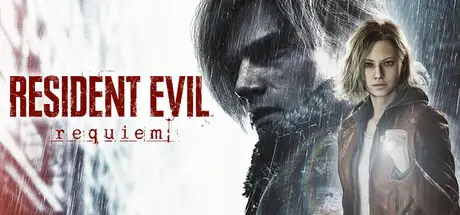
Let me lead with the verdict: Resident Evil Requiem is not one horror game. It is two, bolted into the same disc, and Capcom is daring you to notice the seams between them.

For the first stretch you are Grace, an ordinary woman who never has enough bullets and flinches at every sound behind a door. Then the game hands you Leon — the agent we have known for two decades — and a hatchet, and tells you to wade into the horde. One half holds your breath for you. The other half lets it out in a roar. It is the boldest structural gamble the series has made in years, and the whole game lives or dies on whether you buy into the swing.
The bet paid off. A Metacritic 92 clears Resident Evil 7's 86 and Village's 84, six million copies sold in roughly seventeen days made it the fastest seller in series history, and a 95% Overwhelmingly Positive rating on Steam tells you the crowd agrees. By almost any external measure, this is the franchise operating at the top of its game.
But a high number hides a real argument. The boldest thing this game does — splitting itself cleanly in two — is also the thing players cannot stop fighting about, and whether you come out loving it or merely respecting it depends entirely on what you wanted from a Resident Evil in the first place. Some players want to be hunted for ten hours; others want to be hunted and then become the hunter. Requiem tries to be both games at once, and that ambition is exactly what splits the room. The rest of this review is here to tell you exactly which side of that fight you belong on, and why.
Story | 7.5/10
História: 7.5/10Raccoon City, walked back into by a nobody
Setting the story back in Raccoon City is the kind of move that makes long-time fans put down their controllers. Thirty years of detours — a Spanish village, a snowbound European estate — and the series finally circles home to the city where the whole nightmare started. For anyone who has followed the franchise since the late nineties, that name carries a weight no new location ever could. The clever twist is who takes you there. Not a square-jawed operative, but Grace, about as ordinary a protagonist as the franchise has ever fielded.

Grace is tied by blood to Alyssa Ashcroft, a character the series buried long ago, and that link is the engine of her entire arc. You do not need to have finished the previous eight games to understand why she keeps walking deeper into a dead city.
That accessibility is the smartest thing the writing does this time: veterans find a knowing wink in every Raccoon City corner, newcomers get a clean door in. A nobody shouldering the franchise's heaviest history is simply a more affecting frame than another superhero ever could be. There is something quietly devastating about handing the weight of thirty years of lore to a person who, by every metric, should not be able to carry it — and watching her carry it anyway.
Two leads, two grammars of storytelling
The real structural swing here is that there are two parallel protagonists, and they tell their stories in completely different grammars. Grace's thread is horror narrative — atmosphere, dread, the cold certainty that you do not know what waits around the next corner. Leon's thread is action narrative, fast and direct and dense with set pieces.
Director Koshi Nakanishi compares the alternating shape to Resident Evil Revelations: not a single road run to the end, but two leads each handed a long stretch of their own, traded back and forth. The structure does something clever for the storytelling, too — because the two characters occupy such different emotional registers, the game can shift its entire mood simply by handing you the other one, no exposition required. A cut from Grace to Leon is a tonal hard reset, and the writing uses that rhythm as a tool rather than fighting it.

Leon's return is an emotional anchor in itself. For a great many people he simply is the face of this IP. Putting that old face beside Grace's new one — a civilian shoved along by fate, a veteran who long ago made peace with dying — sets up a genuinely lovely piece of counterpoint.
Where Resident Evil 7 pinned you inside one ordinary first-person viewpoint from start to finish, Requiem's Leon thread gives you a second exit out of the fear. It is a structural answer to a complaint that has dogged the first-person era: that relentless helplessness, sustained for a dozen hours, eventually numbs rather than frightens.
Behind the high score, the script has soft spots
In honesty, story is the softer of this game's pillars, and the 7.5 I land on it is docked from the writing itself. Reviews broadly note that the plot has logic holes, twists that wilt under scrutiny. The antagonist, too, leans one-note — the motive and menace never grow large enough to fill the space the narrative reserves for them.

This is not the same as saying the story is told badly. It is saying the foundation is not as solid as the finish work sitting on top of it. The Raccoon City nostalgia, the dual-lead counterpoint, the cinematic staging — the upper floors are gorgeous. Start interrogating the causal chain underneath, though, and you find seams papered over with mood and fan service.
Think of it less as a watertight detective novel and more as a superbly paced horror film: in the moment you are swept along completely, and it is only after the credits that you start poking at the turns that do not quite hold. For the overwhelming majority of players that gap never touches the immersion. But if you come for plot above all and tend to read a narrative line by line, know going in: this story serves the experience, strong on staging and atmosphere, weaker on airtight logic.
Audio | 8.0/10
Áudio: 8/10What actually makes Grace's half terrifying is the sound
Whether a horror game frightens you is only half a matter of what you see. The other half lives in what you hear, and Grace's thread — the one so many players call the strongest pure horror the series has managed in years — owes that reputation to the RE Engine's immersive audio. When resources are always short and your ears are your only scout, every distant footstep, every knock of water in a pipe gets amplified by your own nerves into something monstrous. That prickle up the back of your neck before you have seen a single thing is built entirely out of sound. First person sharpens the blade further: you cannot see behind yourself, so your ears have to assemble the unseen threat, and that is fear in its oldest form. The game weaponizes your own imagination — a creak you cannot place is scarier than any monster the artists could put on screen, because your mind fills the gap with something worse.

Put plainly, whether Grace's chapters glue you to the chair owes more to the audio than to the visuals. Turn the sound off and the dread evaporates almost entirely; turn it back on, alone, with headphones, and the same room becomes nearly unbearable.
There is real craft in the restraint, too. The mix knows when to give you nothing at all — long pockets of near-silence that train you to dread the next sound before it ever comes. By the time something finally does scrape or shuffle, you are already half-broken, and that is the trap working exactly as designed.
A full cast, and two moods with two voices
The game fields a complete professional voice ensemble — Angela Santamaria, Nick Apostolides, Jane Perry and others carry full performances across both threads. The work holds up: Grace's panic and Leon's composure both land through the voice alone, and that is the floor the 8.0 audio score stands on. The performances never tip into camp, which the series has not always managed, and the localization options are broad enough that the dread survives translation — a real concern for a game whose horror leans so heavily on tone of voice rather than spectacle.
What is striking is how deliberately the two threads were given different sonic signatures. This is not one sound team applying a single house style across the whole game; it is a score that consciously splits itself, the way the gameplay does, and commits fully to both halves.

Grace's side is restrained, sparse, the kind of mix that makes you lean in until your shoulders ache. Cut to Leon and the soundstage throws its doors open: the bark of weapons fire, the dull crack of a hatchet coming down, the clatter of a crowd rushing in. That fall from suppression to release maps exactly onto the hot-and-cold rhythm of the gameplay, and you can practically feel your own posture change with it.
Resident Evil 7 stayed muffled and tense from first minute to last; Requiem instead vaults between two tonal registers, and the listening is the livelier for it.
It is the rare survival horror soundtrack that has to do two jobs at once — wind you to the breaking point, then hand you the satisfying noise of fighting back — and it pulls off both without either one feeling like an afterthought. Better still, the contrast runs both ways: cutting from Leon's racket back into Grace's hush makes that silence scarier than it was the first time, because your ears were just fed and then abruptly starved, and instinct reads the absence as a warning. That alone is a chunk of the 8.0 the audio earns.
Visuals | 9.5/10
Gráficos: 9.5/10The RE Engine pushes photoreal far enough to make your skin crawl
Visuals are this game's highest mark — a near-perfect 9.5 from me. The RE Engine goes all in on photorealism: light, material, the give of skin all edge toward the uncanny, and that is a sturdy slab of the Metacritic 92. But realism is a double-edged thing in a horror game. The truer it looks, the worse it makes you feel — and Requiem understands that this discomfort is the point, not a side effect. When a monster is rendered detailed enough that you can count the pustules on it, the revulsion arrives on a purely physical level.

That is why the gore and body horror here got named, by several outlets, the most extreme the series has produced. This is not effects for the sake of effects, and it is not gore as a numbers game either — it is texture and weight and consequence, every wound looking like it cost something.
It is realism aimed at the one thing horror wants most — to make you want to look away. And the engine never lets you off easy: wounds glisten, flesh deforms under a hit, and the lighting refuses to flatter any of it. The fidelity is not there to be admired so much as to be endured, which is precisely the trick a horror game should be pulling.
One game, two languages of the camera
The visual presentation gains a layer of flexibility because you can swap between first and third person at will, and the two cameras serve genuinely different ends. First person maxes out Grace's claustrophobia — your field of view is hers, and what you cannot see is genuinely unseen. Switch to third and Leon's combat, his dodges and melee finishers get a full stage; the visual weight slides from dread to command. The same engine, the same assets, framed two completely different ways — and crucially, the game looks deliberately composed in both, rather than treating one camera as the "real" one and the other as a bolted-on option.

Raccoon City, the freely explorable district, is the standout of the level art. Broken streets, abandoned buildings, the marks of catastrophe everywhere — they compose images that stick.
It is not just pretty. The environment is doing narrative work on its own, telling you what happened here without a single line of dialogue: a stroller tipped in the road, a barricade that did not hold, a window smeared from the inside. You read the fall of a whole city out of its set dressing, and that economy of storytelling is exactly what photoreal detail is for.
Every platform, and yes, even Switch 2
The game ships across PC, PS5, Xbox Series X|S, and Nintendo's Switch 2 — and the Switch 2 version is a day-one release, the first time a mainline entry has launched alongside a new Nintendo machine on the same date. Given how photoreal this thing is, squeezing it onto Switch 2 while keeping the look recognizable is a real feat in its own right, and a quiet flex of how scalable the RE Engine has become.

Platforms differ, of course. Consoles each strike their own resolution-versus-framerate bargain, while PC raises the ceiling — push materials and ray tracing to their fullest and the PC build is the way to see the game at its most extreme; that the Switch 2 hands you something close in a portable shell is the genuinely surprising part, and a sign Capcom put real work into the multi-platform port rather than shipping a token cut-down version.
Against the already formidable photoreal art of the Resident Evil 4 remake, Requiem steps forward again in material precision, subsurface skin scattering and lighting detail — the strongest sheet of visuals this RE Engine has put on the table, and roughly the ceiling of what photoreal horror looks like right now.
Combat | 9.0/10
Jogabilidade: 9/10Two different games inside a single playthrough
The big gameplay story is the roughly fifty-fifty split of horror and action across two protagonists. Nakanishi likens the structure to Resident Evil Revelations — not a blend stirred into one pot, but two leads each holding a long stretch of their own, traded back and forth. Buy one game and you walk away having played two: two feels, two tempos, two entirely separate kinds of fun.

The cleverness is that the rhythm rises and falls on its own. Grace's stretches press you into slow resource management and puzzle-solving, breath held, inching forward; Leon's stretches hand you a flood of new actions and crowds of enemies and let you exhale.
Nakanishi himself calls it jumping into a cold bath after sitting in a hot sauna. The longer you hold that breath, the sweeter the release lands — and the reverse is true too, since stepping out of Leon's noise back into Grace's silence makes the quiet feel twice as dangerous as it did before.
Grace survives by arithmetic, Leon clears rooms by force
The two leads run on opposite cores. Grace carries the game's signature blood-synthesis system: supplies are forever scarce, and you spend limited materials to buy yourself more life, every craft a small equation. Paired with her civilian framing, it plays as textbook survival horror — which enemy to drop, which corridor to skirt, who gets the last bullet, all of it a choice. The whole shape reaches straight back toward the Resident Evil 2 remake's exploration, puzzles and resource squeeze.
Leon lives in another world entirely. He gets new melee tools like the hatchet, can stand and trade blows against rushing crowds, and his combat is fast, loud, and rich with finishers. That feel answers the Resident Evil 4 remake — crowd-pushing, complex boss fights, modern action horror.
The clearest difference is mental. As Grace your whole brain is wrapped around "should I even fire this shot," because every bullet is worth more than your life. As Leon the headspace flips to "come and get it," with weapons and moves to spare. That swing from miserly arithmetic to open aggression all but packs survival horror and action shooting, two distinct genres, into a single release you alternate through. Getting to feel two operating logics this far apart inside one game is a rare thing in itself.
Swap the camera freely — but the back half loses some air
One more freedom worth flagging: first and third person, switchable any time. It is no gimmick but a real lever on the experience. Want Grace's dread cranked to maximum? Stay first person, where the unseen stays unseen. Prone to motion sickness, or just want eyes on your own moves? Third person is a tap away. Community data bears this out — most players ran Leon in third person, the natural fit for action shooting, while Grace's viewpoint choice splits down the middle, proof that immersion and comfort sit in genuine tension. That split is quietly fascinating: it shows the game asking players to make a real trade between being more scared and being more comfortable, and watching them land on both sides of it.
The shortfall has to be said plainly. The late game flattens out, enemy variety trails the Resident Evil 4 remake, and a "haven't I done this already" fatigue creeps into the closing stretch. The encounters stop surprising you, the new ideas stop arriving, and you can feel the design coasting on momentum it built earlier.
As dazzling as the opening is, the back half doesn't drive the point all the way home. That is why gameplay lands at 9.0 rather than higher: the ceiling is enormous, the first two-thirds are some of the best the series has ever played, but the game cannot quite hold that altitude from start to finish — and a 10 demands exactly that.
Content | 6.5/10
Conteúdo: 6.5/10One playthrough, two helpings
Start with the good. It is a single playthrough, but because each lead carries a long dedicated stretch, the content density you actually play through doubles up. Grace's horror exploration and Leon's action assaults together let one run taste two wholly different styles, which makes the campaign meatier than your average linear horror game.
The freely explorable Raccoon City district tucks in extra things worth digging for, so you are not only ever sprinting toward the next door. Optional rooms, hidden caches, files that flesh out the backstory — the kind of careful environmental rewards the series has always done well, and they give the slower Grace chapters somewhere to breathe between scares.
Put another way, as a one-time main course it serves plenty — you will never feel it ended before it began. A single run still walks you through horror, action, puzzles and exploration in turn, and the variety alone justifies the price of admission. The real trouble only starts after the credits roll.
Once the credits roll, there isn't much left
This is my lowest mark for the game, a 6.5, and the whole deduction is long-tail replay value. The biggest loss: no Mercenaries-style mode at launch. For series veterans, Mercenaries is all but stitched into the DNA — the replay-it-forever, score-chasing little arena that has kept people sinking dozens of hours into past entries long after the story was done.
Requiem simply doesn't offer one this time. Which means once the campaign is done, the reasons to stay are thin. There is no quick-fix arcade loop to drop into for twenty minutes, no leaderboard itch to scratch, none of the "the credits are just the beginning" longevity the franchise trained its fans to expect. For a game that nails the first run so completely, the silence afterward is conspicuous.
Set against the Resident Evil 4 remake, which packed a stack of extra modes around its campaign, Requiem's launch content is visibly leaner. It bet every chip on that one run of the main story, which is a defensible choice for the quality it bought, but a real cost for anyone who measures value in raw hours. The run is terrific — but there is a lot of blank space after the spectacle ends. Higher difficulties and unlockable weapons give the most devoted a reason to start over, yet without a dedicated arena mode that loop runs dry faster than the series faithful are used to. Players who measure a purchase by how long it keeps them busy should go in clear-eyed about that.
A DLC is on the way, but not in hand yet
The good news is that Capcom has confirmed story-driven add-on content. Multiple outlets report a story DLC codenamed Last Days reportedly aimed at September 2026, with Leon at its center — he takes one final mission back into Raccoon City, and the expansion reportedly drags in Ada Wong and the long-dead Alyssa Ashcroft, its events picking up right after the main game's close. For fans, Ada Wong's return is a heavyweight payoff on its own; the two-decade tangle between her and Leon is likely one of the DLC's biggest hooks.
Worth noting: the DLC reportedly aims to fold back the Raccoon City sections that were cut from the base game, and to answer the launch-window criticism about the back half's pacing — which means even Capcom seems to concede that pacing is the most contested thing about the game.
But to be clear, this DLC sits at rumor plus an official "we will," with no release out, no price and no length announced. Treat it as a promising maybe, not a reason to buy today. So if you are buying for complete content, what you get right now is the campaign itself, full stop; the rest you wait for, and there is no guarantee it lands exactly when or how the reports suggest.






Comentários 0
Queremos saber sua opinião
Participe da discussão e compartilhe sua opinião sobre este jogo.
Ainda não há comentários. Conte o que você achou desta análise.