





















Opening
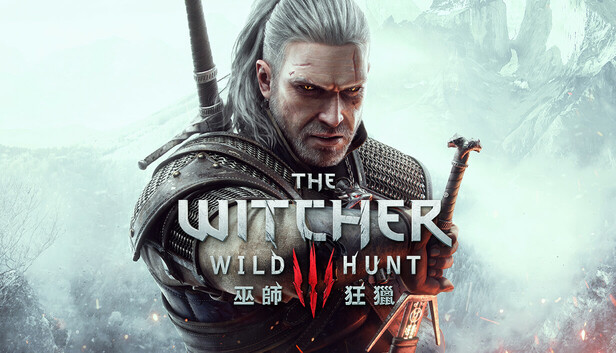
Ten years on, the case for The Witcher 3 has stopped being about a game and started being about an industry.
When it shipped in May 2015, CD Projekt RED was a respected Polish studio with two cult RPGs to its name and a long, quiet reputation among the Slavic-fantasy faithful. By 2024, the studio had sold sixty million copies, banked roughly six hundred and fifty million dollars in gross revenue across base game and two expansions, parlayed that into a Cyberpunk 2077 budget that rewrote the conversation around Western RPGs, and become the only mid-sized European studio sitting at the AAA grown-ups' table. The first Witcher 3 review you read mattered. The hundredth Witcher 3 review — this one — has the harder job, which is explaining why a game that turns ten this month still gets cited in 2026 GOTY arguments by people who never opened a Polish fantasy novel.
The numbers are not the answer. Metacritic 92, Steam 96% positive across eight hundred thousand reviews, BAFTA Best Game and TGA Game of the Year in the same season — those are facts, not arguments. The argument is that side quests in The Witcher 3 hit the writing bar that other studios reserve for main quests, that thirty-six ending combinations have actually-different consequences, that a two-thousand-square-kilometer open world hides scripted moments behind every salt-stained windmill, and that ten years of cheap competition has not produced a peer. Patch 4.0 in December 2022 added ray tracing and DLSS 3 free of charge — at a moment when Sony was charging seventy dollars for a Last of Us coat of paint — and the act made the case for itself. The Witcher 3 is the rare AAA where the post-launch ethics matched the pre-launch pitch.
This review covers the 2022 next-gen edition on PC, with notes on the 2019 Switch port and the 2016 Toussaint expansion where their differences matter. The deck is stacked toward narrative; that is the deck the game itself shuffled. Bring a coffee. The dive is long, and the writing is the point.
Story | 9.8/10
História: 9.8/10The Witcher 3's main plot is "father looks for daughter." Everything that makes the game canonical happens off the side of that sentence, and the canon is built sentence by sentence. CDPR's writing room of approximately sixty people across base game and two expansions produced a campaign where the side material — the marsh widow's missing son, the war veteran's nightmares, the witch's vengeful suitor — meets the writing density bar that most studios reserve for cinematic showcase moments only.
The Bloody Baron arc is the case for video games as literature

The BAFTA jury did not give Best Narrative to The Witcher 3 for Geralt, or Ciri, or the Wild Hunt. They gave it for Phillip Strenger, the Bloody Baron — a fat, balding, alcoholic abuser of a man who happens to be the player's only thread to find Ciri in the Velen marshes. The questline opens with the Baron's hospitality and closes with the player choosing between two endings that are both worse than no ending at all. In between, the writers ask the player to sit with the Baron's wife and daughter, with his miscarried child as a botchling, with his own slow comprehension that the daughter who fled does not want to come home. AAA games with eight-figure cinematic budgets fail at this kind of writing every year. CDPR landed it with typewriter pacing and Polish voice direction and trusted the player to read what the script doesn't underline.
The Whispering Hillock branch inside the Baron line is the cleanest example of the design philosophy. A tree spirit in the swamp offers to heal the Baron's wife in exchange for being freed. Save the tree — the wife recovers, the Baron survives, three orphan children later turn up dead. Kill the tree — the wife dies, the Baron hangs himself, the children live. There is no clean answer. The game does not score the choice. The writers wrote both endings as if they meant them, and ten years of forum debate has not produced consensus on which is the moral read. That refusal is the whole brand.
Three women, thirty-six endings, sixty writers

Ciri is Geralt's adopted daughter. Yennefer is the love of his life. Triss is the love of his most recent life. The game lets the player handle all three relationships in parallel, and the writers backed every plausible permutation with consequences that ripple to one of thirty-six recorded ending combinations. The romance system is not "pick a dialogue option, hold hands." It is woven through the political plot — the King is Dead questline in Skellige, the Kaer Morhen letter exchanges, the final confrontation on the slope of Skellige. A team of sixty writers can do this. Three writers cannot.
The trick is not the branching count. Other RPGs have branched too. The trick is that every branch was written by a human who cared, not generated by a flowchart. The Bloody Baron has a different farewell speech depending on whether you brought Anna home. Yennefer's last morning has different dialogue depending on whether you chose her on the Skellige beach. Geralt's grunts even change consonant placement based on which witcher contract opened the act. None of this is randomized. All of it is hand-written. The economics of that approach are why The Witcher 3 sits where it does — and why the imitators that came after couldn't budget the same density.
Two DLCs that meet the main game's bar

Hearts of Stone shipped in October 2015 with a ten-hour devil-bargain arc starring Gaunter O'Dimm, a folkloric horror villain so well-written that the BAFTA Game Design committee nominated the expansion separately. Olgierd von Everec — the antihero of the arc — earns the same writing budget as Geralt's main protagonists. The arc could have shipped as a main-game-of-the-year on its own; CDPR slotted it as a $9.99 expansion.
Blood and Wine arrived May 2016 with a thirty-hour chivalric send-off in Toussaint, a Provence-coded duchy of vineyards and knight errantry. The expansion runs longer than most full indie games, ships a new color-saturated tilescape, and lets Geralt retire on terms the writers earned over five years of working with him. Reviewers in 2016 used the phrase "mini Game of the Year shipped as expansion," and the phrase has aged into accuracy. Two DLCs, forty hours, $30 combined — and the writing density does not flicker once. The Toussaint succession crisis, the vampire detective Regis arc, the Beauclair tournament — every named questline in the expansion would have been a credited writer's career-best work at a smaller studio.
Audio | 9.5/10
Áudio: 9.5/10The Witcher 3 has the only modern AAA score that walked out of the game and made a parallel commercial life on Spotify, licensed symphony concerts, and a Polish folk-metal band's touring catalog. The audio team designed for that exit ramp from the first day.
A three-composer team with one identity

Marcin Przybylowicz served as music director and lead composer. Mikolaj Stroinski handled key narrative sections — including the entire Toussaint expansion in 2016, an unusual delegation that the published credits make obvious. Adam Skorupa, who scored Witcher 1 and 2, returned for theme continuity. Three composers, one consistent identity — that is the rare arrangement where the music feels handwritten rather than committee-stitched. The Polish source material binds them: Slavic modal scales, modal flute lines, lithuanian-tinged choral passages, all of which sound foreign to a Skyrim-trained ear and become the game's audio signature within ten hours.
Percival Schuttenbach, the Polish folk-metal ensemble, performed the source folk material the score samples and reworks. The band's live tour catalog now leans heavily on Witcher 3 cues — the score generated enough public-facing demand that secondary artists could build a sub-economy on top. No other AAA soundtrack in the last decade has produced that effect. The closest peer is Mick Gordon's Doom 2016 work, and even Gordon's catalog never had a folk band hauling Witcher cues across European concert halls.
Combat music that breathes
The combat themes do not loop the same eight bars for two minutes. They mode-shift on a 90-second cycle: open with a Slavic minor-key menace, settle into a quieter modal flute halfway through, escalate again at the boss's third health-bar turn. The technique borrows from film composition more than game composition, and it is the reason a typical witcher contract — three minutes of fighting — does not feel musically thin even after the player has run the same beasthunting loop fifty times. The score is paced like the writing is paced: in human-feeling beats, not in repeating gameplay loops. The same approach scales up to set-piece encounters: the Bloody Baron's house siege opens with a domestic-folk theme that mutates into the combat motif as Geralt walks through the door, a hand-off invisible if you're not listening for it.
Tavern music is the secret hook. Bards in Novigrad and Beauclair sing about Geralt's recent decisions in near-real time — a song about the Bloody Baron does not unlock until the questline closes; a verse about the Wild Hunt landing appears after Kaer Morhen. The audio system reads from quest state. Most players never consciously notice; nobody who plays for a hundred hours misses the effect. The implementation hides behind a deceptively casual tavern atmosphere that most reviewers describe as "good music in pubs" without realizing the music is being authored by the game's progress.
Voice direction matches the writing's restraint

Doug Cockle's Geralt is the most-quoted English voice performance in the genre, for one reason: Cockle and the voice direction team kept the vocabulary sparse. Geralt grunts, hmms, and answers in eight-to-twelve word sentences. The trust the writers extended to the player — read between the lines — extends to Cockle's vocal performance. Compare to the chatty protagonists of Skyrim, Cyberpunk's V, or even Geralt's predecessor in Witcher 2, and the restraint is the difference. The character does not narrate himself, and the script trusts the listener to follow. The same restraint applies to the supporting cast — Charles Dance as Emhyr var Emreis, Denise Gough as Yennefer, Jaimi Barbakoff as Triss — every performance trims rather than reaches.
Patch 4.0 added Dolby Atmos PS5 spatial audio plus DualSense haptic integration. Eight years post-launch, two free audio upgrades — the kind of post-release attention most studios stop offering after eighteen months. It is the same ethic that ships the next-gen graphics patch at zero cost: the audio team kept caring. The DualSense haptic implementation maps the witcher signs to distinct vibration patterns — Aard rumbles, Igni clicks, Quen pulses — small interaction polish nine years out from launch, the kind of detail that does not move review scores but does move the studio's reputation.
Visuals | 8.5/10
Gráficos: 8.5/10The Witcher 3 you install in 2026 is not the Witcher 3 that shipped in 2015. The patch 4.0 next-gen rebuild in December 2022 is the version this review evaluates, and the difference between then and now is roughly 1.5 points on the graphics score.
The free next-gen rebuild that set an industry precedent

Patch 4.0 shipped December 2022 across PC, PS5, and Xbox Series X/S — free for every existing owner. It added ray-traced global illumination, ray-traced ambient occlusion, DLSS 3 frame generation on PC, FSR 2 cross-platform upscaling, four new ultra-quality preset tiers, DualSense haptic integration, cross-progression save sync across all platforms, and a Netflix-tie-in armor pack. The same week, Sony charged seventy dollars for The Last of Us Part I — a remaster of a 2013 game with iterative visual upgrades. CDPR's free patch was not announced as a moral statement, but the industry read it as one. The free-vs-paid remaster question now defaults to "well, CDPR did it free."
The original REDengine 3 work at 2015 launch was already best-in-class open-world tech. Novigrad's city scale, with hundreds of named NPCs running daily schedules across a five-kilometer Hanseatic port, ran on a custom engine that pre-dated Unreal 5 by seven years. Skellige's wind-and-wave ocean rendering, Velen's marsh fog volumetric lighting, the deep-shadow forest interiors of Kaer Morhen — every biome had bespoke pipeline work. The 4.0 patch did not replace this; it layered ray tracing on top and let the original direction work harder under modern light models. The retention of the original art direction is the patch's most important decision — most next-gen rebuilds revise the source art and lose the visual identity that earned the original its acclaim. CDPR's patch kept everything the original team designed and added technology around it, which is the rarer and harder achievement.
Toussaint and the persistent visual ambition

The Blood and Wine expansion shipped May 2016 with a visual budget that surpassed Skellige's. Toussaint's color palette saturation, the vineyard render distance, the Castle Beauclair facade lit by an actually-modeled-volumetric sunset — all of it was 2016 work running on the same REDengine 3, demonstrating that CDPR was still pushing the rendering pipeline a year past launch. The expansion ran the engine harder than the base game. Reviewers at the time described it as "the prettiest video game vacation in years." That description has aged into "the prettiest video game vacation in any decade."
Toussaint's color science is the deeper achievement. The region uses a Provence-coded warm palette that breaks from Velen's gray-green marsh and Skellige's iron-blue ocean, and the team explicitly designed the color shift to feel like flying south for the winter. The visual change does narrative work — Geralt arrives in Toussaint near the end of his journey, and the color palette tells the player that the world has finally stopped trying to kill him. That kind of color-as-narrative work was, in 2016, unusual outside of art-direction-first indies. CDPR did it inside a paid expansion to an open-world AAA RPG.
The Switch port nobody believed could work

Saber Interactive announced the Switch port in 2019 to industry-wide skepticism. Witcher 3 on Nintendo's handheld at 30 fps, dynamic 720p, all DLC included, complete cross-progression with PC saves through email — none of it should have worked, and Saber shipped it working. The bedtime-handheld market that the Switch carved out turns out to be exactly the cadence Witcher 3 wants: an hour of Velen swamp on the couch, then sleep. The port is the most aggressive piece of platform engineering in the handheld history of the medium, and it ships with Hearts of Stone and Blood and Wine at the same $40 retail. Eight years on, the port still runs.
The eight-year live ops on visuals — water shaders, hair physics, texture streaming, all received post-launch passes that compounded across patches — is the unseen part of the graphics story. Few studios stay engaged with a game's visual fidelity past the eighteen-month mark. CDPR stayed engaged for nine years and counting, and the cumulative effect is a 2015 game that loads in 2026 looking like a 2022 release. Patch notes from 2018, 2020, and 2023 each landed material visual improvements that the marketing barely mentioned — the texture streaming rewrite in 2020 alone dropped pop-in distance by half on PC, an improvement most players never identified because the team buried the change in a "stability fixes" note.
Combat | 7.0/10
Jogabilidade: 7/10Combat is the seven-out-of-ten in The Witcher 3's score sheet, and it's the lowest pillar by half a point. Three independent reviewers — Polygon's Phil Kollar in 2015, GamesRadar's Leon Hurley in 2022, the Chinese community site Niukouguan in 2017 — all flagged the combat handling as the package's weakest link. Their judgment was correct. The longer answer is that the seven is not a flat seven.
Five signs, two oils, three decoctions — the system is deep, the surface is unkind

Geralt's combat toolkit splits across five witcher signs (Aard kicks enemies back, Igni sets them alight, Quen shields the next hit, Yrden slows them, Axii confuses them), monster-specific oils that apply to swords, decoctions that stack permanent buffs by drinking monster mutagen brews, and potions on a fast-toggle. A player who reads the bestiary entry for the night's contract — every entry calls out the monster's weakness in sentence two — applies the appropriate oil, downs the relevant decoction, and then opens the fight knows what to do. Combat in that mode is closer to a souls-like ritual than to a mash-light-attack action loop. The depth exists, it just sits behind a pre-fight prep step the game never forces.
The problem is that most players skip the prep. Default difficulty does not require it. The bestiary text rolls in a sidebar tooltip that most players close. The game's two-minute hand-holding tutorial covers light-attack-and-roll and stops. So a player who never learns the prep step runs the same press-light-attack-three-times-roll loop for sixty hours and concludes, accurately, that combat is shallow. The combat reviews are not wrong; they describe what most players experience.
Roach, weather, and a traversal system that's more nuanced than it looks

Geralt's horse, Roach, gets dismissed in screenshots as the game's running joke about clipping bugs. The mount system underneath is more designed than the bug reports suggest. Roach has terrain pathing logic: she avoids fall hazards if the player isn't actively steering, finds bridge crossings, slows on slick mud, speeds up on stone-paved roads. Weather affects gallop sustain — a thunderstorm forces a walk pace after twenty seconds. Time of day affects the open road encounter frequency. The traversal system reads as casual; it is actually a quietly designed system that does not get its due in screenshot culture.
The day-night NPC schedule is the gameplay system that earns the most credit per byte of effort. Every named villager in Novigrad and Beauclair runs a location loop — works the dock during the morning, returns home at six, sleeps at nine. The schedule reads as decorative until you realize that certain side quests fail-state if you arrive at the wrong hour. The Witcher 3 trusts the world to keep moving without you, and the trust shows up across the campaign in small details that most players never identify but everyone feels.
Gwent is a 10-hour subgame, and Patch 4.0 didn't rebuild combat

Gwent — the in-game collectible card minigame — is deep enough that CDPR spun it off as a standalone title in 2018. The base-game Gwent has six factions, two hundred-plus cards, and a competitive scene that ran tournaments before the standalone shipped. A player who engages Gwent finds a ten-hour subgame inside the AAA RPG. The minigame restraint is rare at AAA budget; most studios would have shipped a coin-flip mini and called it done.
Patch 4.0 added DualSense haptics on PS5 but did not rebuild combat. The decision to leave combat untouched is the cleanest signal of CDPR's design priorities — eight years on, the studio chose to enrich the audiovisual layer rather than rewrite the foundational mechanic. The signal lands both ways: the studio respects the original combat enough not to revise it, and the studio also acknowledges that combat is the wrong layer to rebuild because the writing is the load-bearing system. The decision is correct — rebuilding combat would have invalidated nine years of player muscle memory and broken Toussaint's mid-game balance — but it means the seven-out-of-ten gameplay score still stands. The combat is what it always was, plus a controller buzz when you Aard a drowner. If your reference point is Hollow Knight, Hades, or Sekiro, the Witcher 3 combat will feel undercooked. If your reference point is Skyrim, it will feel rich. Both reads are honest, and the game is the design it is.
Content | 9.5/10
Conteúdo: 9.5/10Two hundred and thirteen hours. That's a typical engaged save of the Complete Edition — base game plus Hearts of Stone plus Blood and Wine — and the per-hour math is the cleanest in AAA open-world history.
HowLongToBeat data and what the numbers mean

HowLongToBeat's base-game tracking sits at 53 hours main story, 103 hours main plus extras, and 173 hours completionist as of late 2025. Those are the numbers for the launch product without expansions. Add Hearts of Stone at roughly 10 hours and Blood and Wine at 30, and a typical engaged playthrough of the Complete Edition runs 213 hours. That figure is the upper end of AAA open-world value, with only Elden Ring and Baldur's Gate 3 in the same conversation among games released in the same decade.
Time-on-game alone is not the story. The story is what time means inside the game. A 50-hour Witcher 3 save will surface 20-30 named side quests with full voice acting and ending consequence, three or four contract beasts whose bestiary entries the player will actually have read, and at least two political decisions in Skellige or Velen that branch the campaign. A 50-hour Skyrim save surfaces a lot of dungeons. The hours-to-meaning ratio in The Witcher 3 is closer to a Telltale-density narrative game than to a Bethesda-density sandbox. That is the design that the imitators have not matched.
Two DLCs that doubled the package

Hearts of Stone shipped October 2015 for $9.99 with a 10-hour Gaunter O'Dimm devil-bargain arc. Blood and Wine shipped May 2016 for $19.99 with a 30-hour Toussaint expansion. Combined cost: $30. Combined runtime: 40 hours. That is more content per dollar than the average $70 AAA release, shipped two and three years after the base game, with the same writing density that earned the BAFTA. The Game of the Year edition routinely sells under $15 during seasonal Steam sales — a ten-cent-per-hour value when total content is engaged. Both DLCs were nominated for game-of-the-year-equivalent awards in their respective expansion brackets, and Hearts of Stone earned the BAFTA Game Design nomination as a standalone product, an unusual recognition for paid DLC and a direct statement on the writing density.
The mod ecosystem is the third leg of content. Nexus alone hosts over eight thousand Witcher 3 mods, ranging from texture upgrades to a fully voiced fan campaign called "The Witcher 3 Enhanced Edition." CDPR shipped REDkit, the official modding toolset, in 2024 — nine years after launch — and the community doubled in the eighteen months following. PC players who finish the base content have one of the largest fan-content libraries in modern RPG history waiting at no cost.
Live-ops attention at zero charge

The 2022 patch 4.0 and the 2024 REDkit release represent two extensions of the lifetime package's value at zero additional charge. CDPR did not need to do either; the base game had stopped being a daily revenue driver years before. They shipped them anyway. The behavior is what the "Labor of Love" Steam Award category was built to recognize. Witcher 3 has not received that award yet — it's older than the category, and CDPR Cyberpunk drama probably suppressed votes — but the eligibility is obvious.
Sixty million copies sold by 2024. Six hundred and fifty million dollars in gross revenue. The math says CDPR turned a $35 million development budget into a roughly 18x return, and the return reshaped the studio. Cyberpunk 2077 had a Witcher 3 budget because Witcher 3 sold. The two games are linked in ways that future game studies courses will spend lectures unpacking — but the foundational version of the argument is simple: Witcher 3 made CDPR rich enough to chase its next ambition. The next ambition stumbled, then recovered. The studio is still here. That is, in itself, a Witcher 3 outcome.
Newcomers and the franchise

Geralt's backstory threads connect to Witcher 1 and Witcher 2, but the writing handles new players with grace. Yennefer's history with Geralt is summarized in dialogue choices that opt-in to backstory. Ciri's training at Kaer Morhen is shown in flashback. The previous games are not required reading. Geralt's emotional weight benefits from them, but anyone starting cold in 2026 will land all the major arcs without confusion. The Complete Edition is the right place to start; the Switch port is the right platform if portability matters, and the PC ray-tracing build is the canonical version if the hardware allows.
Andrzej Sapkowski's eight-novel source material is available in English translation and provides additional depth, but the game functions as a complete narrative without it. Players who finish Witcher 3 and want more frequently report reading the novels in publication order — short-story collection The Last Wish first, then the five-novel main saga starting with Blood of Elves. The expansion-order reading is the canonical entry path for anyone who came to the franchise via the game and wants to extend the engagement past the credits.

Comentários 0
Queremos saber sua opinião
Boas-vindas! Conte o que achou deste jogo — quem chega primeiro pode ter uma surpresa.
Ainda não há comentários. Conte o que você achou desta análise.