Notícia
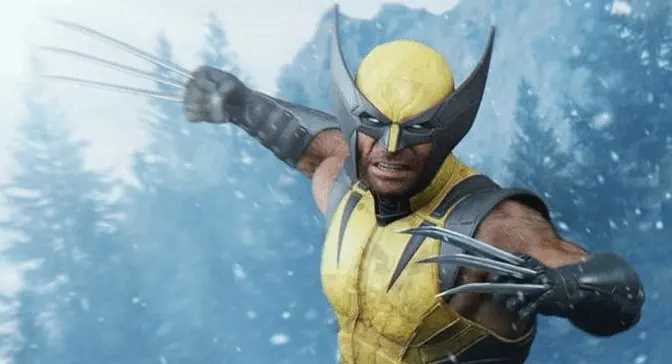
No open world here Marvels Wolverine First game plus
Marvel's Wolverine opts for a linear narrative with NG+ unlocked at launch instead of a Spider-Man 2
















For this round of topics, they essentially made a very gamified choice: by using “one open-world king per year from 2010–2019 + 2026 substitute recommendations,” they re-ranked the strongest batch of titles in players’ memories from the past decade or so, while conveniently providing a “spiritual successor” guide for this year’s big releases. As someone who has done game design and written code, my first reaction to this list wasn’t “nostalgia,” but rather: to what extent do these pairings actually line up in terms of design philosophy and technical implementation? Looking at it as a whole, Gamerant’s original article reads more like an emotion-driven navigation guide than a rigorous design genealogy chart.
From a design perspective, the most professional pairing is actually 2010’s Fallout: New Vegas and 2026’s The Outer Worlds 2. Both are from Obsidian, and their structure of branching narratives plus exploration rewards comes from the same template. That kind of feedback logic in the quest scripts—“a choice you casually made in the first two hours suddenly blows up on you six hours later”—is very typically the result of designers and programmers repeatedly simulating things together in the event system. Recent news mentioned that The Outer Worlds 2 will also have two story expansion packs, which means the main storyline framework is being built from the start with long-term operation in mind. The “main campaign + late-stage DLC slots” puzzle-like level design approach makes it basically a legitimate refill for players who love New Vegas-style nuanced characters and complex endings.
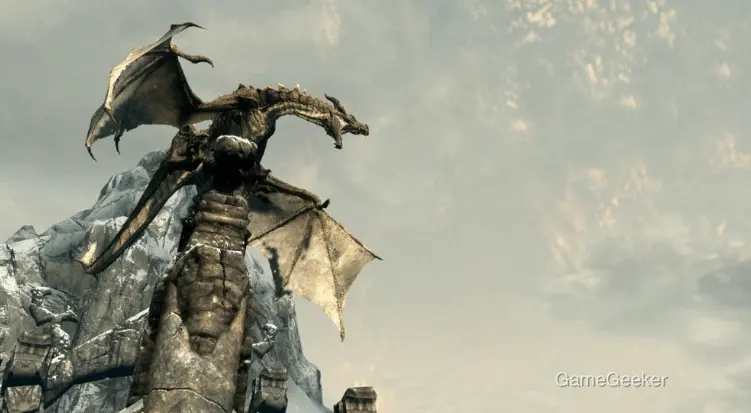
In 2011, The Elder Scrolls V: Skyrim gets matched with Starfield, dubbed “Skyrim in space.” That characterization works for marketing, but structurally the systems are actually quite different. Skyrim is a highly coupled big map into which nearly all systems—shouts, guild questlines, random events—are layered. Starfield, on the other hand, uses a classic sharded world, turning a large number of planets into relatively independent modules. This is very friendly for performance and development scheduling, but sacrifices that sense of unity where “you can literally walk to all the trouble.” Nonetheless, considering Starfield is still preparing its second expansion and a large free update, and is planning to launch on PS5 in April, the game is more like a service-type platform undergoing continuous iteration. If what you miss is that Skyrim experience of “farming builds, digging side quests, obsessing over crafting,” it’s still a reasonable substitute in 2026.

2012’s Assassin’s Creed III is paired with Ghost of Tsushima, and in terms of design orientation this actually fits old players better than the “official sequels.” Back then, the Colonial America setting plus the conclusion of Desmond’s modern storyline made AC3 quite ambitious among open-world games, but system-wise it was still very much “stealth + parkour + outpost checklist.” Ghost of Tsushima turns this old recipe into a textbook example: it downplays UI checklists and emphasizes wind direction and environmental cues, letting players “read” the world visually; in combat, it nails the feeling of duels, avoiding having the pace diluted by collect-a-thon mechanics. If what you miss is the era when Assassin’s Creed still felt like a stealth game instead of a numbers-focused MMO, then in terms of route design and information delivery, Tsushima is actually closer to the early AC elegance.
2013 to 2015 is the most debatable segment of this list: 2013’s Grand Theft Auto V (GTA5) is matched with Cyberpunk 2077, 2014’s Middle-earth: Shadow of Mordor has to hand the torch to Assassin’s Creed: Shadows, and the golden year of 2015 open worlds is represented by The Witcher 3. In addition to the usual nod to Cyberpunk 2077, foreign media more accurately put Kingdom Come: Deliverance II on the table. The real pity here is Shadow of Mordor. With the Nemesis system, it directly added another dimension at the AI and data-structure level: memory, promotion, and hatred were all written into the enemies themselves. Then Warner put a patent on it, so almost no one since has dared or even wanted to make a similar system. Assassin’s Creed: Shadows can only provide a similar emotional arc in the “tracking prey and killing targets one by one” process, but it lacks that feeling of dynamic stories where enemies grow within your save file. That’s a clear gap in design terms.

Conversely, The Witcher 3 and Kingdom Come: Deliverance II are a very professional pairing: the former is still considered the top-tier open-world ARPG among the monsters of 2015, and the latter continues the route of “medieval open-world RPG + high-freedom, choice-driven impact,” only swapping the fantasy filter for a more hardcore, realistic Middle Ages. System-wise, Kingdom Come: Deliverance II continues the same judgment logic from the first game, where how you dress and how you speak will be remembered by the world. This kind of design puts huge pressure on scripting and QA, but the immersion it buys is something Witcher 3 fans are very ready to pay for. If you’ve already replayed Geralt’s story many times and don’t want to go back to traditional stat-grind games, this is probably the most orthodox 2026 successor to “dense narrative + high-freedom choices.”
For 2016’s The Division, I agree strongly with Gamerant: the Dark Zone and seamless co-op almost have no true direct competitors. The Dark Zone’s “PvE shell wrapped around a PvP core” loot-and-extract design is hell-level difficulty for network architecture, sync strategies, and anti-cheat governance, so even now there are very few titles that can deliver a similar experience. The article recommends Borderlands 4 as an open-world looter-shooter substitute, which is more like a “similar emotional flavor” alternative: large world, tons of loot, full-time co-op—these do satisfy some players’ appetite for numbers and progression. But if what you love is the Dark Zone’s high-risk mind games, The Division series is still in a tier of its own on the market.
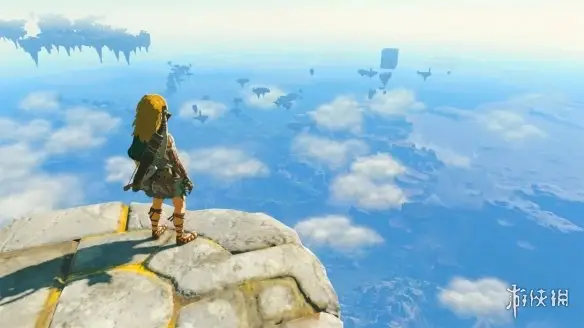
2017’s The Legend of Zelda: Breath of the Wild and the later Genshin Impact have been the subject of endless debate in player communities. Setting emotions aside and looking solely at design, Breath of the Wild uses physics and chemistry systems to create a world rule set where “any curiosity should be rewarded.” That’s a benchmark example in open-world design. Genshin Impact takes the first half of that philosophy—“prioritize exploring a beautiful world, paired with action combat and puzzles”—and grafts onto it a progression-driven live-service model and gacha-based monetization, with levels and event structures built entirely around patch cadence. For developers, one is a premium single-player project with one-off content, the other is a continuously operating event pipeline; their production models are completely different. But if you’re touched by “running everywhere, opening chests, and casually solving lots of small puzzles,” then Genshin is indeed one of the most consistently tuned “substitute experiences” in recent years.
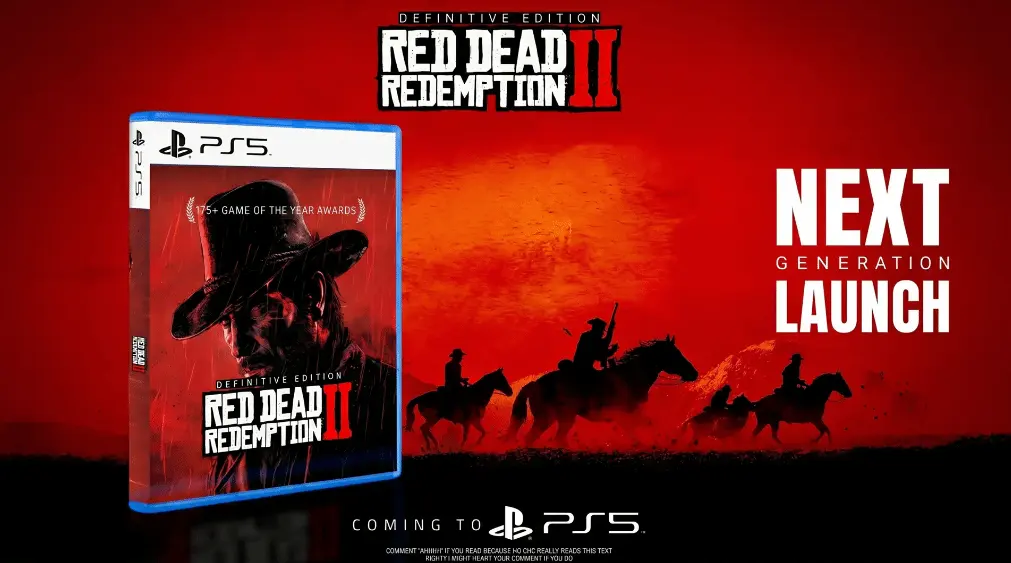
Finally, we have 2018’s Red Dead Redemption 2 and 2019’s Death Stranding. The former is hailed by many players as the best open-world game in history, while the latter carved out its own path amid “walking simulator” controversy. Gamerant believes that almost no game can replicate Rockstar’s ambition and can only pin their hopes on Crimson Desert. Judging from current public information, it indeed draws heavily from Rockstar’s experience in camp storytelling, horseback missions, and NPC interactions. But if you extrapolate from development costs and timelines, it will be hard to fully reproduce that kind of madness where “every roadside NPC has a micro-script.” As for Death Stranding, they compare it with S.T.A.L.K.E.R. 2, on the grounds that both feature a stunning post-apocalyptic world, real-world backgrounds, anomalous phenomena, and a strong sense of loneliness, and that players will spend a lot of time hauling loot between camps and storage facilities. I see this pairing more as an atmosphere-based analogy: if you can accept “walking itself is the core gameplay,” then both are worth giving another dose of patience in 2026.
Looking at the overall trend, this 2010–2019 “kings list” plus 2026 substitute recommendations really reflects one reality: games that deliver “system-level innovation” in open-world design are becoming rarer, and many new titles lean more toward piling on art production, world scale, and business models. If players still want to chase the kind of wonder they felt the first time they played Breath of the Wild, The Witcher 3, or Fallout: New Vegas, the most reliable strategy isn’t to stare at “how similar it looks,” but to choose based on the axis you personally care about: if you value branching narratives, go to Obsidian; if you care about physics-driven interaction, watch the Zelda lineage and its disciples; if you obsess over immersive detail, keep following the Rockstar bloodline. Choosing substitutes this way makes it less likely you’ll feel like you’re just being served a “watered-down version that tastes kind of similar” every time.

Comentários 0
Queremos saber sua opinião
Boas-vindas! Conte o que achou deste jogo — quem chega primeiro pode ter uma surpresa.
Ainda não há comentários. Seja o primeiro.