
Notícia
EB Games Leak Reveals Ocarina of Time Remake Release Date
A Reddit user claims an EB Games poster leaked several Switch 2 release dates, though the listing remains unverified. Ni















When I saw this news, my first reaction wasn’t “another round of corporate slimming,” but more like watching a once grand main quest suddenly start deleting side quests, cutting party members, and even forcing out the behind-the-scenes mages responsible for shaping the world’s tone and atmosphere. According to Forbes and Deadline, Disney’s new CEO Josh D’Amaro recently announced a major round of layoffs affecting all of its media businesses, totaling around 1,000 people. Among the hardest-hit divisions, Marvel stands out in particular, with its television unit, comics division, and other business lines all seeing significant cuts.

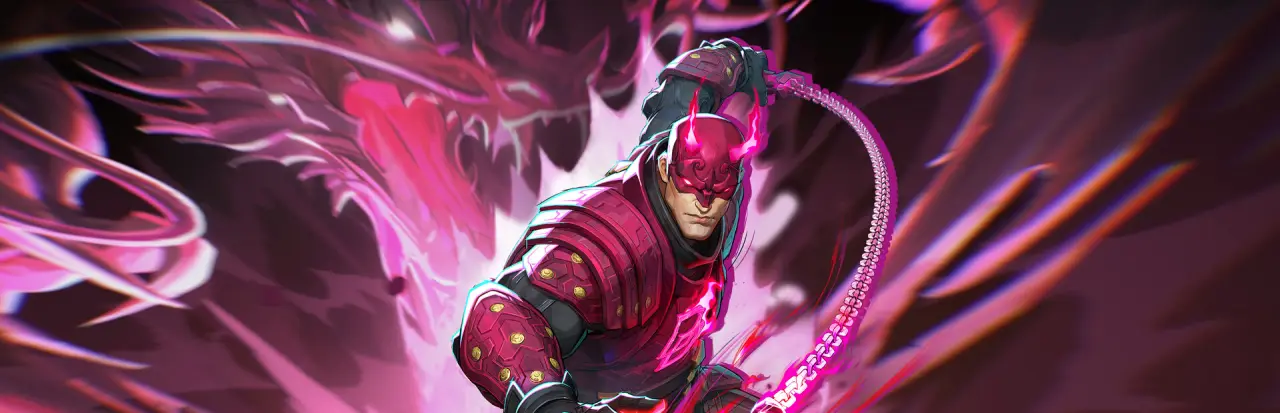
What truly feels regrettable to me is that Marvel’s visual development team has been almost entirely dismantled. This team was not merely an “art outsourcing interface” for drawing concept art, but a group made up of art historians, illustrators, and designers who contributed to the early visual development of works such as The Avengers, Guardians of the Galaxy, and Daredevil. Whether a superhero universe can truly stand on its own depends not only on actors and special effects, but also on how these people, from the earliest stages, weave characters, settings, symbols, and tone into a unified whole. Now only a small number of full-time production staff remain, mainly to assist with project hiring. The change feels very much like tearing down the blacksmith’s shop in a camp and leaving behind only a registration desk.

From what is currently known, this move was not a sudden slash of the blade. Sources familiar with the matter said the main reasons are Marvel’s previously announced project reductions and Disney’s broader, ongoing cost-cutting efforts. An even more critical shift is that visual development staff will increasingly be hired on a contract basis rather than under the previous full-time model, meaning the company hopes to turn fixed costs into controllable, project-based expenses. From the perspective of financial statements, that is of course “leaner”; but from the perspective of the content industry, long-term chemistry, stylistic continuity, and cross-project collaboration often rest precisely on stable teams.
That also explains why the community has shown such mixed emotions. Some believe Marvel has spread its projects too thin in recent years, so contraction was inevitable sooner or later; others worry that as the creative pipeline becomes increasingly outsourced and gig-based, what will ultimately suffer is the distinctiveness of the work itself. Not to mention that some in the industry have already speculated that this adjustment may be related to the rise of AI technology. Although the reports provide no more direct evidence, that shadow does indeed hang over the entire visual industry. Players and audiences are actually very sensitive—whether a poster, a costume design, or a certain visual style “has a soul” is often perceived earlier than anything on a data sheet.

Josh D’Amaro said publicly that these decisions do not negate employees’ contributions, but are meant to allocate resources more efficiently and reinvest in future businesses. The problem is that whenever a company says it wants to “reinvest,” the market hears efficiency, while fans worry about the warmth of the content. Marvel especially had already gone through a smaller round of layoffs in 2024, and now with another, much broader restructuring, this is no longer just a matter of short-term pruning—it feels more like the entire kingdom has begun redrawing its map.
Placed within the broader industry trend, this will likely become a microcosm of how film, animation, and even game-linked content will be produced over the next few years: major companies are no longer blindly chasing ever-expanding universes, but are instead shifting toward more conservative and more quantifiable investment models. For ordinary viewers and players, what matters going forward is not “how many people were laid off” in itself, but whether the works Marvel puts out afterward can still preserve their unique aesthetic and narrative aura. Because the one thing an IP fears most is never slowing down—it is becoming a replaceable template in the process of cutting costs.


Comentários 0
Queremos saber sua opinião
Participe da discussão e compartilhe sua opinião sobre este jogo.
Ainda não há comentários. Seja o primeiro.