Notícia
IGN gives Blood of the Dawnwalker a 9 as its 160-person team delivers
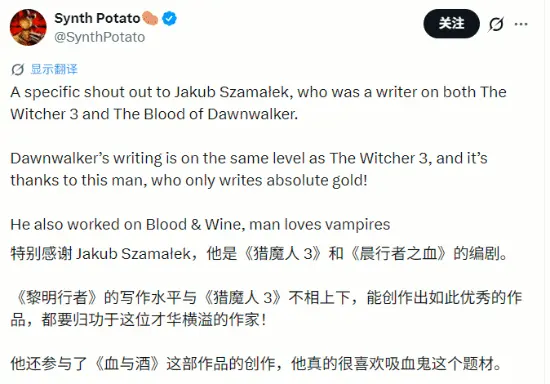
Two gaming bloggers, NikTek and Synth Potato, are calling The Blood of Dawnwalker one of 2026's best RPGs, and the early















Over the past two years, Korean teams have been making increasingly obvious moves into single-player games, and Dragon Sword: Awakening is a new example well worth watching. Its Steam store page has officially gone live, with a planned release in July, and it will also take part in Steam Next Fest in June with a demo. For many players who have been waiting for a new action RPG, this kind of rhythm—“try the demo first, then decide whether to buy”—is actually more convincing than a trailer.

The game is developed by Hound13, whose core team members come from Dragon Nest, and it is built with Unreal Engine 5. Compared with labels like “nostalgia for a previous work,” what I care more about is that this time it has clearly positioned itself as a single-player open-world RPG. Its core selling points are story progression and map exploration, rather than the long-term stat-driven operations typical of MMORPGs. In other words, it is not simply stripping out an online game UI and repackaging it; it wants players to experience the growth loop on the continent of Orbis in a way that feels closer to a console action game.

What is currently most likely to resonate with the market is how clearly its business model has been communicated. The official stance is that the game is a buy-to-play title, with no monthly subscription and no battle pass plan; heroes and equipment can all be obtained through the main story and in-game activities, without going down the gacha route. This information is crucial because it directly shapes players’ expectations after entering the game: you are buying a complete, content-driven open-world RPG, not being pushed along by dailies, banners, and progression anxiety in a live-service product.
From a system design perspective, it is also trying to create a relatively “sandbox-like” loop. Players can collect resources through world exploration, then use them to develop heroes and equipment. If this structure works smoothly, it can generate strong self-driven motivation: you are not moving around just to clear quests, but because the map itself can continuously produce growth value. Its animated rendering style combined with an open-world framework also shows that it wants to pursue a lighter and more approachable visual direction, rather than a purely realistic sense of pressure.

The online component is clearly designed to be “limited but present.” It uses invite codes for teaming up and only opens specific content such as combat and dungeons to multiplayer. Combat supports up to 2 players, while dungeons support up to 3, and it uses a host-based model. There are no regional restrictions, but latency will be affected by the host’s network. This approach feels like adding a supplementary outlet to validate the single-player core experience: you can immerse yourself in solo exploration if you want, and there is also an entry point for fighting bosses with friends, but it will not reshape the entire game structure into an online product heavily dependent on social interaction.
If you ask me whether it is worth paying attention to at this stage, my advice is straightforward: add it to your wishlist first, and keep an eye on the June demo. What makes Dragon Sword: Awakening most appealing right now is not keywords like “Korean team” or “UE5,” but the fact that it hits several of the most genuine current player demands: buy-to-play, no gacha, and a single-player open world. It also has plans for future updates, including additional story content, new characters, new monsters, DLC, as well as future new characters and new world expansion packs. Character skins and pets will be sold separately. As long as the demo can prove that the combat feel, exploration density, and performance optimization are up to standard, this game really does have a chance—just as some have suggested—to become the next dark horse among Korean developers shifting from an online-game mindset toward a single-player path.



Comentários 0
Queremos saber sua opinião
Participe da discussão e compartilhe sua opinião sobre este jogo.
Ainda não há comentários. Seja o primeiro.