
Notícia
Grab two free PC games before Epic's clock runs out, while Undertale and Divinity: Original Sin 2 are 75% off
Astral Ascent and LUFTRAUSERS are free to keep today, while two of PC gaming's most celebrated RPGs cost less than $14 c
















They made a very typical trade-off here: they wanted to use the “like GTA” label to draw users in first, but what really determines word of mouth is still the content density of the open world, the pacing of missions, and the overall level of polish at the foundational level. With several months still to go before GTA6 officially launches, multiple titles billed as “GTA-like” have already stumbled one after another. That alone shows that copying the surface form isn’t hard; the hard part is getting the entire system to run smoothly.
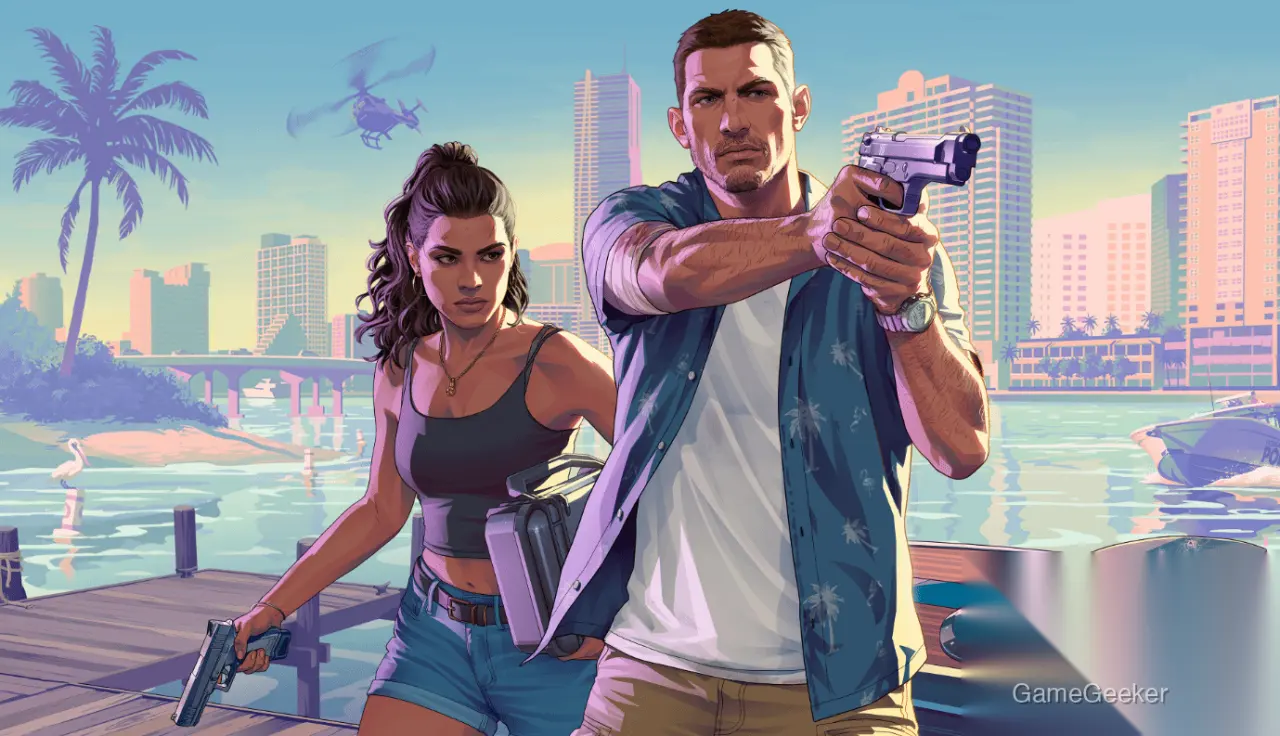
First, take Liquid Swords’ debut title Samson. After launch, the game performed poorly, with only a 51% positive rating on Steam, and the criticism from overseas outlet GameRant was especially harsh, directly faulting it for lacking passion, fun, and originality. From a design perspective, this kind of assessment usually doesn’t come from a single mistake. Rather, it means that several core modules—missions, combat, exploration, and feedback—failed to form a positive gameplay loop, so after just one or two hours, players can already clearly feel the system “spinning its wheels.”
On the other side, the selling point behind MindsEye was even more discussion-worthy. It was released by Build a Rocket Boy, founded by former Rockstar employee Leslie Benzies, and launched under the banner of a “crime open world,” which naturally invited comparisons to GTA. The outcome was equally brutal: the original text mentions rampant bugs, hollow content, and disastrous optimization, ultimately making it one of the lowest-rated games of 2025. At that point, it was no longer a matter of minor flaws, but obvious signs of a rushed production.
From a technical standpoint, the biggest misconception about making a “GTA-like” game is that people assume it’s just a big map plus driving plus gunfights. In reality, the real challenge is that city behavior logic, mission script triggers, vehicle handling, NPC state machines, performance budgets, and content pacing all have to work at the same time. If any one part cuts corners, players will immediately feel that something is off. That GameRant line—“this isn’t a passable but flawed game”—lands so sharply because it points straight to the core issue: these titles aren’t merely a bit under-polished; their foundational gameplay experience never truly stands on solid ground.

From a business logic perspective, these two failures have instead pushed expectations for GTA6 even higher. It’s not that players have suddenly become more demanding, but that after repeatedly seeing substitutes fall short, they’ve become even more aware of just how hard Rockstar’s industrial-scale capabilities are to replicate. GTA6 is currently slated for release in 2026年11月, and Take-Two has already confirmed that full-scale marketing will begin this summer. A third trailer, pricing, and pre-order information will most likely be revealed gradually after that.
For ordinary players, my advice is also very straightforward: if you’re just looking for a new crime-themed open-world game to “hold you over for now,” this is exactly when you should be more cautious and wait-and-see—especially keeping a close eye on launch optimization, mission repetitiveness, and genuine community feedback, rather than judging only by the vibe of the trailers. What games in this category fear most is looking like a model home in the PV, but like a half-finished product in actual gameplay. In a sense, the consecutive failures of Samson and MindsEye are not weakening the hype around GTA6 at all; if anything, they serve as a kind of reverse proof—the more people try to replicate it, the more clearly you can see where the real barrier actually lies.






Comentários 0
Queremos saber sua opinião
Participe da discussão e compartilhe sua opinião sobre este jogo.
Ainda não há comentários. Seja o primeiro.