
Notícia
007 First Light Drops to $24.69 in Its First-Ever Sale, Beating the Previous Low
007 First Light gets its first discount, with Green Man Gaming stacking an extra 18% off the 20% official price cut plus
















Create: Aeronautics, the expansion built on top of the Minecraft mod Create, received its update in April 2026. Both the original article and community discussion point to the same outcome: it is pulling more players toward Minecraft 1.21 and fueling a fresh wave of momentum across the MC scene in 2026. The reason is fairly clear. Rather than adding more decorative contraptions, it pushes Minecraft machinery from "things that move" into something much closer to full sandbox physics.
That leap matters because Create was already enormous before Aeronautics arrived. Released by Simibubi in 2019, the tech mod has grown into a foundational layer for Minecraft engineering play, with more than 50 add-ons, countless compatibility extensions, and more than 200 million downloads across the internet. So Aeronautics is not a standalone miracle. It is a major step built on top of an industrial system that was already mature.
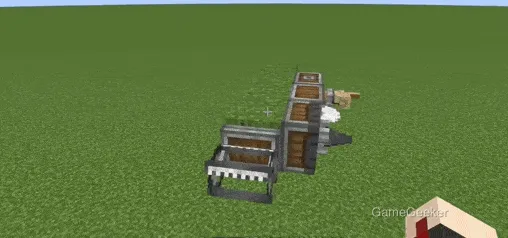
What makes Create stand out is not just recipe depth, but the way it makes power transmission visible. It introduces a system called Stress, described in the article as a simplified take on real-world torque. Rotation generates power, and that power is passed through shafts and gears to drive different machines for production and resource gathering. In practice, that means a fan can replace a furnace, and a mechanical saw can replace an axe for felling an entire tree. As a factory develops, its rotational power can advance from a hand crank to windmills, water wheels, and steam boilers. The appeal is the feeling of building a working industrial chain by hand inside a sandbox.
Just as important, Create also makes structure itself readable. The original article notes that players can use Super Glue to attach blocks to a rotating shaft, letting them break free from the fixed voxel grid and spin as a real moving assembly. In Aeronautics, Super Glue and the newly added Honey Glue can bind whole groups of blocks together, after which a Physics Assembler gives them near-real physical properties. A structure made of 3 grass blocks can be thrown and travel in a parabola; destroy the supporting block and the blocks above will fall. At that point, this is no longer traditional redstone logic. It is a proper sandbox physics playground.

The real breakout feature, though, is aircraft. You are not simply placing down a "flying block." You have to deal with lift, gravity, thrust direction, and steering, then manually install components such as sails, gears, and ropes into the structure. Add the propeller provided by Aeronautics, feed it Stress, and a mass of blocks that could merely move becomes a machine that can actually fly. That is the core appeal: the mod does not hand you an answer, it gives you a physical language and asks you to assemble the answer yourself.
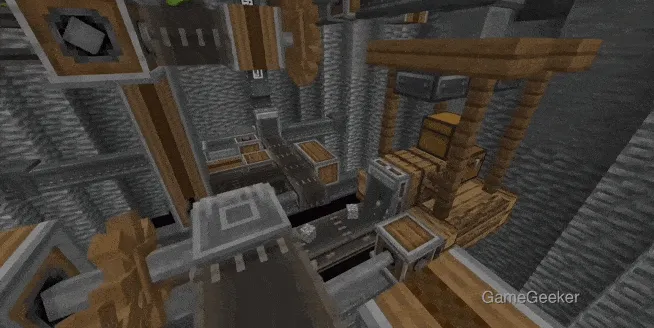
That is also why the article argues that Aeronautics has, in effect, "reinvented the wheel." Strictly speaking, it is not the first Minecraft mod to pursue physics systems and aircraft. Before it, Valkyrien had already become one of the representative names in the space thanks to its mature framework and rich expansion support. But it is not hard to see why Valkyrien has been overshadowed here: it demands more from performance, its style is less unified than the Create ecosystem, it is tied to lower game versions, and Aeronautics benefits from the branding power of a mod family that already has its own aesthetic, tutorial language, and community consensus.
There is another strength that is easy to overlook: Create is unusually good at teaching players how its systems work. At the end of 2020, version 0.3 added "Pondering", the feature often summed up as "Hold W to Ponder". By holding W while looking at a component, players can watch a short tutorial animation. That design feels very close to the best onboarding in simulation games. It does not remove complexity; it explains complexity. The original line says it best: most importantly, it does not push you to "go faster, faster, faster," but encourages you to "hold W and start thinking." That is basically the center of Create's design philosophy.
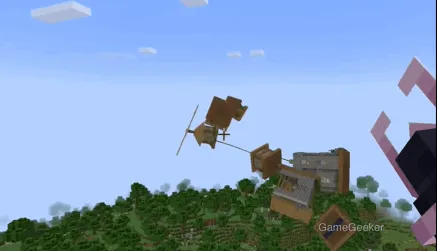
The practical recommendation is straightforward. If you already enjoy Minecraft for building, automation, and trial-and-error experimentation, Create: Aeronautics is absolutely worth starting a separate save around 1.21 for. If you prefer a low-barrier, ready-to-use flying experience, it may not be the fastest mod to get into. What it is selling is not the single second when you leave the ground, but the whole process: from hand cranks to transmission, from gluing to assembly, from gliding to full lift-off. Within 1 month of release, players had already produced a large number of wildly different mechanical creations. That suggests the heat around Aeronautics is not just spectator hype, but genuine creative momentum. For a game with a 17-year history, getting players to think again about wheels, power, and the sky says plenty on its own.





Comentários 0
Queremos saber sua opinião
Boas-vindas! Conte o que achou deste jogo — quem chega primeiro pode ter uma surpresa.
Ainda não há comentários. Seja o primeiro.